Acid Reflux and Your Teeth: How GERD Silently Destroys Enamel
If you have acid reflux or GERD, your teeth may be silently eroding. Learn the warning signs, how dental erosion differs from decay, and how to protect your enamel.
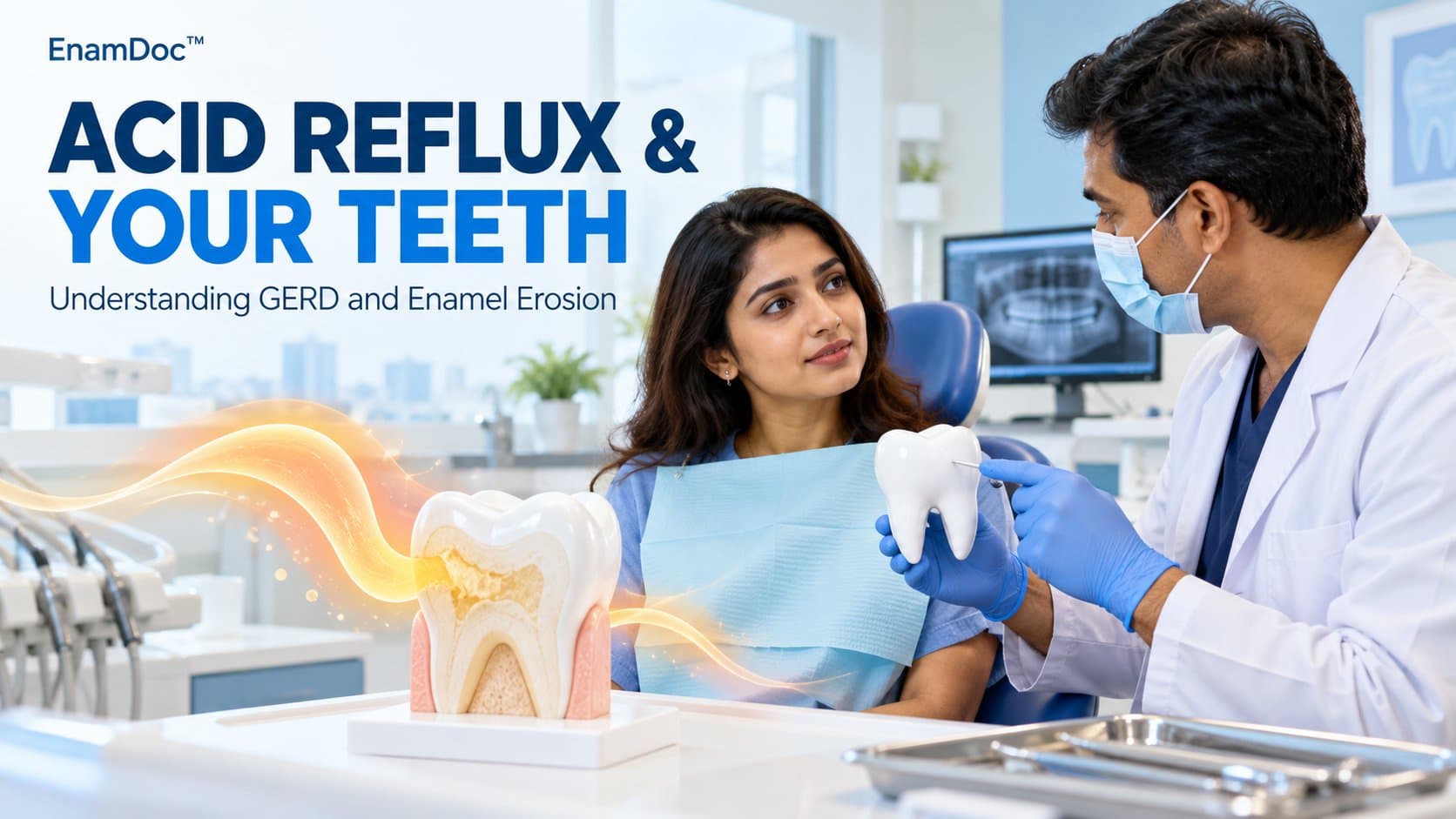
For the millions of Indians who live with acid reflux or GERD (gastroesophageal reflux disease), the focus is usually on managing symptoms like heartburn, regurgitation, or chest discomfort. But there is another part of your body that chronic acid reflux silently affects: your teeth.
Dental erosion caused by GERD is a well-documented but frequently overlooked condition. Unlike tooth decay caused by bacteria, acid-related dental erosion comes from repeated exposure to stomach acid — a far stronger acid than anything found in food or drink. By the time patients notice the signs, significant enamel loss may have already occurred.
How Acid Reflux Damages Teeth
When acid refluxes up the oesophagus and reaches the mouth, it bathes the teeth in gastric acid with a pH of approximately 1.5–3.5 — significantly more acidic than cola (pH ~2.5) or orange juice (pH ~3.5). This acid attacks the enamel directly, softening and dissolving its mineral structure in a process called dental erosion.
The key difference between erosion and decay is important:
- Tooth decay (caries) — caused by bacterial acid produced when bacteria ferment dietary sugars. Typically localised, beginning in pits and fissures or between teeth.
- Dental erosion (from GERD) — caused by direct acid contact. Typically affects the palatal surfaces of the upper front teeth first, and may affect multiple teeth simultaneously in a characteristic pattern.
Warning Signs of GERD-Related Dental Erosion
The early signs of acid erosion are easy to miss. Watch for:
- Generalised tooth sensitivity — particularly to cold drinks, sweet foods, or air — that has developed or worsened gradually.
- Smooth, rounded tooth surfaces — enamel erosion creates a characteristic smoothed, glossy appearance rather than the roughened appearance of decay.
- Cupping of teeth — small depressions forming on the biting surfaces of back teeth as enamel dissolves away.
- Teeth appearing shorter or more translucent — as the enamel layer thins, the yellow dentin beneath starts to show through.
- Increased cavities despite good oral hygiene — because acid-softened enamel is more susceptible to bacterial decay.
Which Teeth Are Most Affected?
The pattern of erosion in GERD-related cases has a characteristic distribution that trained dentists recognise:
- The palatal (inner) surfaces of upper front teeth are most commonly eroded first, as refluxed acid pools against the back of the upper teeth.
- The occlusal (biting) surfaces of molars are often affected as well, particularly in patients with severe or nocturnal reflux.
- The outer (facial) surfaces tend to be less affected in GERD-related erosion — distinguishing it from dietary acid erosion.
Protecting Your Teeth While Managing GERD
The most important step is managing GERD itself — through medication, dietary changes, and lifestyle adjustments. From a dental perspective, the following habits help protect remaining enamel:
Do not brush immediately after a reflux episode
After acid reflux or vomiting, rinse your mouth with water or a bicarbonate of soda solution first, then wait at least 30 minutes before brushing. Brushing acid-softened enamel accelerates erosion.
Use a high-fluoride toothpaste
Patients with GERD-related erosion often benefit from prescription-strength fluoride toothpastes (5,000 ppm), available through dentists. Fluoride helps remineralise softened enamel and provides protective coating.
Sleep slightly elevated
Nocturnal reflux is worsened by lying flat. Elevating the head of the bed by 15–20 cm, or sleeping on your left side, reduces acid reaching the mouth during sleep.
Dental Treatments for Erosion-Damaged Teeth
Once enamel is lost, it cannot regenerate on its own. However, several dental treatments restore the appearance and function of erosion-damaged teeth:
- Composite bonding — A tooth-coloured resin material is applied to eroded surfaces to rebuild tooth shape and reduce sensitivity. Minimally invasive for mild-to-moderate erosion.
- Dental veneers — Thin ceramic shells bonded to front tooth surfaces, suitable for more significant aesthetic concerns.
- Crowns — For heavily eroded posterior teeth, full ceramic or metal-ceramic crowns restore function and prevent further breakdown.
- Remineralisation therapy — Fluoride varnishes applied in-clinic combined with high-fluoride toothpaste can stabilise early erosion before more invasive treatment is needed.
If you have GERD or experience regular heartburn, mention it to your dentist. A dentist can examine your teeth for erosion patterns and advise on protective strategies. You can find a qualified dentist who can assess acid-related dental damage through EnamDoc.
Frequently asked
Frequently asked questions
Can a dentist tell if I have acid reflux just by looking at my teeth?
Yes, in many cases. Dentists recognise the characteristic erosion pattern of GERD — the smoothing and thinning of palatal surfaces of the upper front teeth, and cupping on the biting surfaces of molars. This pattern is distinct from decay and dietary acid erosion, and often prompts dentists to ask about reflux symptoms even without a formal diagnosis.
Is dental erosion from acid reflux reversible?
Enamel that has been lost cannot be regenerated — dental erosion is irreversible in that sense. However, early erosion can be stabilised through fluoride remineralisation therapy and GERD management to prevent further loss. Moderate to severe erosion can be restored with composite bonding, veneers, or crowns to rebuild tooth shape. This is why early detection and treatment matters.
- acid reflux
- GERD
- dental erosion
- enamel
- tooth sensitivity
Keep reading