Can Tooth Enamel Regrow? What the Science Actually Says
Toothpaste ads promise "enamel repair." Real enamel regeneration is close, but not here yet — and confusing the two costs people money.
Medically reviewed by Dr. Ashay Jain, BDS
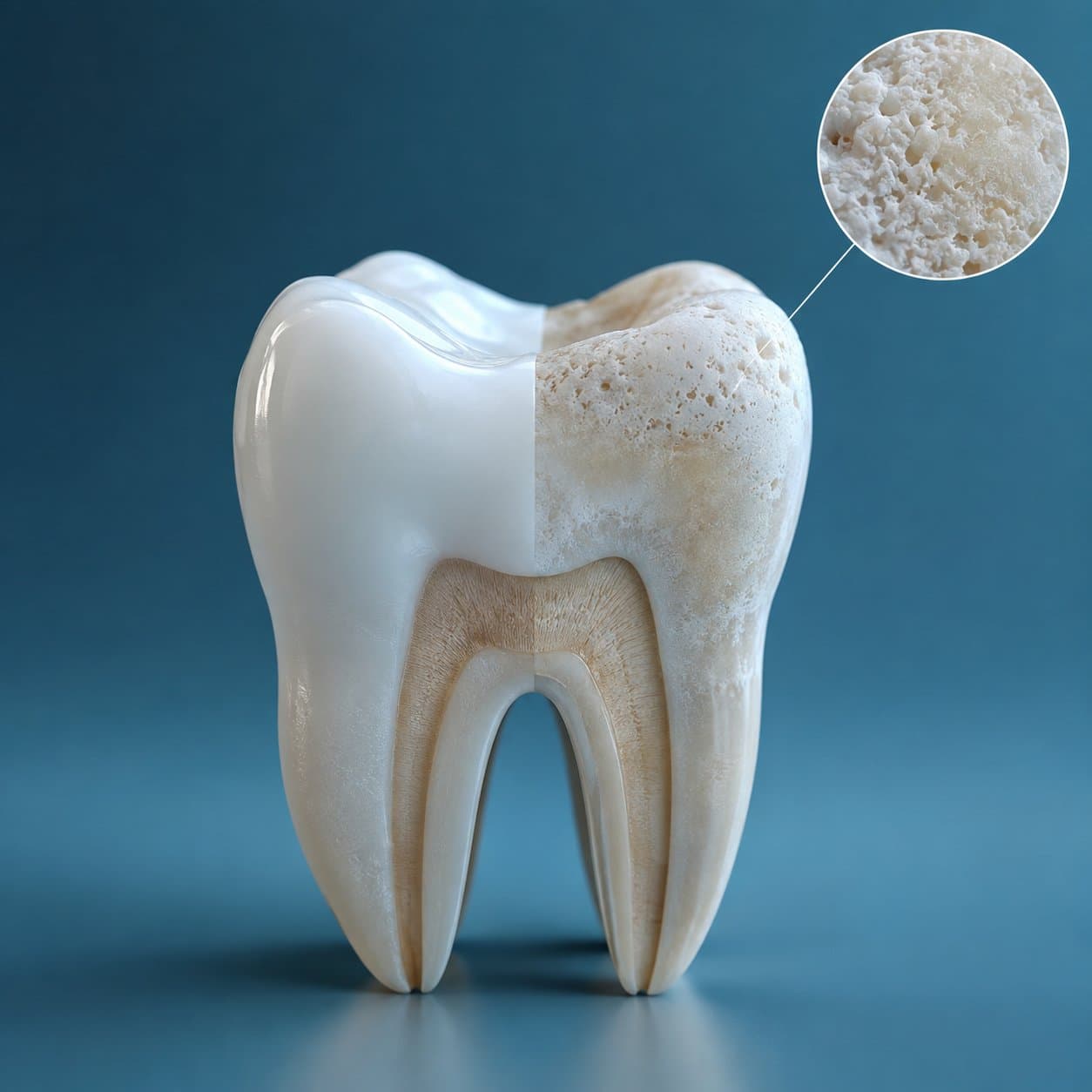
Walk down any toothpaste aisle and you'll find a tube promising to "repair" or "rebuild" enamel. What it's actually doing is narrower than the label suggests — and the gap between that and true regeneration is where most of the confusion sits.
Why enamel doesn't grow back on its own
Enamel is the hardest tissue in the human body, but it's not living tissue. It has no blood supply, no nerves, and no cells capable of dividing and replacing what's lost. Bone repairs itself because it's full of living cells. Enamel was built once, before the tooth erupted, by cells that are gone by the time you're using the tooth. Once a chunk of it is worn away by acid, grinding, or a chip, that specific piece is gone for good.
What "remineralisation" toothpaste actually does
Early enamel damage isn't always a physical hole. Before that stage, acid pulls minerals — calcium and phosphate — out of the enamel's crystal structure, weakening it without removing it. This is called demineralisation, and it's reversible. Fluoride, and newer ingredients like hydroxyapatite, help redeposit minerals into that weakened structure and can even make it more acid-resistant than before.
That's a genuine, evidence-backed effect. It just isn't the same as regrowing enamel that has physically worn away. A toothpaste can strengthen a thin spot. It cannot fill a chip or reverse a groove worn in by years of grinding.
The research that's closer to real regeneration
Labs around the world are working on this gap directly — biomimetic peptides that guide new mineral crystals to grow in an enamel-like structure, and stem cell approaches aimed at coaxing enamel-forming cells back into activity. Some of this work has shown real regrowth of enamel-like material in controlled lab conditions. None of it is an approved, routine clinical treatment yet, in India or anywhere else. It's a promising direction, not a waiting-room option.
What actually protects the enamel you have
Until regeneration treatments exist outside a lab, the practical list hasn't changed much: fluoride toothpaste used correctly, cutting down how often (not just how much) sugary or acidic food and drink touches your teeth, and not brushing immediately after something acidic — the enamel is temporarily softened and brushing right then wears it faster. A dentist can also flag early demineralisation, the white-spot stage, while it's still reversible.
The honest version: nothing sold over the counter regrows enamel. The best available tools slow the loss and rebuild what's only weakened, not gone. That's still worth doing — it's just a different claim than the one on the box.
Frequently asked
Frequently asked questions
Can toothpaste really repair tooth enamel?
Not in the sense of regrowing lost structure. What it can do is remineralise enamel that's weakened but still intact — redepositing calcium and phosphate before the damage becomes a permanent hole.
Is enamel regeneration treatment available in India yet?
Not as a routine clinical option. Biomimetic peptide and stem cell research has produced real enamel-like regrowth in lab settings, but it hasn't reached approved clinical use anywhere yet, including India.
What's the difference between remineralisation and regeneration?
Remineralisation restores minerals to enamel that's weakened but structurally intact. Regeneration would mean growing new enamel tissue where it's physically gone — something the body can't do on its own and medicine can't yet do for you.
- enamel
- remineralisation
- tooth health
- patients
Keep reading