Can You Fix a Chipped Tooth? Treatment Options and Costs in India
A chipped tooth can be a dental emergency or a cosmetic concern — it depends on how much tooth structure is lost. Here is every treatment option available in India and what each one costs.
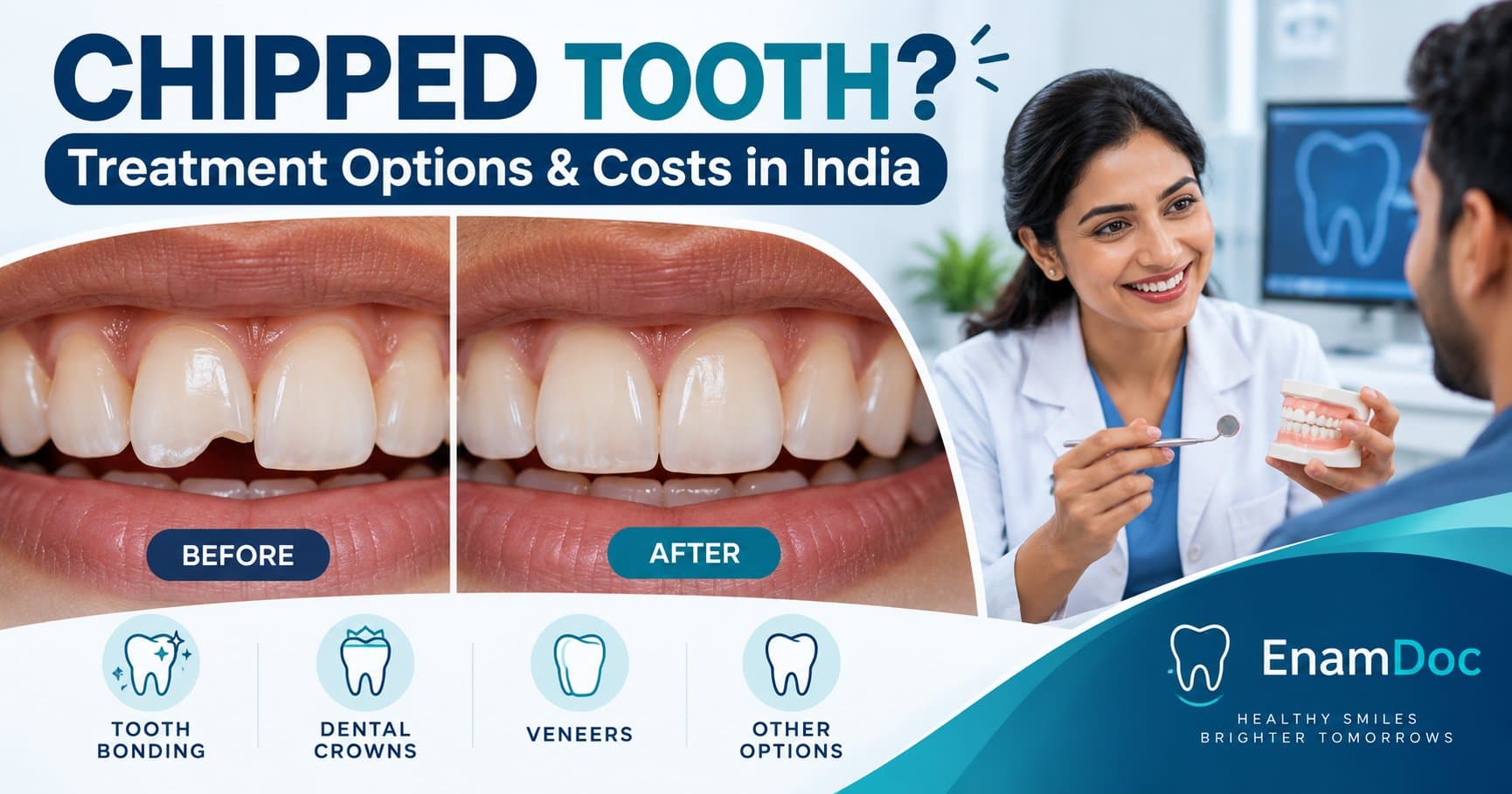
Why a Chipped Tooth Is More Than Just a Cosmetic Problem
A chipped tooth can happen in an instant — biting down on a hard food, a fall, or a sports injury. While a minor chip might seem like no big deal, a chipped or cracked tooth exposes the inner layers of enamel and dentine, making it vulnerable to bacteria, sensitivity, and further breakage. In some cases, nerve damage may already be occurring. So the first rule: always see a dentist after chipping a tooth, even if it doesn't hurt yet.
The good news is that modern dentistry has several excellent options for repairing chipped teeth — ranging from simple same-day fixes to comprehensive restorations. The right option for you depends on how much of the tooth is missing, where the chip is located, and your budget.
How Dentists Classify a Chipped Tooth
Before recommending treatment, your dentist will assess the extent of the fracture. Chips are generally classified as:
- Minor enamel chip: Only the outer enamel layer is affected. No pain, no sensitivity. Usually cosmetic.
- Moderate chip (into dentine): The chip extends into the dentine layer beneath enamel. You may notice sensitivity to hot, cold, or sweet foods.
- Severe chip (reaching the pulp): The fracture exposes or is very close to the nerve. You may experience sharp pain or throbbing. This needs immediate treatment.
- Craze lines: Tiny surface cracks that don't penetrate deep — usually cosmetic only, rarely requiring treatment.
Always bring the chipped fragment to your dentist if you still have it. In some cases, it can be bonded back.
Treatment Options for a Chipped Tooth
1. Dental Bonding (Composite Resin)
Dental bonding is the most common and cost-effective way to fix a chipped tooth. Your dentist applies a tooth-coloured composite resin material directly to the tooth, shapes it to match the natural contour, and then hardens it with a UV light.
Best for: Minor to moderate chips on front teeth, small gaps, or uneven edges.
Duration: 30–60 minutes, single visit.
Cost in India: ₹1,500–₹5,000 per tooth.
Lifespan: 5–10 years with proper care. Bonding is more stain-prone than porcelain and may chip again with heavy biting forces.
2. Dental Veneers
Veneers are thin shells of porcelain or composite that are permanently bonded to the front surface of the tooth. They are an excellent option when the chip is on a visible front tooth and the patient also wants to improve the overall appearance of their smile.
Best for: Front teeth with moderate chips, discolouration, or minor misalignment.
Duration: 2 visits (one for preparation and impressions, one for placement).
Cost in India: ₹8,000–₹25,000 per tooth for composite veneers; ₹15,000–₹40,000 per tooth for porcelain veneers.
Lifespan: Porcelain veneers can last 10–15 years. Composite veneers last 5–7 years.
3. Dental Crown
When a large portion of the tooth is missing, or if the tooth has been weakened by decay or previous fillings, a crown provides full coverage and protection. The tooth is reduced slightly in size, and a custom-made crown — in ceramic, zirconia, or metal-fused-to-ceramic — is placed over it.
Best for: Large chips, fractured cusps, or teeth that have undergone root canal treatment.
Duration: 2 visits.
Cost in India: ₹5,000–₹15,000 for metal-fused-to-ceramic; ₹10,000–₹25,000 for full zirconia crowns.
Lifespan: 10–20 years with good oral hygiene.
4. Root Canal + Crown (If the Nerve Is Involved)
If the chip extends deep enough to expose or infect the dental pulp, root canal treatment is needed first to remove the infected tissue and seal the canal. Once done, the tooth is covered with a crown to restore its strength and shape.
Cost in India: ₹3,000–₹8,000 for root canal + ₹5,000–₹20,000 for the crown.
5. Tooth Fragment Reattachment
If you saved the chipped fragment, your dentist may be able to bond it back to the tooth using composite resin. This is only possible if the fragment is large enough, intact, and hasn't dried out. Keep it moist in milk or saline and get to the dentist as quickly as possible.
6. Dental Implant (If the Tooth Cannot Be Saved)
In cases where the tooth cannot be saved at all, a dental implant is the gold standard replacement. A titanium post is placed in the jawbone, and a crown is attached on top to look and function like a natural tooth.
Cost in India: ₹25,000–₹60,000 per implant.
What to Do Immediately After Chipping a Tooth
- Rinse your mouth with warm water to clean the area.
- Apply pressure with a clean cloth or gauze if there is bleeding.
- If possible, save the chipped piece in a container of milk or saline.
- Take an OTC painkiller such as paracetamol or ibuprofen if there is pain — do not apply it directly to the tooth or gum.
- Avoid hard, crunchy, or sticky foods until you see a dentist.
- Book a dental appointment within 24–48 hours, or immediately if there is severe pain, swelling, or visible nerve exposure.
Will a Chipped Tooth Heal on Its Own?
No. Unlike bone, tooth enamel and dentine do not regenerate. A chip will not grow back or repair itself. What may happen is that the tooth continues to wear, crack further, or develop sensitivity and decay at the exposed area. Treating a chip early is always cheaper and simpler than treating a broken or infected tooth later.
Choosing the Right Treatment
If the chip is small and on a front tooth, dental bonding is your fastest and most affordable option. If you want a longer-lasting and more aesthetic solution for a visible tooth, consider veneers. For large chips or structurally compromised teeth, a crown is the most protective choice. And if pain or infection is involved, do not delay — root canal treatment followed by a crown will save the tooth and relieve your symptoms.
Your dentist will take an X-ray to determine the depth of the fracture and whether the nerve is affected before recommending a specific treatment. Always ask about the estimated lifespan and cost of each option so you can make an informed decision.
Final Thoughts
A chipped tooth is one of the most common dental emergencies — but it is also one of the most treatable. Whether it's a quick bonding job or a more involved crown, dental technology in India has made it possible to restore chipped teeth beautifully and affordably. The key is not to wait: the sooner you see a dentist, the more options you have and the lower the overall cost of treatment.
Frequently asked
Frequently asked questions
Can dental bonding fix a chipped front tooth permanently?
Dental bonding is an effective and affordable option for repairing a chipped front tooth, but it is not permanent. The composite resin used in bonding typically lasts 5–10 years, depending on how well you care for it and the forces it is subjected to. Bonding can chip or stain over time, especially if you bite your nails, chew on pens, or eat very hard foods regularly. However, it is easily repairable and re-bondable if damaged. For a more durable and stain-resistant solution on a visible tooth, porcelain veneers or ceramic crowns are worth considering. Your dentist will help you decide based on the size of the chip and your budget.
How much does it cost to fix a chipped tooth in India?
The cost of fixing a chipped tooth in India depends on the treatment required. Dental bonding, which is the most affordable option for minor chips, costs between ₹1,500 and ₹5,000 per tooth. Composite veneers range from ₹8,000 to ₹25,000, while porcelain veneers can cost ₹15,000 to ₹40,000 per tooth. A dental crown typically runs between ₹5,000 and ₹25,000 depending on the material (metal-fused-to-ceramic or full zirconia). If the nerve is affected and you need a root canal before the crown, add another ₹3,000 to ₹8,000. In general, treating a chipped tooth early — before it worsens — is significantly cheaper than waiting for infection or fracture to develop.
Should I go to the dentist immediately for a chipped tooth if it does not hurt?
Yes, you should still see a dentist even if a chipped tooth is not causing pain. Pain is not always an accurate indicator of dental damage. A chip that reaches into the dentine layer can gradually lead to sensitivity, staining, or bacterial infiltration — even without immediate discomfort. Over time, an untreated chip may develop into a crack that extends into the root, which is far more difficult and expensive to treat. An X-ray from your dentist will reveal how deep the chip goes and whether the nerve is at risk. Treating it now — while it is a minor issue — keeps your options simple and your costs low.
- chipped tooth
- dental bonding
- veneers
- dental crown
- tooth repair
- patients
Keep reading