Dental Anxiety: Evidence-Based Strategies That Actually Help You Get Through the Appointment
Fear of the dentist keeps millions of Indians from getting care they urgently need. Dental anxiety is real and common — but it is also manageable. These evidence-based strategies work before, during, and after your appointment.
Medically reviewed by Dr. Aditya Swami, BDS
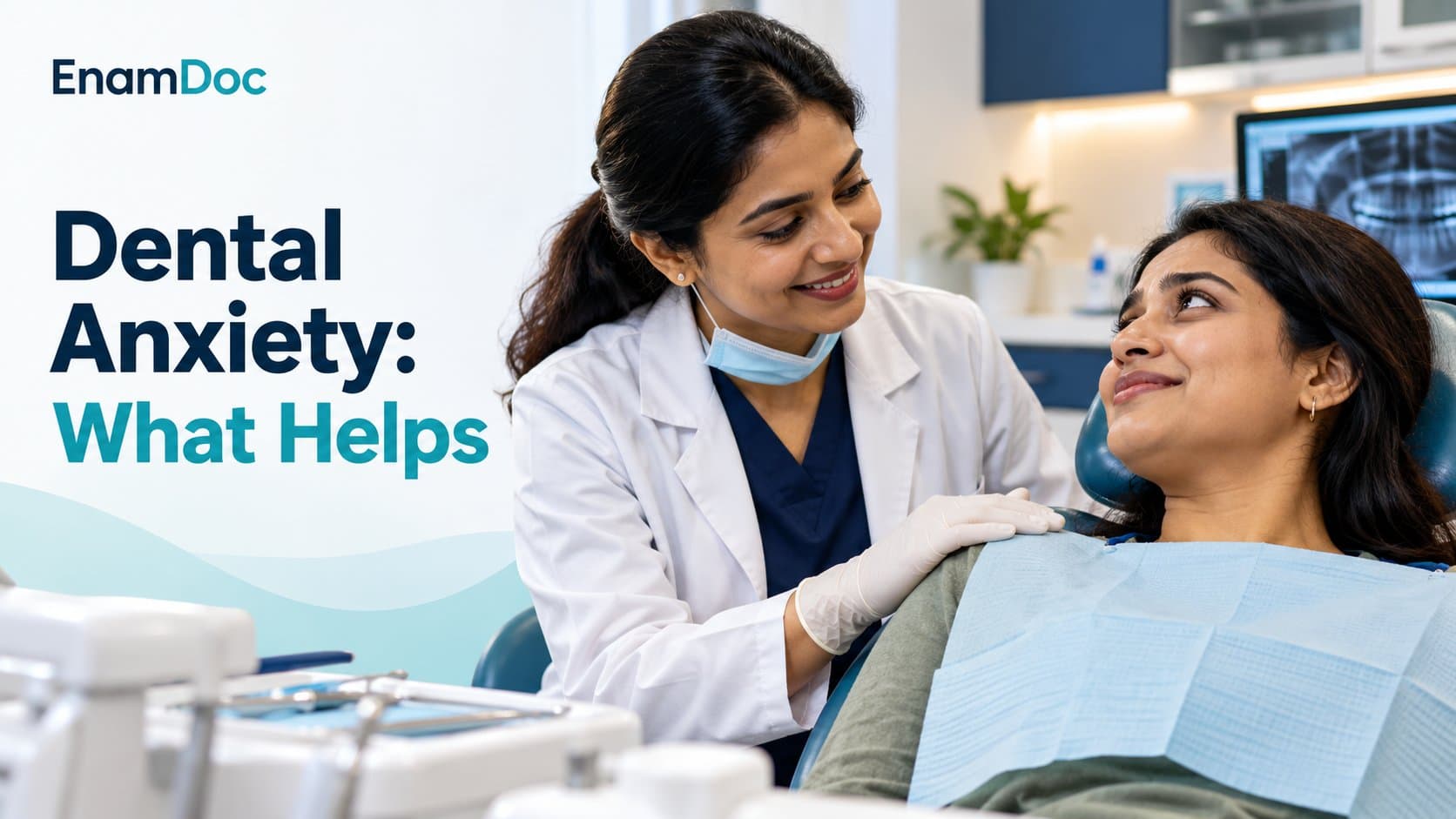
Up to 20% of people avoid the dentist altogether because of fear or anxiety. Many more attend but spend the days before an appointment in genuine dread — not sleeping well, replaying imagined scenarios, cancelling and rescheduling. Dental anxiety is not a personality flaw or an overreaction. It is a well-understood psychological response with known triggers and effective management strategies. This article covers what actually works — before, during, and after your appointment.
Understanding What You Are Actually Afraid Of
Dental anxiety is rarely a single, undifferentiated fear. Understanding your specific trigger is the first step toward managing it. Common triggers include:
- Fear of pain: By far the most common — often based on a past unpleasant experience, or on secondhand stories. Modern anaesthesia makes dental procedures much more comfortable than they were even 10–15 years ago.
- Fear of needles: The anaesthetic injection is often the most anxiety-provoking moment. Topical anaesthetic creams, ultra-fine needles, and slow injection technique dramatically reduce discomfort.
- Loss of control: Lying back with someone working in your mouth — unable to see clearly, unable to speak — triggers helplessness in some people. Agreeing on a stop signal with your dentist completely addresses this.
- Embarrassment about dental condition: Many anxious patients have avoided the dentist for years and are ashamed of what their teeth look like. This keeps them from going, which makes the condition worse, which makes them more ashamed — a cycle that only breaks with one appointment.
- Sensory triggers: Smells, sounds (the drill), the sensation of instruments in the mouth — these can be powerful triggers, especially if linked to a past traumatic experience.
- Gagging: A strong gag reflex makes dental examinations and impressions genuinely uncomfortable and creates anticipatory anxiety.
Before the Appointment
Choose the Right Dentist
Not all dentists are equally skilled at managing anxious patients, and this matters enormously. When you call to book, be honest: "I have significant dental anxiety — is the dentist experienced with nervous patients?" A good dentist will welcome this information and adapt their approach. Look for reviews that mention patient comfort and communication. A dentist who dismisses anxiety or seems impatient is the wrong one for you, regardless of technical skill.
Schedule Strategically
Morning appointments work better for most anxious patients. You spend less time waiting and worrying, and the procedure is done before the rest of the day. Avoid scheduling on days when you are already stressed or sleep-deprived.
Tell the Dentist Everything Before You Start
Before the appointment begins, communicate your anxiety openly. Tell them what specifically worries you, what your worst experience was if there was one, what helps, and what doesn't. Agree on a stop signal — most commonly raising your hand — so you always have a way to pause the procedure if you need it. Having that control changes the psychological dynamic of the appointment significantly.
Controlled Breathing Before You Go
Slow diaphragmatic breathing activates the parasympathetic nervous system and reduces physiological anxiety. In the waiting room or before you leave home: inhale slowly for 4 counts, hold for 2, exhale slowly for 6. Repeat 5–10 times. It sounds simple because it is — and it works measurably on anxiety levels.
During the Appointment
Headphones and Music
Bringing your own headphones and listening to a podcast, audiobook, or playlist you love does two things: it masks the sounds of dental instruments (particularly the high-pitched drill sounds that trigger many people), and it gives your brain something to process other than the procedure. Many patients say this single change transformed their experience.
The Stop Signal
Once you have agreed on a stop signal with your dentist, use it if you need to — without guilt. The signal is there for you. A good dentist will not be annoyed; they want you to stay in control. Knowing you can stop is often enough that you do not need to.
Focus on Breathing
During the procedure, keep returning to slow breathing. When your mind starts catastrophising, your body follows — heart rate and muscle tension increase. Slow your exhale down deliberately. It is harder for the fear response to fully activate when you are breathing slowly.
Request Explanations
Some patients become more anxious not knowing what is happening. If that is you, ask your dentist to explain each step before doing it. "I'm going to apply some numbing gel now — it will feel cold" — this kind of narration prevents surprises. Other patients prefer not to know. Tell your dentist which you prefer.
Numbing Gel Before Injections
Always ask for topical anaesthetic gel to be applied before any injection. This numbs the surface tissue and makes the needle significantly less perceptible. It takes about 60 seconds to work. Most dentists will use it routinely, but if they do not, ask — there is no reason not to.
Sedation Options
For patients with severe dental anxiety or dental phobia (a clinical-level fear that has led to years of avoidance), standard management strategies may not be sufficient and sedation is a legitimate and appropriate option:
- Oral sedation: A sedative tablet (typically a benzodiazepine like triazolam or diazepam) taken before the appointment reduces anxiety significantly while keeping you conscious. Available through dentists who offer sedation dentistry. You will need someone to accompany you.
- Nitrous oxide (laughing gas): Inhaled through a small mask during the procedure, nitrous oxide creates a relaxed, slightly euphoric state. You remain fully conscious but feel detached from the situation. Effects wear off quickly after the mask is removed. Not widely available in India but increasingly offered in urban clinics.
- IV sedation / conscious sedation: A higher level of sedation administered intravenously, leaving you in a deeply relaxed, semi-conscious state with minimal memory of the procedure. Requires an anaesthetist and a hospital or specialist clinic setting.
- General anaesthesia: Reserved for patients with extreme phobia, cognitive conditions that prevent cooperation, or for complex procedures requiring it on clinical grounds.
After the Appointment
Acknowledge that you did it. This is genuinely important. The single most powerful predictor of future dental attendance is having had a positive — or at least neutral — recent experience. After a manageable appointment, your anxiety for the next one will be lower. The first one is the hardest.
Book the follow-up before you leave the clinic. The longer the gap, the more anxiety rebuilds. Six-monthly check-ups with a dentist you trust keep problems small and manageable — and keep the fear from accumulating into something bigger.
On EnamDoc, you can search for dentists and filter by patient reviews — including reviews from patients who mention being anxious or nervous. Finding a dentist who is experienced with nervous patients is the most important first step.
Frequently asked
Frequently asked questions
Is dental phobia a real medical condition?
Yes. Dental phobia (or odontophobia) is a recognised anxiety disorder characterised by an intense, irrational, and persistent fear of dental treatment that leads to significant avoidance — often for years or decades. It is distinct from the milder dental anxiety that many people experience before appointments. Dental phobia is more appropriately managed with the help of a psychologist or psychiatrist alongside a sympathetic dentist, and may respond well to cognitive behavioural therapy (CBT) and in some cases sedation dentistry. If fear has stopped you from attending a dentist for more than two years, it is worth seeking professional support.
Can I ask my dentist to stop during a procedure if I need to?
Absolutely — and you should agree on a stop signal before the procedure begins. The most common signal is raising your hand. As soon as you raise your hand, the dentist should immediately pause, remove instruments from your mouth, and check in with you. You can then catch your breath, ask a question, or decide to continue when ready. Good dentists welcome this arrangement because it keeps anxious patients in treatment rather than walking out. If a dentist seems annoyed when you request a stop signal, this is a red flag about their approach to patient communication.
Are there sedation options available for dental treatment in India?
Yes, though availability varies by city and clinic. Oral sedation (taking a prescribed sedative tablet before the appointment) is the most accessible option — available through dentists who offer sedation dentistry in most major Indian cities. Nitrous oxide (laughing gas) is less commonly available but exists in some larger urban clinics. IV sedation and general anaesthesia are available at hospitals and specialist dental centres, particularly for complex procedures or patients with extreme phobia. These options do add cost, but for patients who have avoided treatment for years, sedation can be the breakthrough that allows necessary care to finally happen.
- dental anxiety
- fear of dentist
- dental phobia India
- how to overcome dental fear
- dentophobia
Keep reading