Dental Emergency Guide: What to Do in the First 30 Minutes
A step-by-step dental emergency guide for common situations: knocked-out teeth, severe pain, broken teeth, and lost fillings — what to do right now.
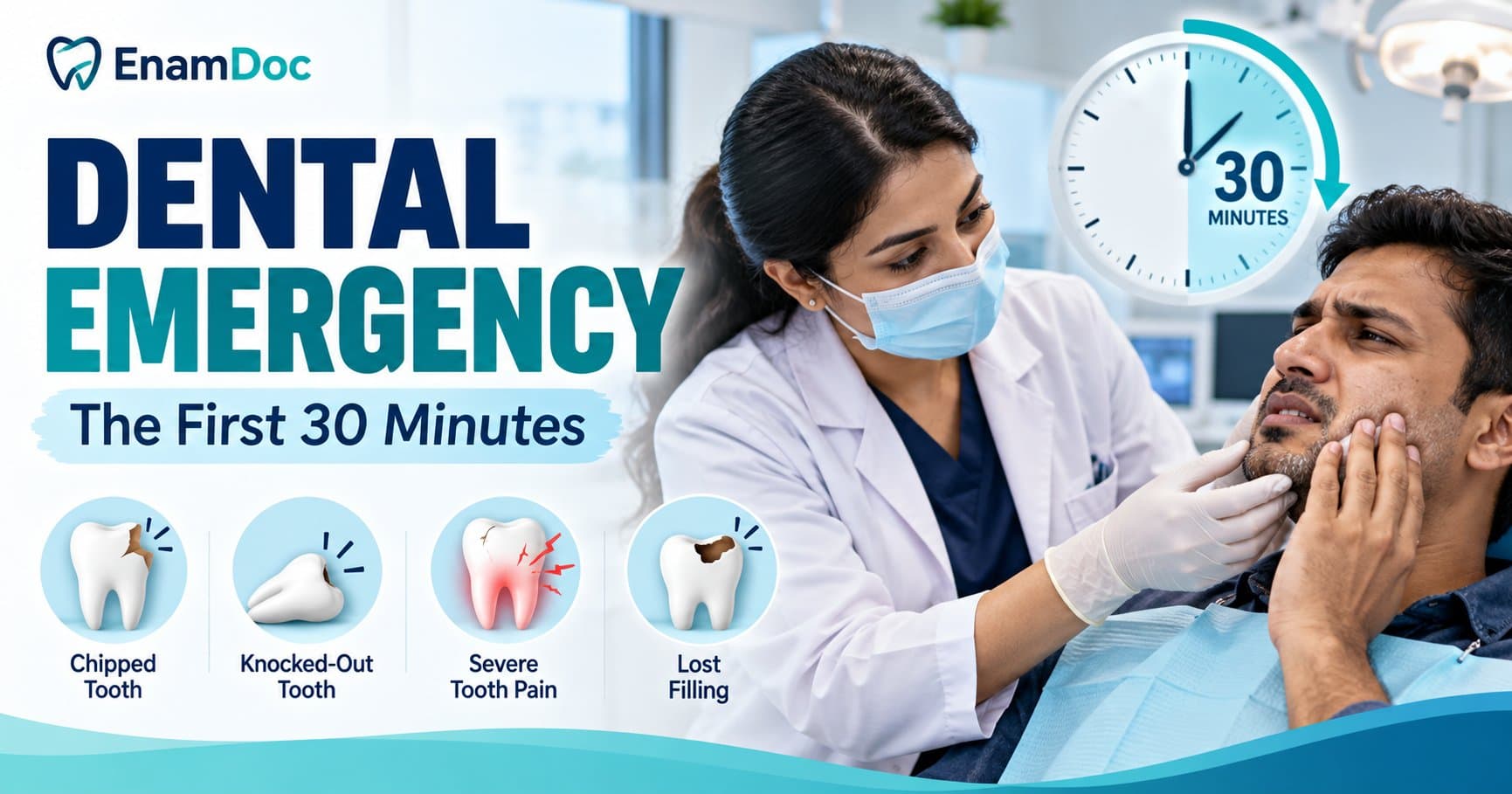
A dental emergency can happen at any time — biting down on something hard, a fall on the playground, sudden severe pain in the middle of the night. What you do in the first 30 minutes often determines whether a tooth can be saved, how much pain you're in, and how serious the damage turns out to be.
This guide covers the most common dental emergencies and exactly what to do before you reach a dentist.
What Counts as a Dental Emergency?
Not every dental problem is an emergency, but these situations are:
- A tooth that has been completely knocked out
- A tooth that is cracked or broken and causing severe pain
- Severe, throbbing toothache that won't subside
- A dental abscess (swelling near a tooth or gum)
- Lost or broken crown or filling causing pain or sharp edges
- Bleeding from the mouth that won't stop
- A broken jaw or facial swelling that is spreading
If you're unsure, call a dentist. Most dental clinics have an emergency line, and a quick description of symptoms is usually enough to tell you whether to come in immediately or schedule an urgent appointment.
Knocked-Out Tooth (Avulsion)
This is the most time-sensitive dental emergency. A knocked-out adult tooth can sometimes be reimplanted if you act within 30–60 minutes.
What to Do
- Pick the tooth up by the crown (the white part) — never by the root.
- If the tooth is dirty, rinse it gently with milk or clean water. Do not scrub or use soap.
- Try to reinsert the tooth into its socket. Bite gently on a clean cloth to hold it in place.
- If you can't reinsert it, store the tooth in milk. Avoid water or dry storage — the root cells die quickly without moisture.
- Get to a dentist within 30 minutes.
Important: This only applies to adult (permanent) teeth. Do not try to reinsert a baby tooth — it can damage the permanent tooth developing underneath.
Severe Toothache
Severe, throbbing pain usually indicates infection, an exposed nerve, or deep decay. It can become very serious if untreated.
What to Do
- Take an over-the-counter painkiller like ibuprofen (follow dosage instructions). Do not place aspirin directly on the gum — it can cause chemical burns.
- Rinse with warm salt water.
- Apply a cold compress to the outside of the cheek to reduce swelling.
- Do not apply heat — it can increase swelling and make infection worse.
- Call your dentist as soon as the clinic opens. If you have swelling spreading to your jaw or neck, go to a hospital emergency department — this can indicate a spreading infection that requires immediate medical treatment.
Cracked or Broken Tooth
Whether caused by trauma, biting something hard, or an old weakened filling giving way — a cracked tooth needs attention.
What to Do
- Rinse your mouth with warm water.
- Apply a cold compress if there is swelling.
- Cover any sharp edges with dental wax or a piece of sugarless gum to protect your tongue and cheek.
- See a dentist within 24 hours — cracks can deepen with normal chewing and may eventually affect the nerve.
If the break is minor and not causing pain, it's not a same-day emergency, but don't delay more than a day or two.
Lost Filling or Crown
Losing a filling or crown exposes the underlying tooth, which can be sensitive to temperature and pressure.
What to Do
- Rinse with warm water.
- If a crown has come off, try to keep it — your dentist may be able to re-cement it.
- Temporary dental cement (available at pharmacies) can cover the exposed area and provide relief until you see a dentist.
- Avoid eating on that side.
- See your dentist within 1–3 days — don't leave a lost filling for weeks as it risks decay or a cracked tooth.
Dental Abscess
An abscess is a pocket of pus caused by bacterial infection. It usually looks like a swollen, pimple-like bump on the gum near a tooth, and may cause throbbing pain, fever, or swollen lymph nodes.
What to Do
- Do not attempt to pop or drain it yourself.
- Rinse with warm salt water — this can help draw out some of the infection and provide temporary relief.
- Take ibuprofen for pain and fever.
- See a dentist urgently. A spreading abscess can become life-threatening if infection travels to the jaw, neck, or airway. If you develop difficulty swallowing, trouble opening your mouth, or significant facial swelling, go to a hospital emergency department immediately.
Soft Tissue Injuries (Cuts to Lips, Tongue, or Gums)
Bites to the tongue or cheek, cuts from sharp objects, or trauma to the lips and gums can bleed significantly.
What to Do
- Clean the wound gently with water.
- Apply pressure with a clean cloth or gauze for 10–15 minutes.
- Apply a cold compress to reduce swelling.
- If bleeding doesn't stop after 15–20 minutes of continuous pressure, go to a hospital emergency department.
What to Have in a Dental Emergency Kit
A basic dental emergency kit at home can make a real difference. Consider keeping:
- Temporary dental cement or dental wax (available over the counter)
- Ibuprofen (check expiry date)
- Gauze pads
- A small container with a tight lid (for storing a knocked-out tooth in milk)
- Your dentist's emergency contact number
Finding Emergency Dental Care in India
The biggest challenge during a dental emergency is finding a clinic that will see you quickly. EnamDoc lets you search for dental clinics by city and check real patient reviews, so you're not calling around blindly when you're in pain. You can see which clinics are open, check their specialisations, and book urgently — all in one place.
The Most Important Rule
In any dental emergency: call your dentist first. Even after hours, many clinics have an emergency line or answering service. The few minutes it takes to call can save a tooth — and sometimes, a lot more than that.
Frequently asked
Frequently asked questions
What should I do if my tooth gets knocked out?
Pick the tooth up by the crown (the white part), never the root. Rinse it gently with clean water — do not scrub or use soap. Try to reinsert it into the socket and bite gently on a cloth to hold it in place. If you cannot reinsert it, store the tooth in a small cup of milk or your own saliva. Get to a dentist within 30 minutes — the sooner you arrive, the higher the chance the tooth can be saved.
Is a toothache a dental emergency?
Not every toothache is a dental emergency, but some are. Mild, intermittent pain can often wait a day or two for a regular appointment. However, you should seek urgent care if the pain is severe and throbbing, if there is visible swelling in the face or jaw, if you have a fever, or if you notice a pimple-like bump on the gum (a sign of abscess). These symptoms suggest infection, which can spread quickly and become dangerous if left untreated.
Can I use painkillers to manage a dental emergency at home?
Over-the-counter painkillers like ibuprofen (400–600 mg) can help reduce both pain and inflammation temporarily. Paracetamol is a safe alternative if you cannot take ibuprofen. Never place aspirin directly on the gum or tooth — it can cause a chemical burn. Clove oil applied with a cotton ball can also numb the area briefly. These are stopgap measures only. Painkillers do not treat the underlying problem, so you still need to see a dentist as soon as possible.
- dental emergency
- broken tooth
- knocked out tooth
- dental pain
Keep reading