Digital Dental Records vs Paper Files: Why Indian Clinics Are Finally Making the Switch
Clinics across India are abandoning paper files — and it's not just about convenience. Here's what the data says about patient outcomes, efficiency, and compliance.
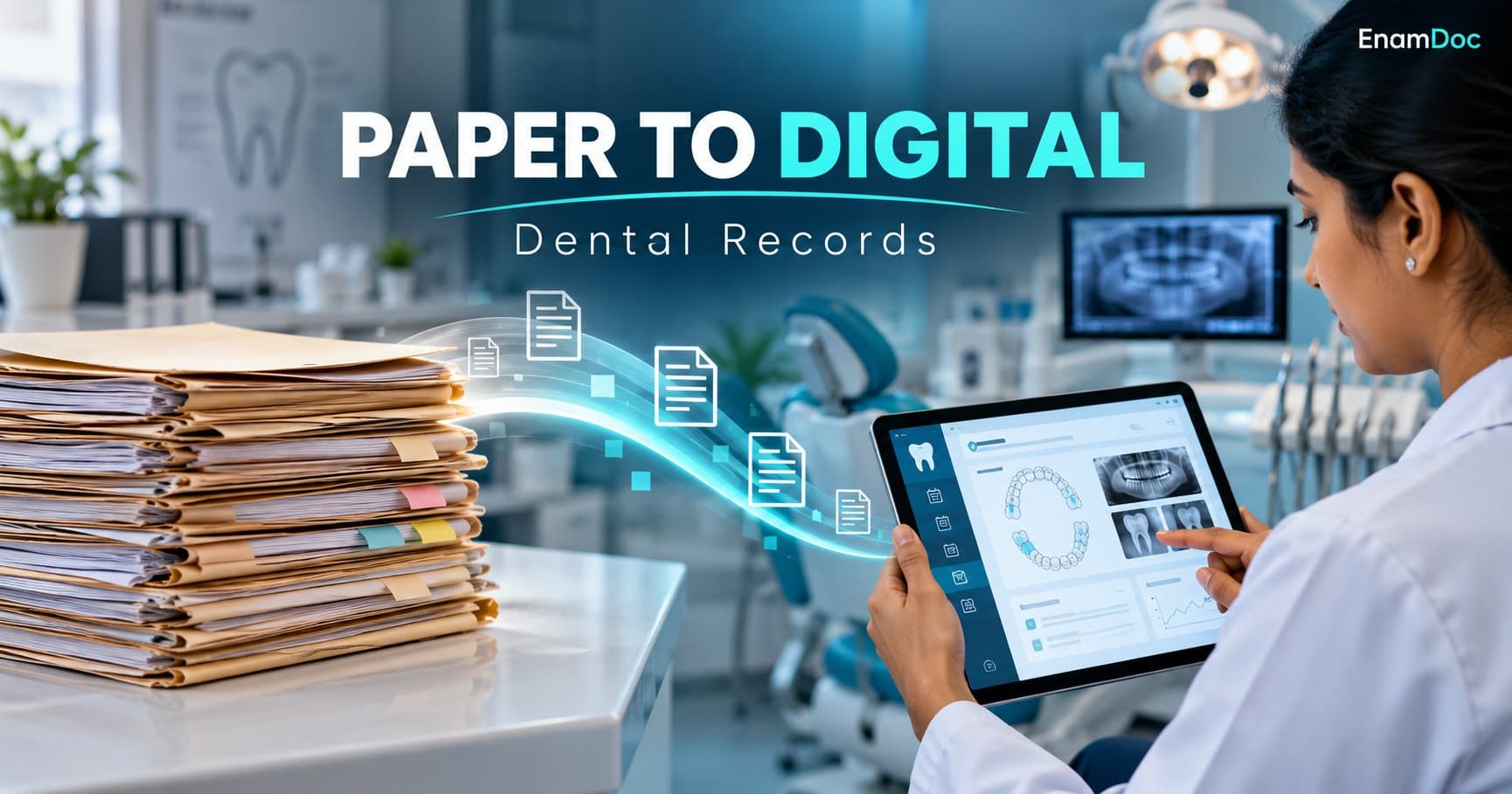
If you've been running a dental clinic for more than five years, the scene is probably familiar: a patient walks in after 18 months asking you to "pull up their old records," and somewhere behind the front desk, there's a paper file hunt happening that takes 15 minutes you didn't plan for.
The shift to digital dental records in India isn't happening because dentists love technology. It's happening because paper is genuinely getting in the way of better patient care — and patients are starting to notice.
The Real Problems With Paper Records
Lost and Inaccessible Information
Physical files can be misfiled, damaged, or simply gone. X-rays printed on film fade. If a patient visits from another city or moves clinics, there's no easy way to transfer records.
No Alerts, No Follow-Ups
A paper file doesn't remind you that a patient was due for a recall 6 months ago. It doesn't flag a patient who mentioned a penicillin allergy 3 years ago. Everything depends on staff memory or manual checking.
Storage and Space
For a clinic that's been running for 10+ years, the storage footprint is considerable. Filing cabinets, shelf space, and regular organization become ongoing administrative costs.
Handwriting and Legibility
Clinical notes written in a rush are sometimes difficult to read later — by the same dentist who wrote them, let alone a locum or a colleague.
What Digital Records Actually Fix
Instant Search and Access
A patient's complete history — notes, X-rays, prescriptions, treatment plans, consent forms — is accessible in seconds by name, phone number, or date. No hunting.
Allergy and Medical History Flags
Good dental software surfaces medical alerts prominently. The system can flag that a patient is on blood thinners before you start a surgical procedure.
Automated Recall Reminders
Patients who are due for a cleaning or a follow-up receive automated reminders via SMS or app notification, without your front desk needing to manually contact every one.
X-Ray Integration
Digital radiographs (RVG systems) integrate directly with records. The image is stored against the patient's file automatically, dated and timestamped.
Multiple Users, No Bottleneck
In a clinic with two or three dentists, digital records mean multiple team members can access patient information simultaneously without physically passing files around.
What to Look for in a Dental Practice Management System
Not all software is designed for Indian dental practices. Look for:
- Offline capability: India's internet reliability varies. A system that works offline (and syncs when connected) is essential for clinics outside major cities.
- Cloud backup: Your data should not live only on one computer.
- Indian regulatory compatibility: Records should support the typical formats Indian patients and insurers expect.
- Ease of use for staff: A system the front desk finds complicated will be abandoned.
- Patient communication tools: SMS reminders, digital invoices, WhatsApp integration.
- Reasonable cost: Many international systems are priced for Western clinics. Indian-made options tend to be much more affordable.
EnamDoc's Approach
EnamDoc was designed specifically for Indian dental practices — from single-dentist clinics to multi-chair setups. It handles digital patient records, appointment management, billing, follow-up reminders, and dentist-patient communication, including a system for dental students working in academic clinics.
The transition from paper to digital doesn't have to be overnight. Many clinics start by digitizing new patients while keeping existing paper records for reference, completing the migration over 6–12 months.
The Cost Question
The concern about software cost is real. But consider the calculation: staff time spent searching for paper files, missed follow-ups that don't return, errors from inaccessible allergy information, and the physical cost of storage — these aren't free. For most moderately busy clinics, a well-chosen digital system pays for itself within the first year.
Frequently asked
Frequently asked questions
Is it legally required to maintain digital records in Indian dental clinics?
As of 2025, there is no uniform mandate for digital records across all Indian states, but the Digital Information Security in Healthcare Act (DISHA) framework strongly encourages it. Many dental councils and hospital accreditation bodies are moving toward digital-first documentation standards.
How do patients benefit from digital dental records?
Patients benefit in several ways: faster appointment check-ins, no need to re-explain their history at every visit, access to their own X-rays and treatment plans, easier second opinion seeking, and continuity of care if they switch clinics.
Are digital dental records secure from data breaches?
No system is breach-proof, but well-designed dental record platforms use encryption, role-based access, and audit logs that are significantly more secure than paper files, which can be lost, damaged, or accessed without any record of who viewed them.
- digital dental records
- dental clinic management
- paperless clinic
- EnamDoc
Keep reading