Digital Dentistry 101: What BDS Students Should Know Before Graduating
Clinics are moving to scanners and same-day crowns faster than dental colleges are teaching it. Here's the baseline every new graduate should already know.
Medically reviewed by Dr. Ashay Jain, BDS
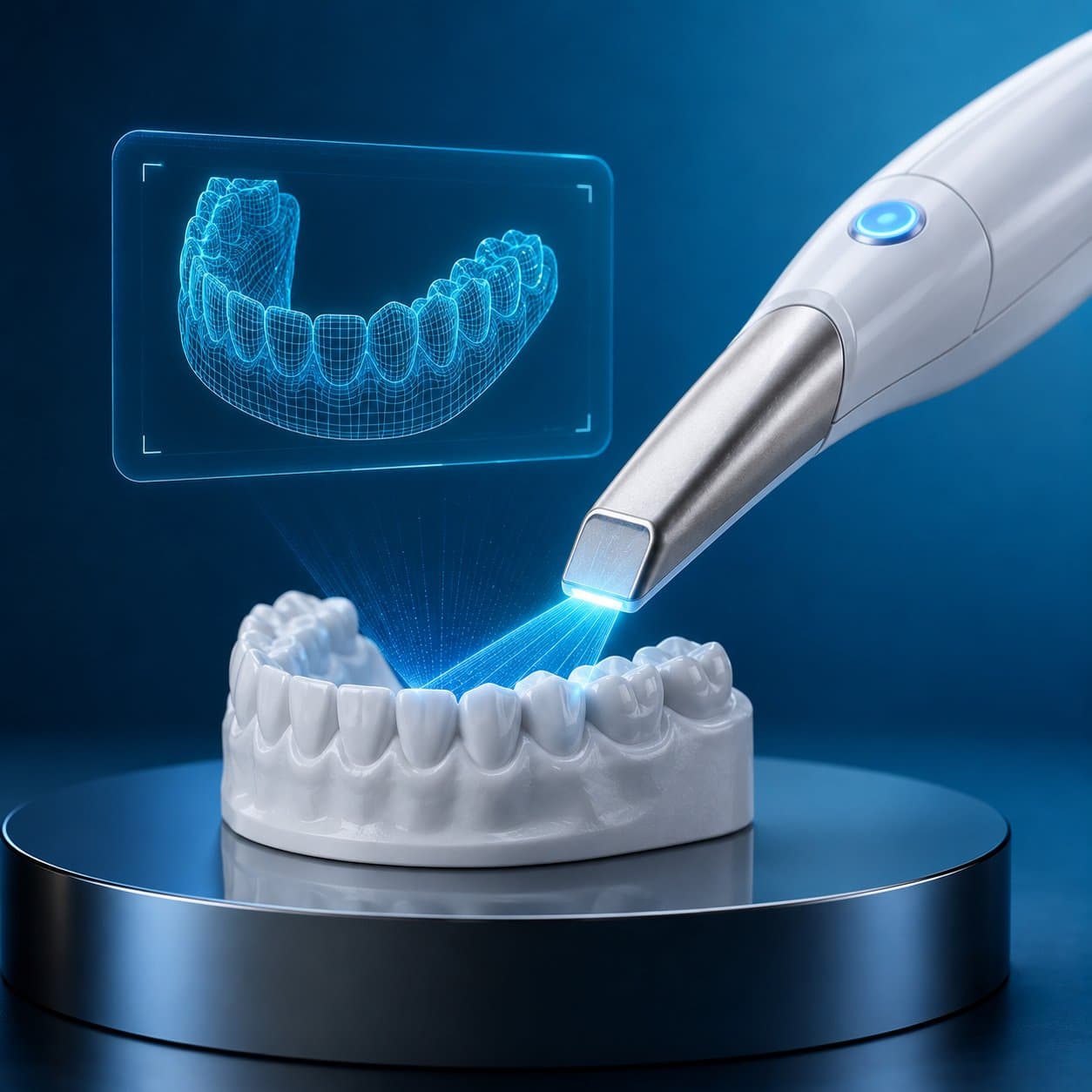
Ask a BDS student to take a conventional alginate impression and most can do it with their eyes closed by internship. Ask the same student to explain how an intraoral scanner workflow fits into a same-day crown, and the answer is usually a shrug. Clinics are adopting the technology faster than the curriculum is catching up, and that gap shows up fastest in the first year of practice.
What intraoral scanners actually replace
An intraoral scanner captures a digital model of the teeth directly, replacing the alginate or PVS impression and the physical cast that follows it. For the patient, that means no tray, no gag reflex, no waiting for material to set. For the dentist, it means an immediate digital model that can be reviewed, magnified, and sent straight to a lab or milling unit — no shipping a physical impression that can distort or arrive damaged.
CAD/CAM and same-day crowns, in plain terms
CAD/CAM stands for computer-aided design and computer-aided manufacturing. Once a tooth is scanned, software designs the restoration on screen, and a milling unit carves it from a ceramic block — all of it possible chairside, in the same appointment, for crowns, inlays and veneers that would otherwise need a lab and a second visit. Some clinics still send scans to an external lab rather than milling in-house; the scanning step is the same either way, only the manufacturing location changes.
What you don't need to master yet, and what you do
Nobody expects a new graduate to own a scanner or know a specific software's interface — brands and systems vary by clinic, and that's trained on the job. What actually matters going in is understanding the workflow logic: why margins still need to be as clean as they would for a conventional impression, why moisture and haemostasis control matter just as much to a scanner as to alginate, and why a bad scan fails for the same underlying reasons a bad impression does. The preparation principles you're already learning don't change — only the capture method does.
How to get exposure to this during BDS or internship
Ask to shadow chairside during any digital case at a clinic with the equipment — most dentists are glad to show a student a scanner in use since it takes minutes to demonstrate. Manufacturer demo videos on YouTube cover scanning technique in more depth than most lecture time allows. None of this requires a paid course before graduating; it requires knowing the vocabulary and workflow well enough to not be starting from zero on day one of a job that already has the equipment.
The gap between what's taught and what clinics use isn't going to close from the curriculum side quickly. Closing it yourself, in whatever exposure you can get during BDS, is the part actually inside your control.
Frequently asked
Frequently asked questions
Do BDS colleges in India teach digital dentistry?
Coverage is inconsistent across colleges. Most curricula still emphasise conventional impressions and lab workflows, though some colleges have started introducing digital scanning and CAD/CAM exposure in later years.
Will digital scanners replace conventional impressions completely?
Adoption is trending that direction in urban clinics, but conventional impression technique is still relevant, especially in general and rural practice where scanners aren't yet standard. Both are worth being competent at.
Is it necessary to learn CAD/CAM software before graduating?
No. Specific software varies by clinic and is learned on the job. What actually helps a new graduate is understanding the workflow logic and why preparation principles carry over from conventional to digital impressions.
- digital dentistry
- BDS
- students
- technology
Keep reading