Fluoride Treatment for Adults: Do You Still Need It After Childhood?
Most adults think fluoride is just for children. Dr. Aditya Swami explains why professional fluoride treatment remains one of the most effective and underused tools for preventing adult tooth decay.
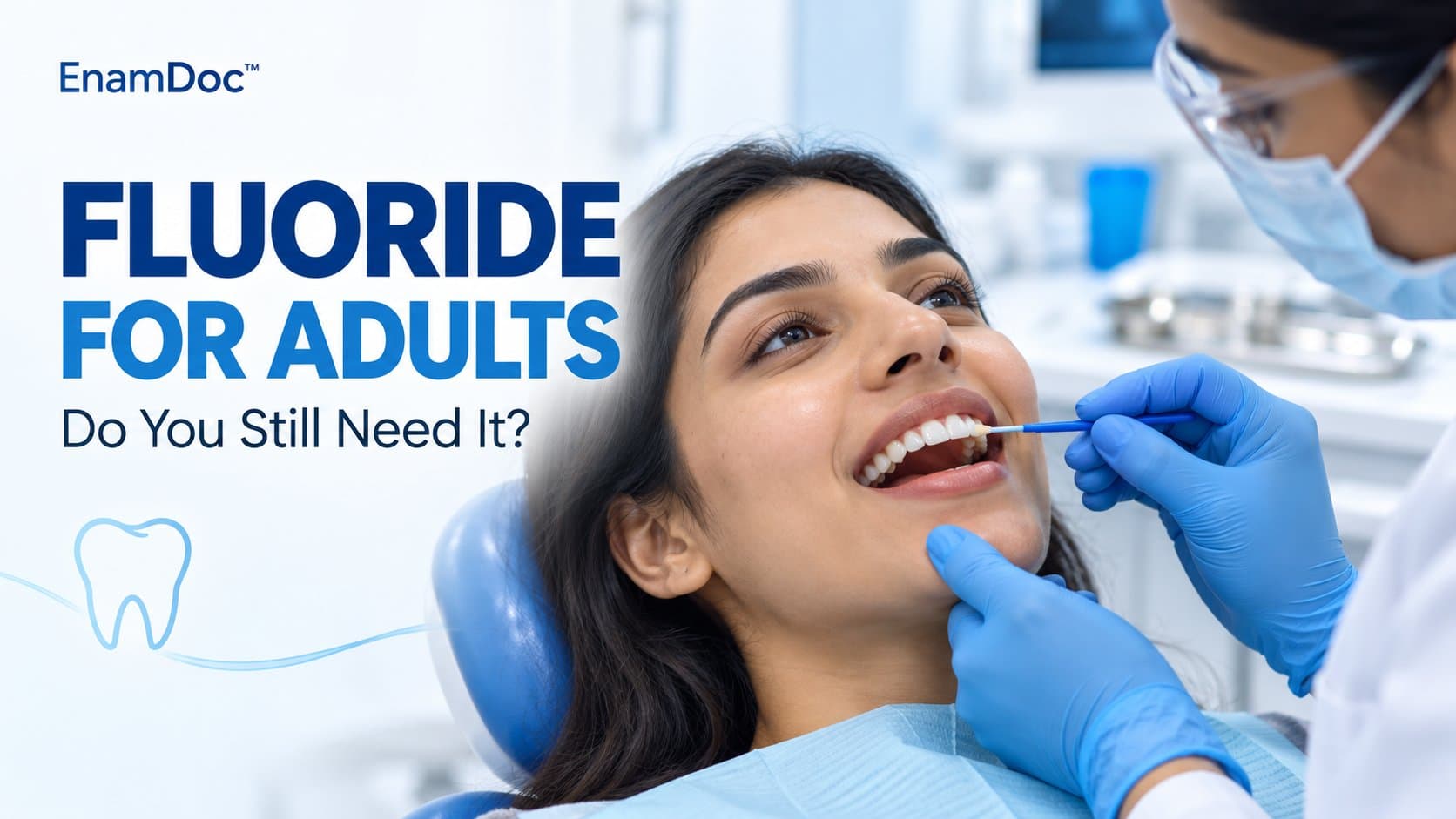
Walk into any dental clinic with children, and you will see fluoride varnish being applied as part of a routine check-up. Walk in as an adult, and the subject rarely comes up. This gap is not based on science — it is based on a common misconception that fluoride is primarily a childhood intervention.
In reality, adult teeth are just as vulnerable to decay as children's teeth, and professional fluoride treatment is one of the most cost-effective tools in preventive dentistry for patients of all ages. Here is what you need to know.
What Is Fluoride and How Does It Protect Teeth?
Fluoride is a naturally occurring mineral. When it is absorbed into tooth enamel — the hard outer layer of the tooth — it incorporates into the crystal structure of hydroxyapatite, converting it into fluorapatite. Fluorapatite is significantly more resistant to acid attack than the original enamel. Every time bacteria in your mouth metabolise sugar and produce acid, your enamel loses some mineral (demineralisation). Fluoride helps reverse this process (remineralisation) and makes the repaired enamel more acid-resistant than before.
This mechanism works at any age. The teeth that benefit are your teeth, not just your childhood teeth.
Why Adults Are Not Immune to Cavity Risk
Several factors make adult tooth decay more likely than most people expect:
- Root surface exposure: As gums recede with age — whether from gum disease, aggressive brushing, or normal ageing — the root surfaces of teeth become exposed. Unlike enamel, root surfaces are covered in cementum, a much softer material that is far more susceptible to acid damage. Root caries (decay on the root surface) is common in adults over 40 and very difficult to restore once established.
- Dry mouth from medications: More than 500 medications cause reduced saliva flow. Adults are more likely to take long-term medications than children. Without adequate saliva to neutralise acids and wash away bacteria, decay risk increases dramatically. This is one of the top reasons dentists recommend fluoride for adult patients on certain medications.
- Dietary habits: Frequent snacking, coffee, tea, alcohol, and carbonated drinks all expose teeth to acids or sugars throughout the day. The cumulative acid exposure over decades wears down enamel and creates conditions for decay.
- Existing restorations: Teeth with fillings, crowns, or other restorations have margins — the edges where the restoration meets the natural tooth — that are vulnerable to recurrent decay. Fluoride can reduce this risk.
- Gum disease treatment: Scaling and root planing, a common treatment for periodontitis, can temporarily increase the sensitivity and porosity of root surfaces. Fluoride applications after periodontal treatment are standard practice in many clinics.
Types of Professional Fluoride Available
Your dentist or hygienist can apply fluoride in several forms, each with different strengths and applications:
- Fluoride varnish — a concentrated fluoride resin (usually sodium fluoride 5%) painted directly onto the teeth. It sets quickly, sticks to the teeth for several hours, and releases fluoride gradually. This is the most commonly used form in India and is safe, quick, and effective. Applied every three to six months depending on your risk level.
- Fluoride gel — a high-concentration acidulated phosphate fluoride (APF) or neutral sodium fluoride gel applied using custom trays. More commonly used in patients with high decay risk, such as those undergoing radiotherapy.
- Fluoride foam — similar to gel but applied in a disposable tray. Less commonly available in India.
- Silver diamine fluoride (SDF) — a liquid that simultaneously arrests active decay and deposits fluoride into the tooth structure. It causes the treated area to turn black, but it is effective for arresting cavities without drilling. Used for high-risk patients, older adults, and individuals with dental anxiety.
At-Home Fluoride for Adults
Alongside professional treatment, your dentist may recommend prescription-strength fluoride toothpaste or gels for home use. In India, standard over-the-counter toothpastes contain 1,000–1,450 ppm fluoride. Prescription fluoride toothpastes deliver 5,000 ppm — significantly higher concentrations suitable for high-risk adults.
Common prescription formulations include:
- 5,000 ppm sodium fluoride toothpaste (Prevident, Colgate Duraphat or equivalent) — used once daily in place of regular toothpaste, or as a bedtime gel applied after brushing
- 0.05% sodium fluoride rinse — a lower-concentration rinse for daily use in moderate-risk patients
Note: Prescription fluoride is not the same as swallowing fluoride supplements. These products are applied topically and spit out. Systemic fluoride supplementation is not recommended for adults with access to fluoridated water or fluoride toothpaste.
Who Benefits Most From Fluoride Treatment in Adulthood?
Professional fluoride is particularly valuable for adults who have:
- A history of frequent or recurrent cavities
- Dry mouth caused by medications, Sjogren's syndrome, or radiotherapy to the head and neck
- Exposed root surfaces from gum recession
- Active periodontal disease or a history of periodontal treatment
- Orthodontic appliances (braces increase plaque retention and decay risk)
- Tooth sensitivity due to enamel erosion
- A diet high in acidic foods, sugar, or frequent snacking
Patients with low cavity risk and good oral hygiene still benefit from professional fluoride, though the frequency may be lower — once a year rather than every three months.
Is Fluoride Safe for Adults?
Yes, when used appropriately. Fluorosis — the visible mottling associated with excess fluoride exposure — occurs only during tooth development, which is complete by early adolescence. Adults cannot develop fluorosis. Professional topical fluoride does not pose any risk of systemic toxicity when applied by a trained clinician.
Swallowing large quantities of fluoride gel could cause nausea, but this is why patients are asked to sit upright and spit during treatment. The varnish formulation used most commonly in India releases fluoride gradually and is extremely safe even if a small amount is swallowed.
The Fluoride Conversation You Should Be Having With Your Dentist
At your next appointment, ask your dentist to assess your personal fluoride needs. The answer will depend on your cavity history, medications, gum health, diet, and home oral hygiene routine. A personalised fluoride protocol — combining the right professional application frequency with appropriate home-use products — is one of the simplest and most evidence-backed ways to protect your teeth through adulthood and into older age.
Fluoride is not just for children. Your teeth deserve it at every stage of life.
Frequently asked
Frequently asked questions
Do adults really need professional fluoride treatment, or is fluoride toothpaste enough?
For most adults with low to moderate cavity risk, a fluoride toothpaste (1,000–1,450 ppm) used twice daily provides meaningful protection. However, professional fluoride varnish or gel delivers a much higher concentration in a single application and is particularly beneficial for adults at higher risk — those with a history of frequent cavities, exposed root surfaces from gum recession, dry mouth caused by medications, or active periodontal disease. Your dentist will assess your risk level and recommend the right combination of home and in-office fluoride for your specific situation.
What is root caries and why are adults more vulnerable to it than children?
Root caries is tooth decay that occurs on the root surface of a tooth rather than the enamel crown. Unlike enamel, which is very hard and mineral-dense, the root surface is covered in cementum — a much softer tissue that is highly vulnerable to acid attack. Root surfaces only become exposed when gums recede, which is far more common in adults over 40 than in children. Fluoride is particularly effective at protecting exposed root surfaces, which is why professional fluoride treatment becomes more important as we age, not less.
How often should adults receive professional fluoride treatment?
The frequency depends on your individual cavity risk. Adults at low risk may benefit from a fluoride varnish application once a year, typically timed with their routine check-up and scale and polish. Those at moderate risk — with mild gum recession, some previous cavities, or early signs of erosion — typically benefit from treatment every six months. High-risk adults, including those on medications that cause dry mouth, patients undergoing cancer radiotherapy involving the head and neck, or those with active root decay, may need fluoride applied every three months. Discuss your specific situation with your dentist to determine the right schedule for you.
- fluoridetreatmentadultsadultfluoridevarnishfluorideforteethcavitypreventionadultsdentalfluorideIndia
Keep reading