Sports Mouthguards: Do Athletes and Active Kids Really Need One?
Thinking about a sports mouthguard for yourself or your child? Learn which sports carry the highest dental injury risk, what a custom mouthguard protects against, and why dentist-made guards are worth the cost.
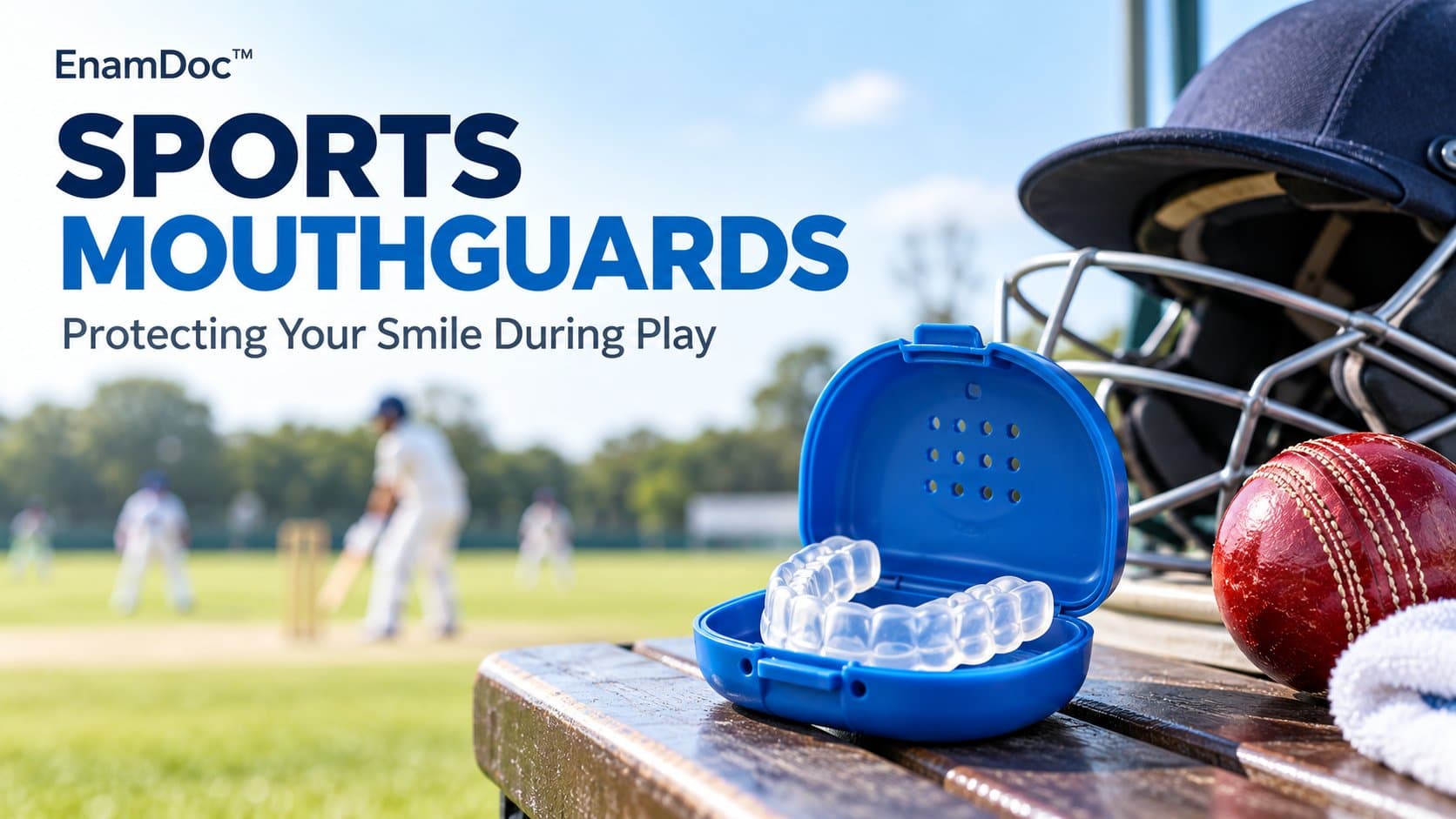
Every year, dental injuries account for a significant proportion of sports-related injuries in children and adults. A knocked-out tooth, a fractured crown, a cut lip from a broken tooth — these injuries are not only painful and distressing but also expensive to treat. Yet in many cases, they are entirely preventable with a simple piece of protective equipment: a sports mouthguard.
Despite this, mouthguard use in recreational sports — particularly in India — remains low. Many parents are unsure whether their child really needs one. Many adult athletes view them as uncomfortable or unnecessary. This article covers who actually needs a sports mouthguard, what the research says, and why a custom-fitted guard from a dentist makes a meaningful difference.
Which Sports Carry the Highest Dental Injury Risk?
Not all sports carry equal dental risk. The highest-risk activities are those involving contact with opponents, equipment, or hard surfaces:
- High contact risk: Cricket (facing fast bowling), football, hockey, martial arts (boxing, MMA, karate), rugby, basketball, volleyball, and water polo.
- Moderate risk: Gymnastics, skateboarding, cycling, and any sport involving falls or impact with the ground.
- Lower risk (but still relevant): Swimming, tennis, and badminton — where equipment contact or falls can occasionally cause facial injuries.
Cricket deserves special mention for Indian families. A cricket ball travelling at pace can cause severe dental trauma, jaw fractures, and soft tissue injuries. Batting and fielding positions close to the wicket carry the highest risk.
What Does a Sports Mouthguard Actually Protect Against?
A sports mouthguard is worn over the upper teeth (and sometimes both arches) to absorb and redistribute the force of an impact. It provides protection against:
- Tooth fractures and avulsion (tooth knockouts) — the most common dental sports injuries.
- Cuts and lacerations to lips, cheeks, and tongue caused by contact with sharp tooth edges during impact.
- Jaw fractures — by cushioning the mandible during direct blows.
- Concussion — there is evidence that mouthguards may reduce the risk of concussion by absorbing impact energy transmitted to the skull.
The Difference Between Custom and Over-the-Counter Mouthguards
Sports mouthguards come in three main types:
Stock (ready-made) mouthguards
Pre-formed and sold in sports shops, these are the cheapest option but offer the poorest protection. They cannot be adjusted for fit, are bulky, restrict breathing, and often fall out during play — prompting athletes to remove them altogether.
Boil-and-bite mouthguards
Thermoplastic guards that are softened in boiling water, then bitten into shape. Better than stock guards but still limited in their fit, thickness uniformity, and retention. These are a reasonable temporary or occasional-use option.
Custom-fitted mouthguards from a dentist
Made from a dental impression of your own teeth, these guards are precisely fitted to your arch, have consistent thickness across critical impact zones, are comfortable to wear and breathe in, and provide superior protection. Research consistently shows that custom-fitted guards are significantly more effective at preventing injuries than over-the-counter alternatives.
For children whose teeth are still developing, periodic replacement is recommended as the mouth changes — typically every one to two sporting seasons.
At What Age Should Children Start Wearing a Mouthguard?
Children can begin wearing custom mouthguards as soon as they start participating in contact or collision sports — typically from age 6–7 when primary (baby) teeth are being replaced by permanent teeth. The period of mixed dentition (when both primary and permanent teeth are present simultaneously) is particularly important to protect, as injury to a permanent tooth at this age can have lifelong consequences.
Even children in recreational sports leagues rather than competitive play benefit from mouthguard use, since injury risk is present regardless of skill level or competition format.
Mouthguards After Dental Work
If you or your child has had recent dental treatment — braces, dental implants, crowns, or veneers — a standard over-the-counter mouthguard may not fit well or may damage existing work. A custom mouthguard from a dentist can be made to accommodate orthodontic appliances and fit over restorations without compromising protection.
If you play sports regularly and want a sports mouthguard that fits properly, EnamDoc can help you find a dentist near you who provides custom sports mouthguard fabrication.
Frequently asked
Frequently asked questions
At what age should children start wearing a sports mouthguard?
Children can start wearing custom sports mouthguards as soon as they begin participating in contact or collision sports — typically from age 6 or 7, when permanent teeth start coming through. The period when both primary and permanent teeth are present (mixed dentition) is especially important to protect, since injury to a permanent tooth at this age can have lifelong consequences. Even children in recreational leagues benefit from wearing a mouthguard.
What is the difference between a custom mouthguard and a boil-and-bite guard?
A custom mouthguard is made from a dental impression of your own teeth, giving it a precise fit, uniform thickness across impact zones, and better retention during play. Boil-and-bite guards are thermoplastic guards softened in hot water and bitten into shape — they fit better than stock guards but are still limited in accuracy and protection. Research consistently shows that custom-fitted guards from a dentist provide significantly better protection against dental injury than over-the-counter options.
- sports mouthguard
- dental injury
- mouth protection
- children dental care
- athletes
Keep reading