TMJ Pain: Causes, Symptoms, and When to See a Dentist
Clicking jaws, facial pain, and morning headaches often point to the temporomandibular joint. Here is what TMJ disorder actually means, why it happens, and how dentists treat it.
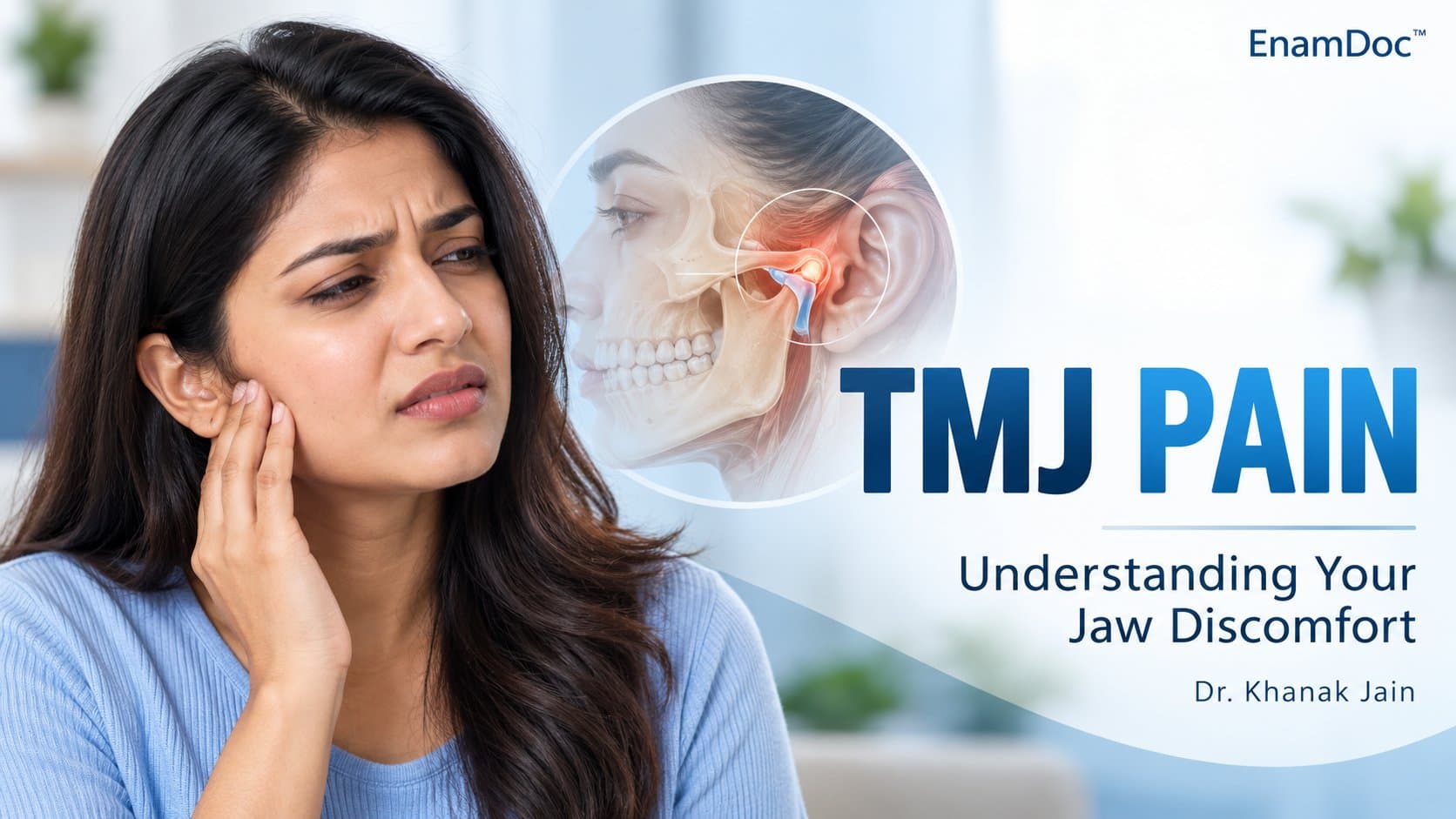
You bite down on a piece of bread and your jaw clicks. You wake up with a dull ache across your face. You notice your jaw feels stiff in the morning. These are among the most common signs of temporomandibular joint disorder — and most people who have it do not know what is causing it.
The temporomandibular joint (TMJ) is the hinge that connects your lower jaw to your skull, just in front of each ear. It is one of the most complex joints in the body because it allows both a hinge movement and a sliding movement. When something goes wrong with this joint or the muscles around it, you get a group of conditions dentists call TMJ disorder (TMD).
What Is TMJ Disorder?
TMJ disorder is not a single condition — it is an umbrella term for pain or dysfunction affecting the jaw joint and the muscles that control jaw movement. There are three main subtypes: pain originating from the joint itself, structural problems like disc displacement or degenerative joint disease, and pain in the muscles used for chewing (the masseter and temporalis). Many patients have features from more than one subtype, which is part of why TMJ disorder can be difficult to pin down.
Common Causes of TMJ Pain
Teeth Grinding and Jaw Clenching (Bruxism)
This is the most common contributing factor. When you grind or clench — which most people do during sleep — you load the jaw joint and surrounding muscles with far more force than normal chewing produces. Over time, this overloads the tissues. Many people are unaware they grind their teeth until a dentist notices the wear pattern on their enamel.
Disc Displacement
Inside the TMJ is a small fibrocartilage disc that acts as a cushion between the bones. When this disc shifts out of its normal position, it often produces a clicking or popping sound when you open or close your mouth. If the disc slips far enough, it can temporarily lock the jaw — a condition called closed lock.
Osteoarthritis of the Joint
Like other joints in the body, the TMJ can develop degenerative changes over time. The cartilage that lines the joint surfaces wears down, leading to pain, a grinding sensation, and reduced range of motion. This is more common in adults over 50, though it can occur earlier.
Jaw Injury or Trauma
A blow to the jaw, a car accident, or even a prolonged dental appointment with the mouth held wide open can stress the joint and trigger TMJ symptoms. Symptoms do not always appear immediately — they can develop weeks after an injury.
Stress and Jaw Tension
Psychological stress significantly increases jaw muscle tension and the likelihood of grinding or clenching, even during waking hours. This is why TMJ pain often worsens during particularly stressful periods and may improve when stress levels drop.
Recognising the Symptoms
TMJ disorder produces a wide range of symptoms that can seem unrelated at first:
Jaw pain or tenderness — particularly when chewing, opening the mouth wide, or first thing in the morning after a night of clenching.
Clicking, popping, or grating sounds from the jaw joint when opening or closing the mouth.
Limited jaw opening — difficulty opening the mouth fully, or a jaw that deviates to one side during opening.
Headaches at the temples — often mistaken for tension headaches or migraines, because the temporalis muscle (which sits at the temple) is a common pain generator in TMJ disorder.
Ear symptoms — pain in or around the ear, a sense of fullness, or tinnitus (ringing), because of how close the TMJ is to the ear canal.
Facial pain — a dull ache across the cheeks, jawline, or around the eyes.
Neck and shoulder tension — the muscles of the jaw connect to the neck, so chronic jaw tension often spills into the neck and upper back.
How Dentists Diagnose TMJ Disorder
Diagnosis is clinical — it comes from history-taking and physical examination. Your dentist will assess the range of jaw movement, feel the jaw muscles and joint for tenderness, listen for clicks or grating, and examine the teeth for signs of grinding. Imaging is used selectively: a panoramic X-ray (OPG) shows the bony joint structures, while an MRI reveals the position of the disc and surrounding soft tissues when needed.
Treatment Options
Occlusal Splint (Mouth Guard)
A custom-made hard acrylic splint worn at night is the most commonly prescribed first treatment. It does not cure the underlying cause, but it reduces joint loading and prevents direct tooth-to-tooth contact during grinding. Most patients notice improvement within four to six weeks.
Physical Therapy
Targeted exercises stretch and strengthen the jaw muscles and improve posture. Manual therapy to the neck and jaw is helpful when muscle tension is the dominant feature. Many TMJ patients benefit enormously from a physiotherapist who specialises in orofacial pain.
Anti-inflammatories and Pain Relief
Short courses of NSAIDs (such as ibuprofen) reduce inflammation and manage acute flares. Muscle relaxants are occasionally prescribed for short-term use when jaw muscle spasm is severe.
Lifestyle Adjustments
Avoiding hard or chewy foods during a flare, applying warm compresses to the jaw, and practising awareness of jaw posture during the day (teeth slightly apart, tongue resting gently on the palate) significantly reduce the load on the joint and muscles.
Injections and Advanced Treatments
For persistent muscle pain, Botox injections into the masseter and temporalis can reduce the force those muscles generate and provide relief for several months. Arthrocentesis — flushing the joint with sterile saline — is a minimally invasive procedure that can help when the joint is stuck or inflamed. Open joint surgery is rare, reserved for cases where conservative treatments have genuinely failed and the structural problem is clearly identified.
When to See a Dentist
Many brief episodes of jaw clicking or stiffness resolve on their own. See a dentist if jaw pain has persisted for more than a few weeks, if your jaw is locking or you cannot open it fully, if headaches are becoming more frequent and seem to originate at the temples, or if you notice your teeth wearing down or chipping. A dental assessment will determine whether your symptoms fit a TMJ diagnosis and guide you toward the right treatment or specialist referral.
The majority of TMJ disorder is manageable with conservative care. Early attention consistently produces better outcomes than waiting until symptoms become severe.
Frequently asked
Frequently asked questions
Can TMJ disorder go away on its own?
Mild TMJ symptoms linked to stress or muscle overuse often improve without treatment once the trigger resolves. However, progressive symptoms — worsening pain, a jaw that locks more frequently, or signs of joint degeneration — do not resolve on their own. Early dental assessment consistently produces better outcomes than waiting until symptoms become severe.
Is a clicking jaw a sign of serious TMJ disorder?
A jaw that clicks without pain is usually not a cause for concern on its own — many people have disc displacement that is completely painless. However, if clicking is accompanied by jaw pain, limited opening, or the jaw is locking, these warrant a dental assessment to rule out progressive joint damage.
What is the difference between TMJ disorder and bruxism?
Bruxism is the habit of grinding or clenching the teeth, usually during sleep. TMJ disorder is the broader term for pain and dysfunction in the jaw joint and surrounding muscles. Bruxism is one of the most common causes of TMJ disorder, but TMJ disorder can also be caused by disc displacement, arthritis, jaw injury, and other factors.
- TMJjawpaintemporomandibularjointjawclickingjawlockingfacialpainbruxism
Keep reading