Tongue Scraper vs Toothbrush: Do You Actually Need One?
Tongue scrapers remove bad-breath bacteria more effectively than a toothbrush. Learn what the evidence shows, how to use one correctly, and who benefits most.
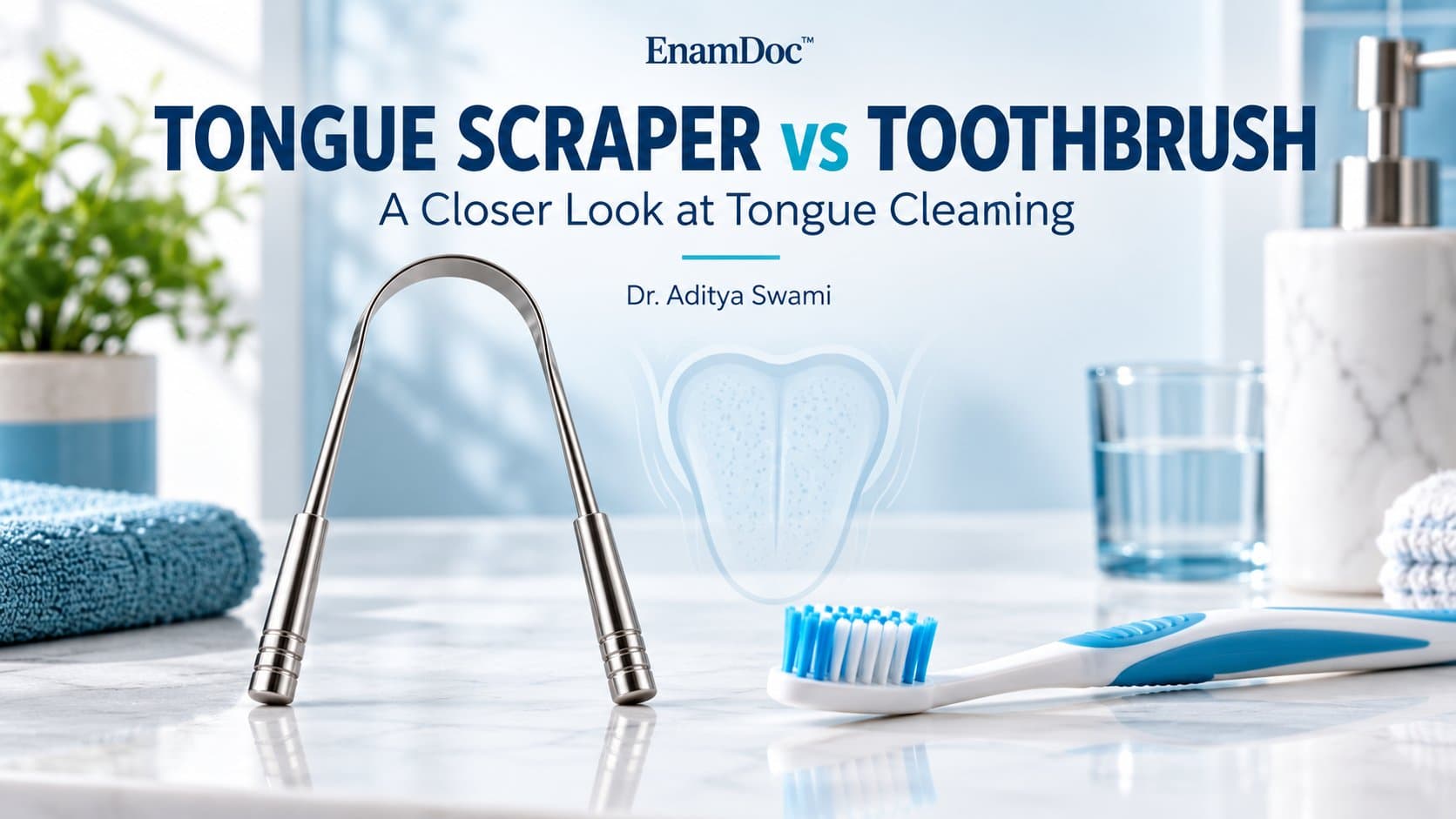
The back third of your tongue — the area furthest from the tip — harbours a dense biofilm of anaerobic bacteria. These bacteria break down proteins in your mouth and produce volatile sulphur compounds (VSCs): hydrogen sulphide and methyl mercaptan. VSCs are the primary chemical cause of bad breath. A toothbrush, by design, is not built to clean this area effectively. The question is whether a tongue scraper is.
What the Evidence Actually Shows
A 2004 Cochrane-linked review and subsequent studies found that tongue scrapers and tongue brushes both significantly reduce VSC levels and self-reported bad breath scores compared to no tongue cleaning. The key finding: scrapers outperform toothbrushes at reducing VSCs from the tongue surface. This is because scrapers physically lift and remove the biofilm rather than merely spreading it.
A 2005 randomised controlled trial published in the Journal of Periodontology found that two weeks of tongue scraping reduced VSCs by 75 percent. Toothbrush tongue cleaning reduced them by around 45 percent. Both were better than doing nothing, but the scraper was more effective.
Toothbrush vs. Tongue Scraper: What Each Does
Toothbrush on the Tongue
The bristles can dislodge some surface debris and bacteria. However, the bristle motion also spreads material laterally, and the gag reflex often prevents people from reaching the posterior tongue — where VSC production is highest. Most people who "clean their tongue with a toothbrush" are cleaning the front third only.
Tongue Scraper
A scraper — typically U-shaped and made of stainless steel or plastic — is drawn from the back of the tongue to the tip in one stroke. This physically removes the accumulated biofilm. Steel scrapers are more durable and easier to clean than plastic ones. The motion allows access to the posterior tongue with less stimulation of the gag reflex than repeated brush strokes.
Does Tongue Scraping Actually Reduce Bad Breath?
Yes, but the degree depends on the cause. If your halitosis is tongue-origin (which accounts for roughly 80–90 percent of cases), tongue scraping will produce a noticeable improvement. If the cause is periodontal disease, a dry mouth, acid reflux, or a systemic condition, tongue scraping will provide only partial relief.
One important caveat: the effect is temporary. VSCs accumulate again within hours, particularly overnight. Tongue scraping needs to be a daily habit to maintain the benefit.
How to Use a Tongue Scraper Correctly
- Hold the scraper at both ends, forming a U-shape pointing toward you.
- Extend your tongue and place the scraper as far back as you comfortably can — near the junction of the tongue and the palate.
- Apply light pressure and draw the scraper forward to the tip in one smooth stroke.
- Rinse the scraper under running water.
- Repeat 2–3 times, covering the full width of the tongue.
- Rinse your mouth with water.
Once daily — typically as part of your morning oral hygiene routine — is sufficient for most people.
Are There Any Risks?
Tongue scraping is safe when done gently. Pressing too hard or scraping too aggressively can temporarily irritate the tongue's surface (the filiform papillae). A steel scraper requires no more pressure than a card being drawn across a surface. The tongue will feel slightly uncomfortable for a day or two if you are new to it; this settles quickly.
Who Should Use One?
Tongue scraping is beneficial for most adults, particularly those with:
- Persistent bad breath despite good brushing and flossing
- A visibly coated tongue (white or yellow coating)
- A dry mouth due to medications or mouth breathing
- A high-protein diet (which increases VSC substrate)
It is a low-cost, evidence-supported addition to oral hygiene that takes under a minute. The only question worth asking is why it is not more widely recommended — and the honest answer is that it is not a billable procedure, so it rarely comes up at routine dental appointments.
Frequently asked
Frequently asked questions
Is a tongue scraper better than using a toothbrush on my tongue?
Yes. Clinical studies show that tongue scrapers reduce volatile sulphur compounds (VSCs) — the main cause of bad breath — by around 75%, compared with roughly 45% for a toothbrush. A scraper lifts and removes the biofilm; bristles tend to spread it across the tongue surface rather than extracting it.
How often should I use a tongue scraper?
Once a day is enough for most people. Morning is best because VSCs accumulate overnight as bacteria break down proteins during sleep. There is no evidence that scraping more than once daily adds additional benefit.
Can tongue scraping replace mouthwash?
No — they work differently and complement each other. Scraping physically removes the bacterial biofilm from the tongue surface. Mouthwash kills residual bacteria and can reach between teeth and along the gum line. Used together, they are more effective than either alone.
- tonguescrapertonguecleaningoralhygienebadbreathhalitosisoralbacteria
Keep reading