Tooth Abscess: Symptoms, Danger Signs, and What Treatment Involves
Spot a tooth abscess early. Learn the danger signs that need emergency care and understand treatment options — root canal, drainage, or extraction.
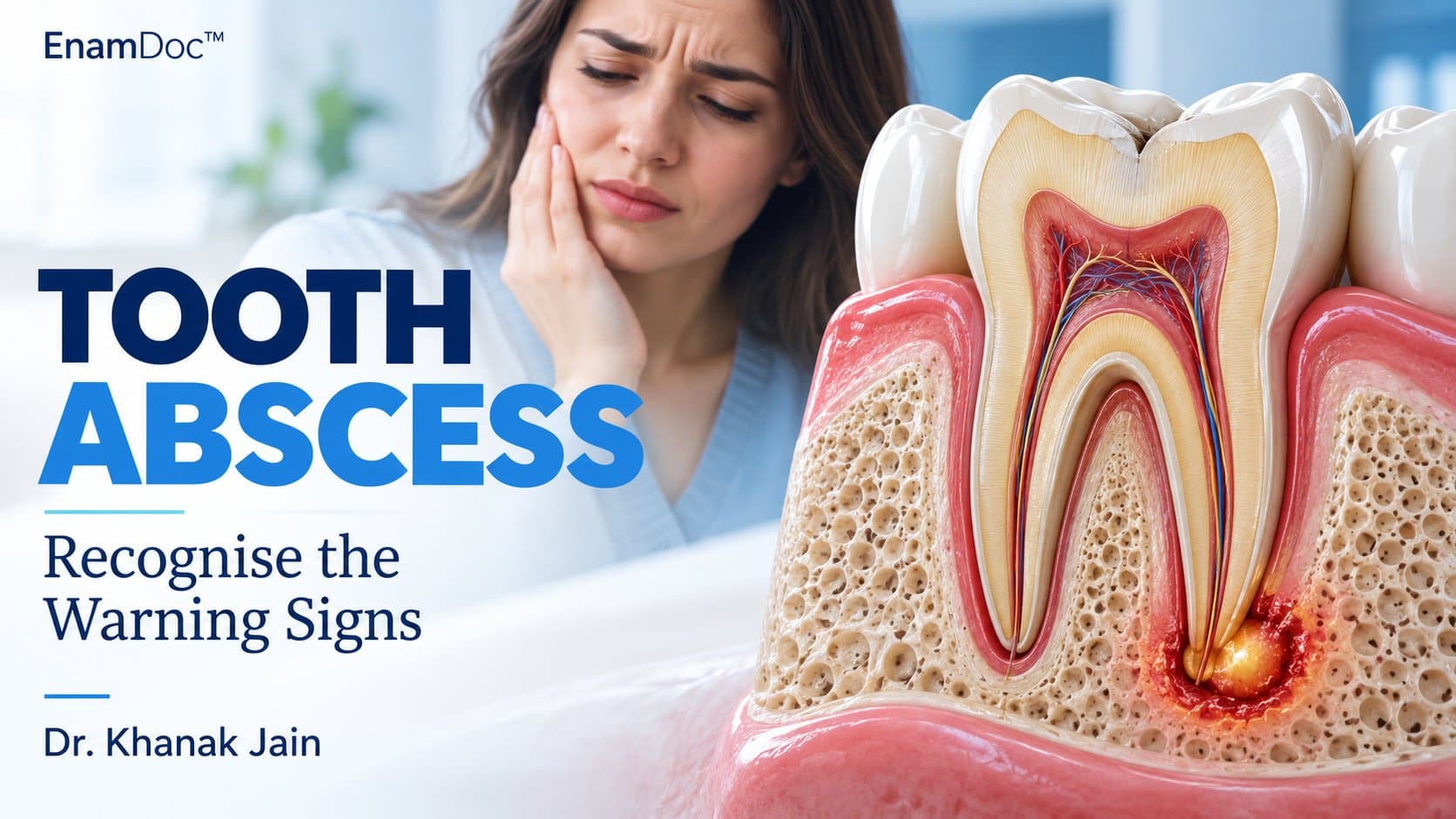
A tooth abscess is not just a bad toothache — it is an active bacterial infection with the potential to spread. Untreated dental abscesses have caused deaths in otherwise healthy adults because the infection reached the airway, the skull base, or the brain. Getting proper treatment is not optional; it is urgent.
What Is a Tooth Abscess?
An abscess is a pocket of pus that forms when bacteria invade the soft tissue inside or around a tooth. Dental abscesses fall into two main types:
- Periapical abscess: Starts inside the tooth (the pulp) and spreads to the tip of the root. Usually caused by untreated decay or a cracked tooth that allowed bacteria to reach the pulp.
- Periodontal abscess: Forms in the gum alongside a tooth, typically as a complication of gum disease. The tooth's own nerve may be healthy.
Symptoms of a Tooth Abscess
Classic symptoms include:
- Severe, throbbing toothache that may radiate to the jaw, ear, or neck
- Sensitivity to hot and cold that lingers after the stimulus is removed
- Pain when biting or chewing
- Swelling in the cheek, jaw, or face
- Tender, swollen lymph nodes under your jaw or in your neck
- Fever
- A pimple-like bump on the gum (sinus tract) that may ooze foul-tasting fluid
If the sinus tract opens spontaneously, pain may temporarily improve — but this does not mean the infection has resolved. It has simply found an exit.
Danger Signs That Need Emergency Care
Seek immediate emergency care — not just a dental appointment — if you experience any of the following:
- Difficulty swallowing or breathing
- Rapidly spreading facial swelling
- Inability to open your mouth fully (trismus)
- High fever with swelling of the floor of the mouth or neck
- Feeling acutely unwell, confused, or short of breath
These signs suggest the infection may have spread into the fascial spaces of the neck — a life-threatening condition called Ludwig's angina. This is a dental emergency and requires hospital treatment.
How Dentists Diagnose an Abscess
Diagnosis typically involves a clinical examination (tapping the tooth, probing the gum), thermal and electric pulp vitality tests, and a periapical X-ray. On an X-ray, a periapical abscess appears as a dark shadow (radiolucency) at the root tip, representing bone that has been destroyed by the infection.
Treatment Options
Root Canal Treatment
For a periapical abscess where the tooth is restorable, root canal treatment is the preferred approach. The dentist removes the infected pulp, cleans and shapes the root canals, and seals them. The abscess typically resolves as the infection is eliminated at source, and the tooth is preserved.
Incision and Drainage
If there is a visible, fluctuant swelling — a pus-filled bulge that feels soft and movable — the dentist may incise and drain it under local anaesthetic. This provides rapid pain relief and reduces the bacterial load. Drainage is combined with definitive treatment, not used as a standalone fix.
Tooth Extraction
If the tooth is non-restorable due to extensive decay, a fracture below the gum, or insufficient bone support, extraction removes the source of infection entirely. A replacement (implant, bridge, or denture) can be planned once healing is complete.
Antibiotics
Antibiotics alone do not cure a dental abscess. They reduce systemic signs such as fever and are prescribed when infection is spreading or when the patient is immunocompromised. They are always an adjunct to — never a replacement for — definitive dental treatment.
What Happens If You Leave It Untreated?
An abscess does not resolve on its own. Without treatment, the infection can spread to surrounding bone, erode through the jaw, or track into the fascial planes of the neck. Systemic spread can lead to septicaemia. The risk of dying from an untreated dental abscess in a healthy adult is low, but it is not zero — and it is entirely preventable with timely treatment.
Frequently asked
Frequently asked questions
Can a tooth abscess go away on its own?
No. A dental abscess will not resolve without treatment. The infection may appear to calm temporarily if a sinus tract opens and drains, but the bacteria remain. Without definitive treatment — root canal or extraction — the infection continues and can spread to the jaw or neck.
When should I go to hospital rather than waiting to see a dentist?
Go immediately if you have difficulty swallowing or breathing, rapidly spreading facial swelling, inability to open your mouth (trismus), high fever with neck swelling, or feel acutely unwell or confused. These signs suggest the infection has spread beyond the tooth and may be life-threatening.
Will antibiotics cure a tooth abscess?
No. Antibiotics reduce symptoms and prevent systemic spread but do not eliminate the source of infection inside the tooth. You still need definitive dental treatment — root canal or extraction — even if antibiotics temporarily make you feel better.
- toothabscessdentalabscessperiapicalabscessswollenjawdentalinfection
Keep reading