Why Does My Tooth Hurt After a Filling? Common Causes and When to Call Your Dentist
It is normal to feel some sensitivity after a dental filling — but how do you know when the pain is part of healing and when it signals a problem? Dr. Aditya Swami explains the common causes of post-filling pain and exactly when to call your dentist.
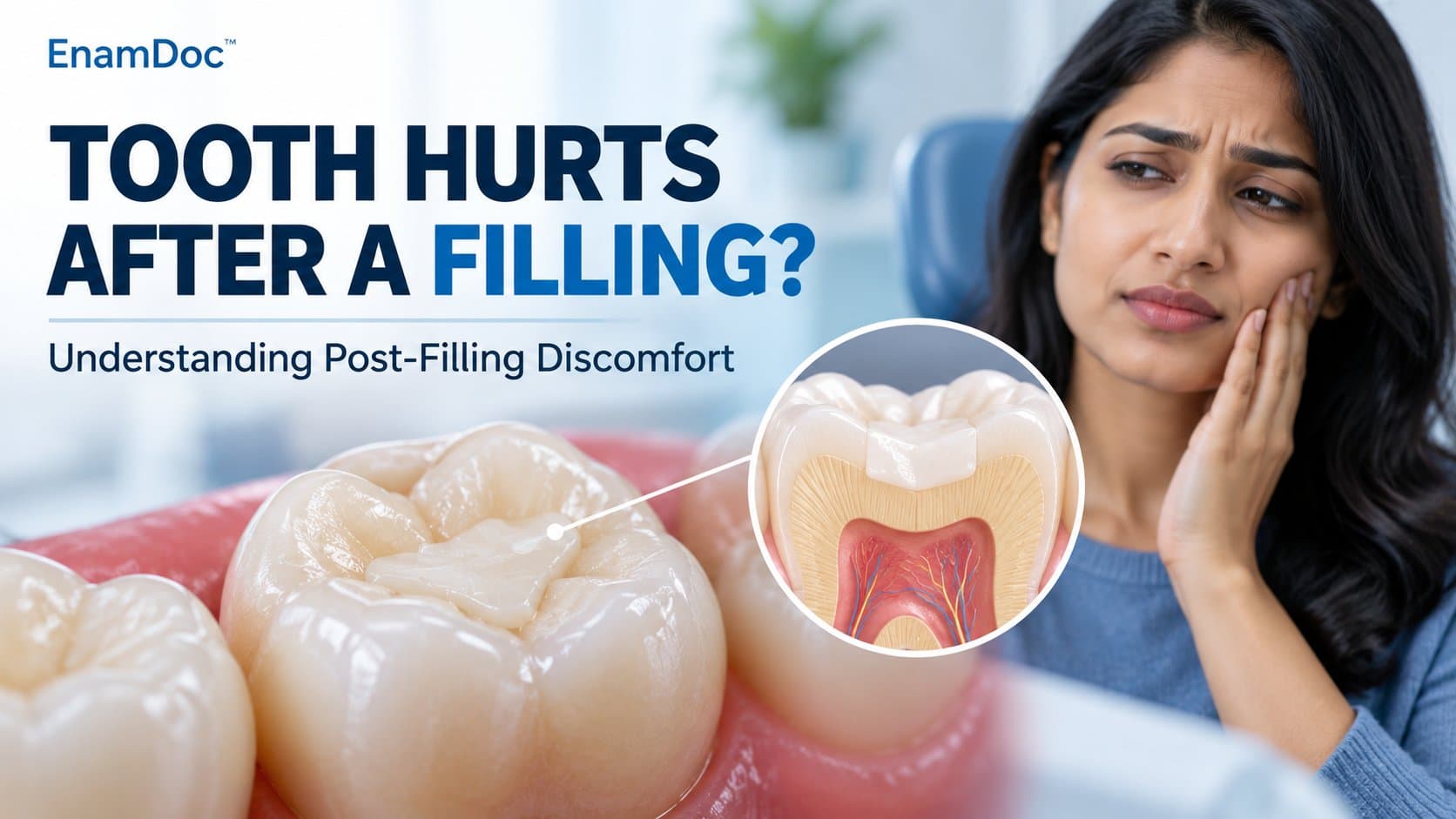
You've just left the dentist's chair after getting a cavity filled. The numbing has worn off, and now your tooth feels strange — maybe sensitive, throbbing, or even sharp. Is this normal? Almost always, yes. But there are a few situations where post-filling pain is a signal that something needs attention.
Here's a breakdown of why fillings cause pain, how long it typically lasts, and the specific signs that mean you should call your dentist.
Is Post-Filling Pain Normal?
Yes — in most cases. Your tooth has just been drilled, shaped, and filled. Even with a gentle dentist and local anaesthesia throughout, some inflammation in the surrounding tissue is expected. This is your body responding to the work done, not a sign anything went wrong.
Most post-filling discomfort is mild and temporary. It typically peaks within 24–48 hours and resolves on its own within a week. The type of pain, however, tells you a lot about what's happening inside your tooth.
Common Reasons Your Tooth Hurts After a Filling
1. Sensitivity to Hot and Cold
The most common complaint after a filling is sensitivity to temperature — sharp, brief discomfort when you sip hot tea or bite into something cold. This happens because composite resin filling material can transmit temperature changes to the nerve more easily than your original tooth structure did. It usually settles down within 2–4 weeks.
2. Bite Alignment Is Off
Your dentist checks the filling height with special paper before you leave. But with your mouth still numb, accurate feedback can be hard. If the filling sits even slightly higher than your natural bite, your tooth hits differently with every chew — creating pressure and soreness that can radiate through the jaw.
This is one of the most common and most fixable causes of post-filling pain. A quick follow-up visit to have the filling polished down usually resolves it immediately.
3. Pulpitis — Irritation of the Dental Pulp
The pulp is the soft tissue inside your tooth containing nerves and blood vessels. When a cavity is deep, cleaning it out and placing a filling can irritate this pulp. In most cases the irritation settles (reversible pulpitis) and pain fades within a few weeks. In some cases — particularly with very deep cavities — the inflammation doesn't resolve (irreversible pulpitis) and the tooth may eventually need a root canal.
4. Cracked Tooth Syndrome
If you feel a sharp, shooting pain specifically when biting down, a hairline crack in the tooth may have been present before or appeared during the procedure. This crack causes the two halves of the tooth to flex slightly under pressure, producing intense brief pain. Cracked teeth require further investigation and may need a crown or root canal treatment.
5. Referred Pain from Nearby Teeth
Sometimes the ache you feel isn't coming from the filled tooth at all. The dental nerve can refer pain to adjacent or opposing teeth. If your dentist confirms the filled tooth looks fine, the discomfort may simply be this referred sensation — which typically resolves as inflammation settles.
How to Manage Mild Post-Filling Pain at Home
- Avoid extreme temperatures for the first few days — skip very hot coffee and very cold drinks.
- Chew on the opposite side until sensitivity eases.
- Use a desensitising toothpaste containing potassium nitrate — apply a small amount directly to the sensitive area with your finger.
- Take over-the-counter pain relief such as ibuprofen or paracetamol as directed, if needed.
- Avoid hard or sticky foods for 24 hours to let a composite filling fully set.
When to Call Your Dentist
Most post-filling pain is mild and self-resolving. But these signs warrant a call — don't wait them out:
- Severe or throbbing pain that doesn't improve after 3–4 days
- Pain that wakes you at night
- Swelling, tenderness, or a pimple-like bump on the gum near the filled tooth
- Sensitivity that gets worse rather than better over time
- Pain spreading to your jaw, ear, or other teeth
- Bite that still feels wrong after a week — the filling may need adjustment
Can a Filling Fail?
Fillings are generally durable — composite fillings typically last 7–10 years, while amalgam can last 15 years or more. But no filling lasts forever. If a filling cracks, develops a gap, or falls out, bacteria can re-enter the tooth and cause a new cavity beneath the restoration. If you suspect this, a dentist can confirm with an X-ray and replace it promptly.
Good Dental Records Help Catch Problems Early
One of the most effective ways to catch filling issues before they become serious is maintaining complete dental records — including X-rays from your last visit, notes on cavity depth, and your symptom history. EnamDoc helps dental clinics manage exactly this: digital patient records, treatment histories, and follow-up reminders so no detail is missed. When you're treated at a clinic using EnamDoc, your dentist has your complete history on screen to make the right call, fast.
When in Doubt, Ask
Dentists understand that post-filling pain is worrying, especially if you've never experienced it before. Don't hesitate to call your clinic, describe your symptoms, and ask for guidance. An experienced dentist can often tell from a brief description whether what you're feeling is expected or needs a follow-up visit.
Frequently asked
Frequently asked questions
How long does tooth pain last after a filling?
Mild sensitivity and discomfort after a filling typically resolve within 1–2 weeks. If pain persists beyond 2 weeks or is getting worse rather than better, contact your dentist. Severe or throbbing pain should always be assessed promptly, regardless of how soon after the filling it started.
Should I avoid eating after getting a filling?
Avoid eating until the local anaesthesia has fully worn off — you could accidentally bite your cheek or tongue without realising. After that, avoid very hard, sticky, or extremely hot or cold foods for 24–48 hours to let a composite filling fully set and to minimise sensitivity.
Can a filling cause pain days or weeks after the procedure?
Yes. A filling that sits slightly too high can create bite pressure that builds over days as swelling subsides and numbness fades. Pulp irritation can also cause delayed aching that develops gradually. If new pain starts more than a week after a filling, or if existing pain worsens, call your dentist — both causes are treatable when caught early.
- dental filling
- tooth pain
- post-filling sensitivity
- dental care
- patients
Keep reading