Tooth Sensitivity After Teeth Whitening: How Long Does It Last and How to Fix It
Sensitivity after teeth whitening is the most common side effect — but it doesn't have to ruin your experience. Dr. Khanak Jain explains why it happens, how long it lasts, and exactly what to do about it.
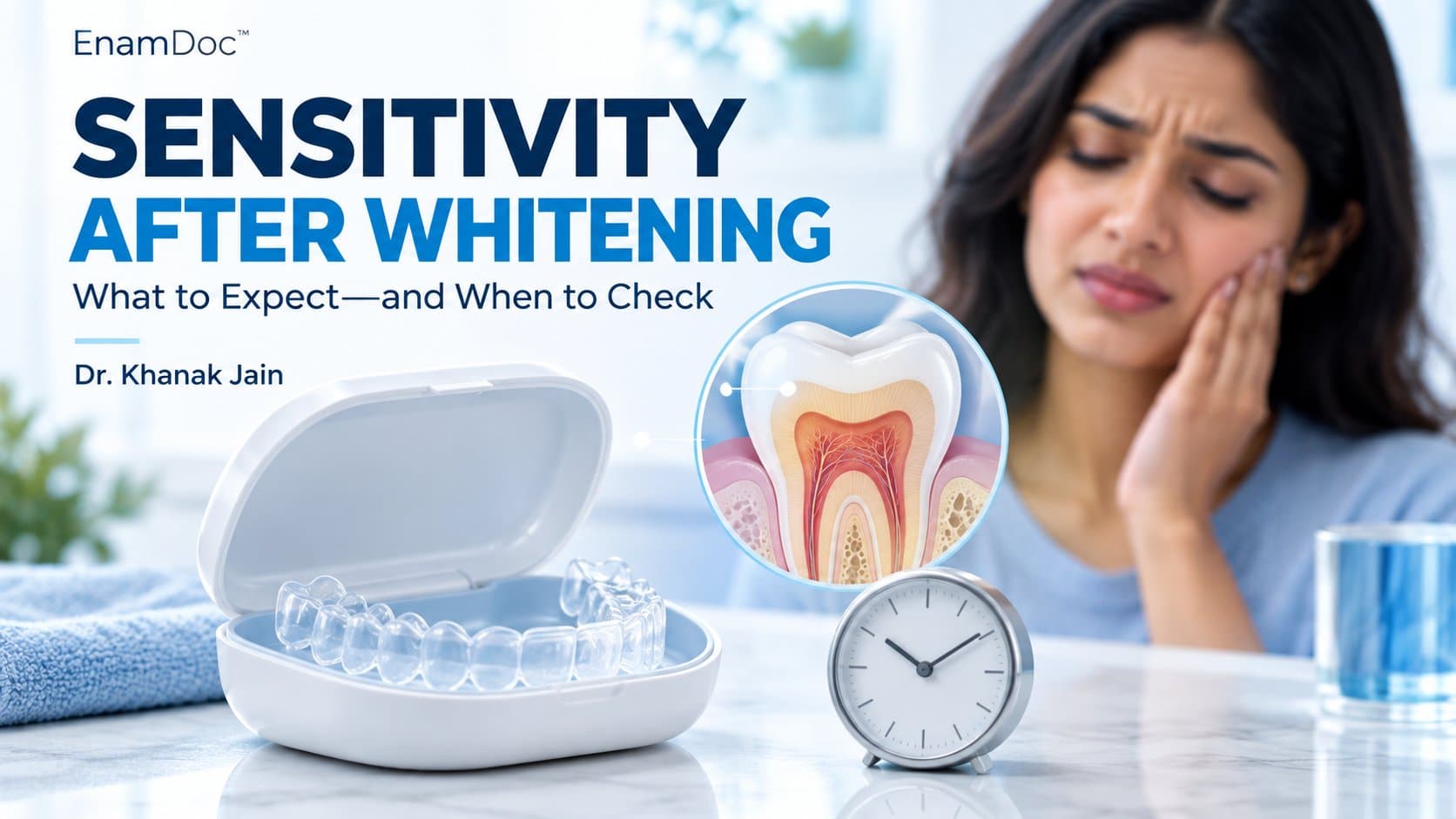
Teeth whitening is one of the most requested cosmetic dental treatments in India. It's quick, non-invasive, and produces results people actually notice. But there's one side effect that catches almost everyone off guard: sensitivity.
It usually starts a few hours after treatment. A sharp, shooting sensation when you drink something cold. A dull ache that wasn't there before. For some people it's mild. For others, it's enough to make them regret the whole thing.
Here's what's actually happening, how long it lasts, and — most importantly — how to manage it.
Why Whitening Causes Sensitivity
Teeth whitening works by using hydrogen peroxide or carbamide peroxide to break down surface stains. The peroxide molecules are small enough to pass through the outer enamel layer and into the dentine underneath.
Dentine contains tiny fluid-filled tubes called dentinal tubules that connect to the nerve of the tooth. When peroxide reaches this layer, it temporarily stimulates these tubules — and that stimulation is what you feel as sensitivity.
This is especially pronounced with:
- High-concentration in-clinic bleaching (as used in laser whitening and power whitening)
- Teeth that already have thin enamel
- Teeth with existing exposed dentine at the gumline
- Teeth with small cracks or early-stage decay
The sensitivity is not a sign of damage. It's a temporary physiological response.
How Long Does It Last?
For most people, sensitivity after professional whitening lasts 24 to 72 hours. After that, it fades on its own.
In some cases — particularly with high-concentration in-clinic treatments — sensitivity can persist for up to a week. This is uncommon, but not alarming if you don't have underlying dental issues.
If sensitivity continues beyond 7–10 days or gets progressively worse rather than better, that's worth a follow-up with your dentist. Persistent sensitivity after whitening can occasionally signal a pre-existing issue like a small crack or early pulpitis that the whitening process has irritated.
What to Do Immediately After Whitening
The first 24–48 hours are when sensitivity is at its worst. Here's how to get through them:
1. Avoid temperature extremes
Cold drinks, hot soups, ice cream — these will trigger the sharpest sensations. Stick to room-temperature food and drinks for at least 48 hours. If you need to drink something cold, use a straw to minimise contact with your teeth.
2. Use a sensitivity toothpaste immediately
Toothpastes containing potassium nitrate (such as Sensodyne or Colgate Sensitive) work by blocking dentinal tubules. Start using one on the day of your whitening appointment and continue for 2–4 weeks after. Apply it directly to your teeth with your finger before bed — don't just brush with it.
3. Take a mild painkiller if needed
Over-the-counter pain relief like ibuprofen can help if the sensitivity is severe enough to disrupt sleep or daily activity. Follow standard dosing guidelines and don't take it for more than 2–3 days without medical advice.
4. Avoid acidic foods and drinks
In the first 48 hours, your enamel is slightly more permeable than usual. Avoid citrus fruits, carbonated drinks, vinegar-based foods, and coffee. These can worsen sensitivity and also cause surface staining before the whitening results have fully stabilised.
What Dentists Use to Prevent Sensitivity During Whitening
If you're considering professional whitening and are worried about sensitivity, your dentist has several options:
- Pre-treatment desensitising gels — Applied before the whitening gel, these coat the dentinal tubules and reduce peroxide penetration
- Lower-concentration peroxide — More sessions with a lower-concentration gel produces similar results with significantly less sensitivity
- Shorter application times — Multiple shorter sessions rather than one long one
- Fluoride treatment after whitening — Professional fluoride application seals open tubules and remineralises enamel quickly
If you've had sensitivity with whitening before, tell your dentist at the start of your consultation — not after you're already in the chair. They can plan the treatment protocol to reduce discomfort.
Who Should Be Extra Careful?
Not everyone is a straightforward candidate for whitening. Sensitivity is more likely — and can be more severe — if you have:
- Exposed root surfaces due to gum recession
- Thin or worn enamel
- Active decay or cracked teeth (these should be treated before any whitening)
- Existing sensitivity to cold that you notice in daily life
- Recent dental restorations (note: whitening does not change the colour of crowns, veneers, or composite fillings)
A good dentist will check for all of these before recommending whitening and tell you honestly if you're likely to experience significant sensitivity.
At-Home Whitening Kits: Is Sensitivity Different?
At-home whitening kits — whether dentist-prescribed custom trays or over-the-counter strips — typically use lower concentrations of peroxide. They produce more gradual results and usually cause milder sensitivity.
However, some people are still sensitive to even low-concentration peroxide. If over-the-counter strips cause sensitivity, stop using them and consult a dentist. Continuing with a product that causes pain won't speed up results and may cause damage if you have an underlying issue.
When to Call Your Dentist
Contact your dentist if:
- Sensitivity is severe and doesn't improve after 48 hours
- Sensitivity is getting worse rather than better
- You notice pain without any temperature trigger (spontaneous pain)
- Sensitivity persists beyond 7–10 days
Teeth whitening done properly — with the right candidate selection and a good technique — should produce results you're happy with and sensitivity you can manage. If you're considering whitening and want a pre-treatment check, find a qualified dentist through EnamDoc and have a proper consultation first. Five minutes of conversation before treatment can prevent hours of discomfort after it.
Frequently asked
Frequently asked questions
Can I eat normally after teeth whitening?
For the first 24–48 hours after whitening, avoid temperature extremes (very hot or very cold food and drinks), acidic foods and drinks (citrus, vinegar-based foods, carbonated drinks, coffee), and foods that stain (tomato sauce, berries, turmeric). After 48 hours, you can return to a normal diet. The first 48 hours are when your enamel is most vulnerable to staining and sensitivity triggers.
Does teeth whitening permanently damage enamel?
No. Professionally supervised teeth whitening does not permanently damage enamel when performed correctly. Studies consistently show that clinically approved concentrations of hydrogen peroxide and carbamide peroxide do not cause irreversible enamel damage. The temporary sensitivity you experience is not damage — it's a short-term physiological response that resolves on its own. However, overuse of whitening products, especially high-concentration at-home kits used more frequently than recommended, can cause enamel erosion over time.
- tooth sensitivity whitening
- teeth whitening side effects
- sensitivity after bleaching
- whitening pain relief
Keep reading