When Should Your Child First Visit the Dentist? A Parent's Complete Guide
Most Indian parents take their children to a dentist only when something hurts. Dentists recommend the first visit much earlier — and for good reasons. Here is the timeline, what to expect, and how to build a dental habit that lasts a lifetime.
Medically reviewed by Dr. Khanak Jain, BDS
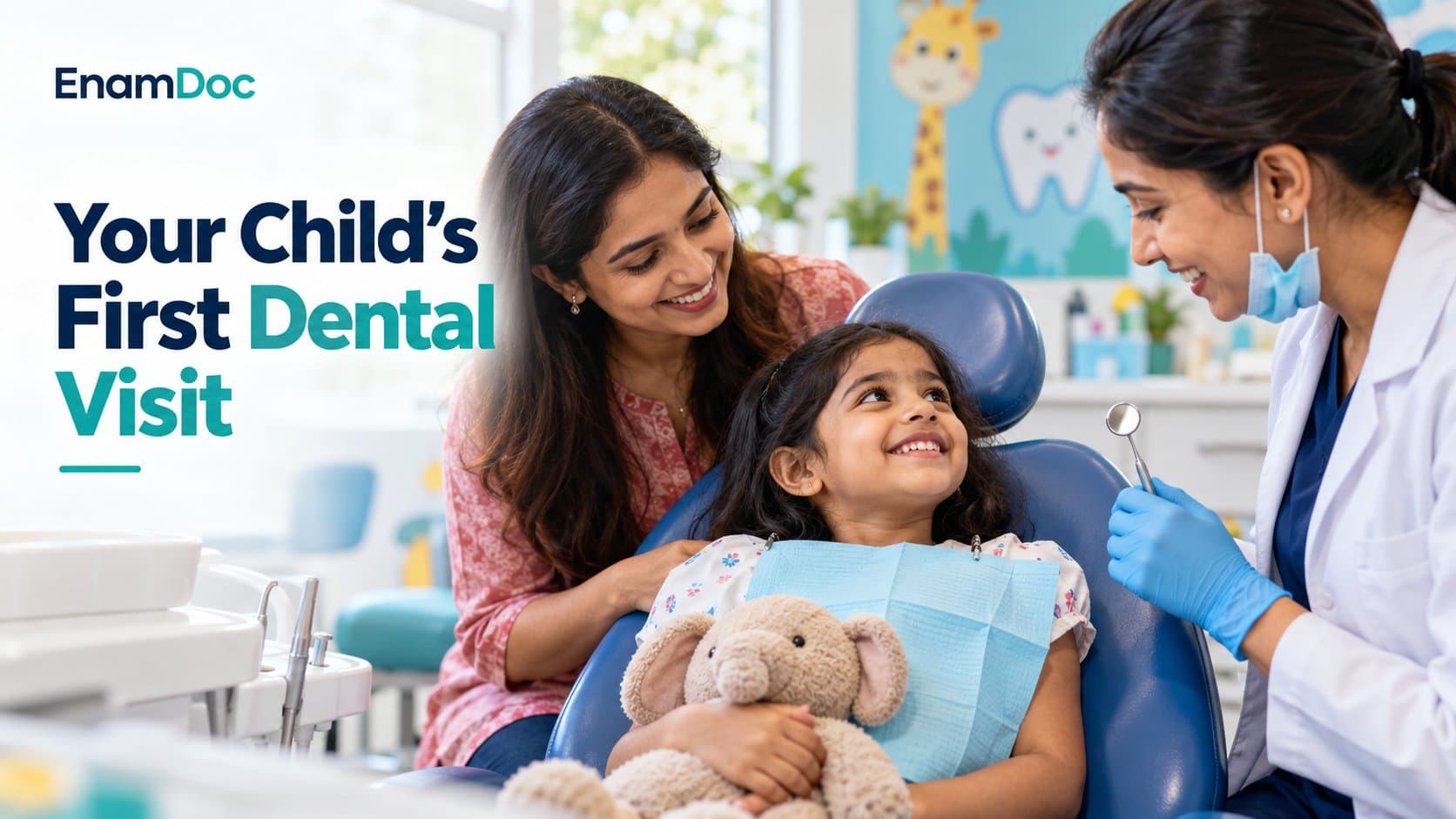
In India, the most common reason parents bring a child to the dentist for the first time is a toothache. By that point, the problem is usually significant — a decayed baby tooth, an abscess, or a child who has been quietly tolerating pain for longer than anyone knew. Paediatric dental guidelines recommend a very different timeline: the first dental visit should happen around a child's first birthday, or within six months of the first tooth appearing. This article explains why — and what that first visit actually looks like.
Why So Early? Don't Baby Teeth Fall Out Anyway?
This is the most common question — and the most common reason parents delay. Yes, baby teeth eventually fall out. But they do important work in the meantime:
- Chewing and nutrition: Children need functioning teeth to eat properly. A toddler with decayed or painful baby molars cannot chew well, which affects their nutrition and growth.
- Speech development: Teeth play a significant role in speech. Missing or severely decayed front teeth can affect how children learn to form certain sounds.
- Space holders: Baby teeth hold space in the jaw for the permanent teeth forming underneath. Premature loss of a baby tooth — especially a molar — often causes the permanent tooth to come in crooked because surrounding teeth drift into the empty space.
- Pain and infection: Decayed baby teeth cause real pain. An abscess from a baby tooth can affect the developing permanent tooth bud below it. And dental infections in children — as in adults — can spread if left untreated.
Early dental visits are not primarily about treating problems. They are about preventing them, and establishing a relationship with a dentist before anything goes wrong.
The Recommended Timeline for Children's Dental Visits
First Visit: Around Age 1 (or Within 6 Months of First Tooth)
The Indian Academy of Paediatric Dentistry and the American Academy of Pediatric Dentistry recommend the first dental visit by age 1, or within six months of the first tooth appearing (usually around 6 months). This visit is brief and low-key — the dentist checks for any early signs of decay, reviews the parents' oral hygiene technique, discusses diet and bottle use, and gets the child comfortable with the dental environment.
Age 2–3: Regular Six-Monthly Check-ups Begin
By age 2–3, most children have most of their 20 primary teeth. Six-monthly dental check-ups become the standard cadence. The dentist monitors tooth development, applies fluoride varnish (a highly effective cavity preventive for young children), and catches any early decay while it is still very small and simple to treat.
Age 5–7: The Transition Period
The first permanent molars typically erupt around age 6–7, often without pushing out any baby teeth — they come in behind the existing teeth. Many parents do not realise these permanent teeth have appeared until the dentist points them out. This is also when dental sealants are typically first recommended for these new permanent molars.
Age 7: First Orthodontic Screening
Most orthodontists recommend a first assessment around age 7 — not because treatment starts then, but because early evaluation can identify developing bite or spacing issues that are much easier to address if caught before the jaw finishes growing. Early intervention (interceptive orthodontics) can sometimes prevent more extensive treatment later.
What Happens at a Child's First Dental Visit
Parents are often surprised by how gentle and brief the first visit is. For a toddler:
- The dentist or hygienist will count the child's teeth and check for any visible decay
- The gums and oral tissues are briefly examined
- A fluoride varnish may be applied — a quick brush-on treatment that requires no special preparation
- The dentist will discuss cleaning technique (yes, you should be cleaning a one-year-old's teeth — with a soft damp cloth or tiny soft brush), diet, bottle and sippy cup use, and any habits like thumb-sucking
- No X-rays are taken at the very first visit unless there is a specific concern
The entire visit may take 20–30 minutes. The goal is largely for the child to have a positive, low-key experience so the dentist is not a scary stranger later.
Tips for Making the First Visit Go Well
- Use positive language: Avoid using words like "needle," "drill," "hurt," or "it won't be bad." Frame it matter-of-factly: "The dentist is going to count your teeth and make sure they are healthy."
- Schedule at the right time of day: Morning appointments work better for toddlers — they are well-rested and less likely to be overtired or hungry.
- Bring a familiar comfort object: A stuffed animal or blanket can help a young child feel secure in a new environment.
- Stay calm yourself: Children pick up on parental anxiety. If you are visibly nervous about dental visits, your child will be too. Try to project confidence even if you personally find dentists stressful.
- Consider a paediatric dentist: Paediatric dentists (pedodontists) have 2–3 years of additional training in child behaviour management and working with young patients. Their clinics are typically designed to be less clinical and more child-friendly.
Common Issues Dentists Find in Young Children
Early childhood caries (ECC) — also called "baby bottle decay" — is the most common chronic disease in young children worldwide. In India, studies have found ECC prevalence rates of 35–70% in preschool children. It typically affects the upper front teeth first and is associated with:
- Frequent bottle or sippy cup use with juice, flavoured milk, or formula beyond infancy
- Breastfeeding on demand through the night without cleaning teeth afterwards
- Sweet snacks eaten frequently throughout the day
- Sharing spoons or blowing on food (which transfers cavity-causing bacteria from adult to infant)
Treatment in very young children (under 3) with multiple decayed teeth sometimes requires general anaesthesia in a hospital setting — a significant undertaking that is entirely avoidable with early preventive care.
Book your child's first dental appointment on EnamDoc and find paediatric dentists near you who specialise in young patients. The earlier you start, the easier — and less expensive — dental care will be throughout your child's life.
Frequently asked
Frequently asked questions
Do I really need to take my baby to a dentist before they turn one?
Yes — this is the recommendation from the Indian Academy of Paediatric Dentistry and most international paediatric dental bodies. The first visit around age 1 is not about drilling or treating problems; it is about catching any early signs of decay when they are trivial to address, getting advice on diet and cleaning technique, and establishing the dentist as a familiar, non-threatening presence. Early childhood caries (baby tooth decay) is extremely common in India and often found in children as young as 18 months. The first visit is insurance against finding out about a significant problem later.
How do I clean my baby's teeth before they are old enough for a toothbrush?
Before teeth appear, wipe the gums after feeds with a clean damp cloth to remove milk residue. As soon as the first tooth erupts (usually around 6 months), start cleaning it twice daily with a soft infant toothbrush and a rice-grain-sized smear of fluoride toothpaste (1,000 ppm fluoride — standard children's toothpaste in India is appropriate). For children 3–6, increase to a pea-sized amount. Many parents are surprised that fluoride toothpaste is recommended from the first tooth — the protective benefit far outweighs the negligible amount that may be swallowed at this stage.
My child is scared of the dentist. What should I do?
Dental anxiety in children almost always comes from either a previous unpleasant experience or parental anxiety that the child has absorbed. If your child hasn't had a negative dental experience yet, the best approach is to begin early (the first birthday recommendation helps here — a one-year-old has no preconceptions about dentists), choose a paediatric dentist or a dentist experienced with children, and use calm, neutral language about visits. For a child already anxious, a gradual approach works well: start with a 'show' visit where the child sits in the chair but has nothing done, just to see the environment. Over subsequent visits, move gradually to examination, then cleaning. Never describe what won't happen ('it won't hurt') — this creates anticipation of pain.
- children first dentist visit
- when to take child to dentist
- kids dentistry India
- paediatric dentist
- baby teeth care
Keep reading