When Should Your Child First See a Dentist? Parent's Guide
The answer surprises most parents: your child's first dental visit should happen within 6 months of their first tooth — often before their first birthday. Here's why it matters and what that visit actually looks like.
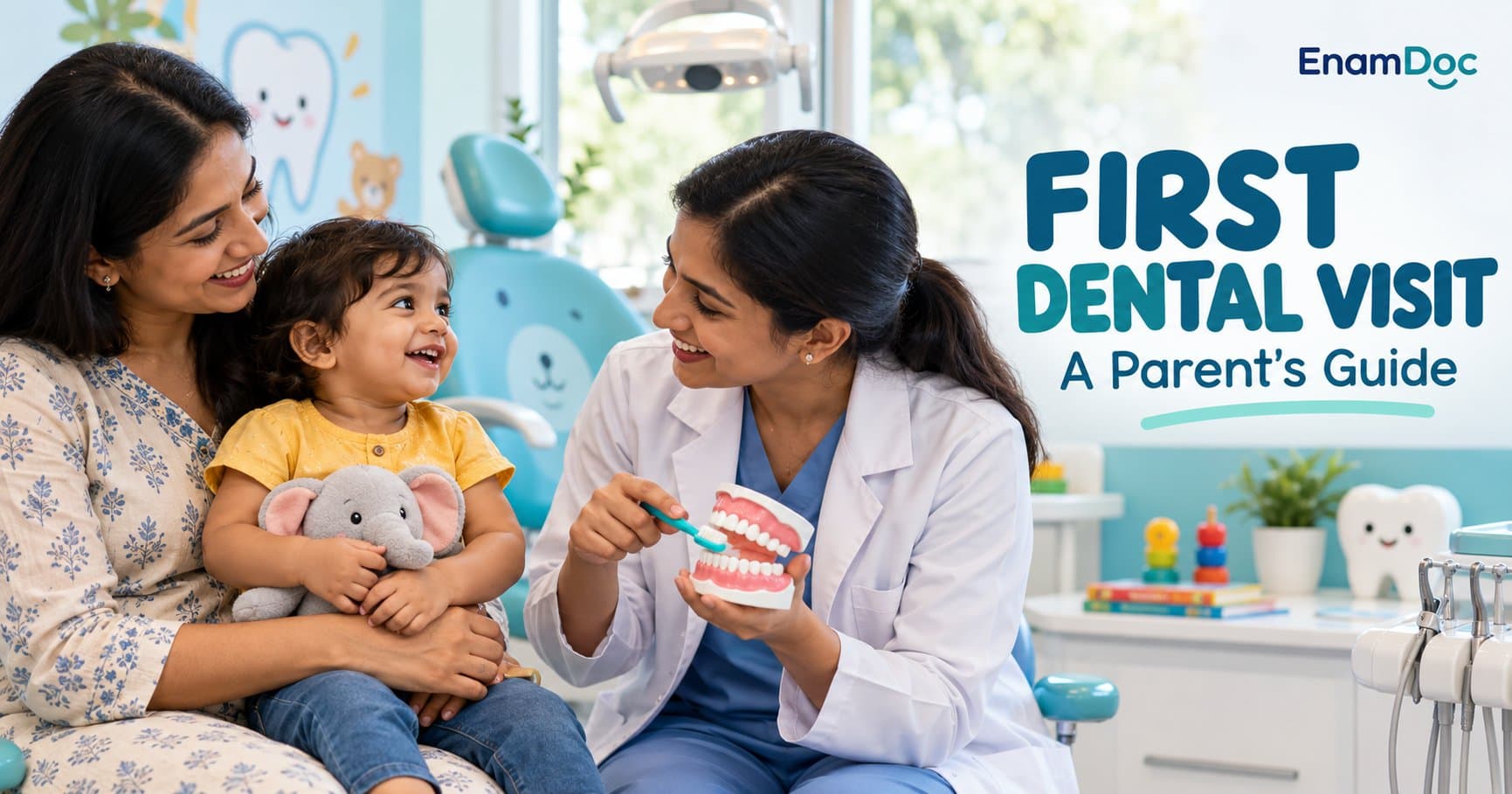
The Recommendation That Surprises Most Parents
Most parents assume the first dental visit happens around age 3 or 4 — when a child is old enough to sit in a chair and follow instructions. The actual recommendation from paediatric dental associations is considerably earlier: within 6 months of the first tooth erupting, or by the child's first birthday — whichever comes first.
This surprises people. Why would a baby who barely has any teeth need a dentist? The reasons are more practical than they might seem.
Why So Early?
The primary reason is prevention. Early childhood caries (ECC) — tooth decay in infants and toddlers — is one of the most common chronic childhood diseases in India. Baby teeth matter far more than many parents realise:
- They hold space for permanent teeth. If a baby tooth is lost too early due to decay, neighbouring teeth shift and crowd out the space the permanent tooth needs
- They affect speech development — particularly sounds that depend on tongue-to-tooth contact
- They affect nutrition — a toddler with painful teeth eats less and may develop preferences that affect growth
- Decay in baby teeth can spread to the developing permanent teeth beneath them
The first visit also establishes a "dental home" — a relationship between your child and a specific dental practice — before any problems arise. This is critical for building positive associations with dental care from the start.
What Happens at the First Visit
The first visit for an infant or young toddler is very different from a standard adult check-up. It's short — typically 15 to 30 minutes — and involves:
A Gentle Examination
The dentist examines your baby's mouth — often with you holding the child in a "knee-to-knee" position, where the baby lies across both your laps facing the ceiling. The dentist checks for early signs of decay, assesses how teeth are erupting, looks at the gums and soft tissue, and evaluates the jaw and bite development.
Guidance for Parents
Much of the first visit is actually coaching for the parent. You'll get specific guidance on:
- How and when to start brushing (from the first tooth — with a small rice-grain amount of fluoride toothpaste)
- Feeding practices that raise decay risk (night bottle feeding with milk or juice, prolonged breastfeeding on demand at night)
- When and how to introduce flossing
- The appropriate time to stop using a pacifier or thumb-sucking
- Fluoride needs and whether supplements are appropriate
Fluoride Varnish (Often)
Many paediatric dentists apply a fluoride varnish at this visit and at subsequent appointments — a safe, quick application that strengthens enamel and reduces decay risk significantly.
Timing Milestones: When to Book Around Key Dental Events
First Tooth (Usually 6–10 Months)
First appointment: within 6 months of this or by the first birthday. Most parents wait until the child has a visible tooth to book — that's the right instinct.
Age 2–3: First Full Examination
By age 2–3, most children have all 20 primary teeth. This is when a more comprehensive examination becomes possible, often including a gentle X-ray if there are concerns about spacing or hidden decay between teeth. Professionally applied sealants may be discussed.
Age 3: Cooperation Improves Significantly
Most children can understand simple instructions by age 3 and can participate more actively in the appointment — making routine cleaning and examination much easier. Many dentists use this age as a milestone for more regular 6-monthly visits.
Age 5–7: Permanent Teeth Begin Erupting
Lower front teeth typically arrive first. This is a critical monitoring period for crowding, bite development, and early orthodontic assessment. The first permanent molar — which arrives around age 6 without replacing any baby tooth — is often sealed to prevent decay as soon as it is fully erupted.
How to Make the First Visit Go Smoothly
A child's perception of the dentist is shaped almost entirely by their first few visits. Here's how to set the stage:
- Don't share your own dental anxiety with the child beforehand — even casually. Children pick up on parental nervousness.
- Use positive language: "We're going to meet the teeth doctor who checks if your teeth are strong and healthy." Avoid "it won't hurt" — this plants the idea of pain.
- Read books or watch videos about visiting the dentist with your child beforehand
- Book the appointment at a good time — when your child is typically rested and not hungry, usually morning
- Let the dental team lead — experienced paediatric dental staff know how to work with children; intervening too much can undermine their technique
What If My Child Is Already Older and Has Never Been?
Don't delay further because of guilt about missed early visits. The best time is now. An initial examination can identify any problems that have accumulated, establish a cleaning baseline, and begin building a positive relationship with dental care. A paediatric dentist experienced in managing anxious or first-time patients can make even a difficult initial visit manageable.
Find a Paediatric Dentist for Your Child on EnamDoc
On EnamDoc, you can find verified paediatric dentists and general dentists experienced in treating children across India. Filter by location, age group, and parent reviews. A good first dental experience sets the tone for a lifetime of healthy habits — it's worth finding the right clinic.
Frequently asked
Frequently asked questions
Do baby teeth really matter if they just fall out anyway?
Yes — significantly. Baby teeth are not throwaway teeth. They hold space for permanent teeth; if lost too early due to decay, the neighbouring teeth shift and crowd the incoming permanent tooth, often requiring orthodontic treatment later. Baby teeth also affect speech development, chewing ability, and nutrition. Decay in baby teeth can infect the developing permanent tooth beneath them. Early childhood cavities cause real pain that affects a child's sleep, eating, and concentration at school.
At what age should I start brushing my baby's teeth?
Start brushing as soon as the first tooth appears — even if it's just one small tooth. Use a soft infant toothbrush with a tiny amount of fluoride toothpaste (rice-grain size) twice daily. Before any teeth appear, you can wipe your baby's gums with a damp cloth after feeding. Many parents are surprised by how early this should start — but bacteria that cause tooth decay can colonise the mouth from a very young age, even before teeth are visible.
How do I handle a child who refuses to cooperate at the dentist?
This is very common, especially for first visits. Experienced paediatric dentists use techniques like tell-show-do (explaining and demonstrating before doing), voice control, and positive reinforcement. Choose a dentist who specialises in children, schedule at a time when your child is well-rested, and stay calm yourself. Never force a child's mouth open or use shame about resistance — this creates lasting negative associations. Sometimes the first visit is just about getting comfortable in the chair — that is completely acceptable progress.
- child dentist
- baby teeth
- first dental visit
- paediatric dentistry
- children oral health
- parents
- patients
Keep reading