White or Red Patches in the Mouth: Leukoplakia, Lichen Planus, and When to Get Them Checked
Most patches inside the mouth are harmless irritation. A few are not, and the difference is not something you can tell by looking in a mirror. Here is what leukoplakia and similar patches actually mean, and when a biopsy matters.
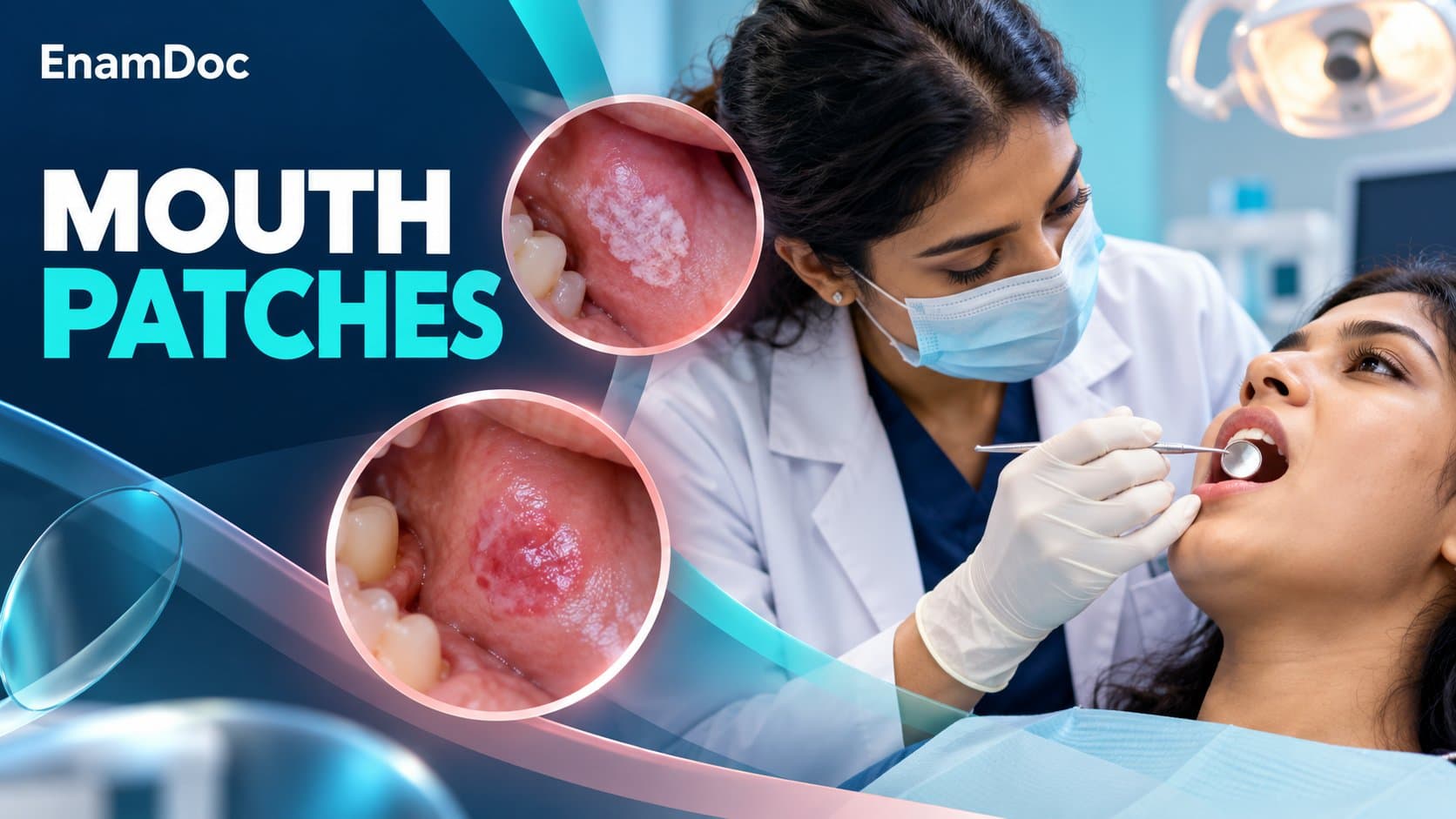
A white patch on the inside of the cheek, or a red one on the gum, is something almost everyone notices at some point and almost always ignores — usually correctly, since most of these patches are harmless irritation from a rough tooth edge, a burn from hot food, or a mild fungal or viral infection. But a small number turn out to be precancerous or early cancerous changes, and the only way to tell the two apart reliably is a professional exam, not a mirror check.
Leukoplakia: The Most Common Type
Leukoplakia is a white or greyish patch that cannot be scraped off and cannot be explained by any other diagnosis — it is essentially a description of appearance, not a single disease. It forms when cells on the inside of the mouth grow thicker than normal, usually in response to chronic irritation from tobacco, alcohol, a sharp tooth, or an ill-fitting denture.
Most leukoplakia patches are benign and stay that way. But a meaningful minority — estimates in clinical literature generally range from around 3% to 17.5% depending on the patch type and location — show dysplasia (abnormal cell changes) or progress toward oral cancer over time, which is why every leukoplakia patch that does not resolve on its own within two to three weeks needs a professional look.
Erythroplakia: Less Common, More Concerning
A red, velvety patch that cannot be attributed to another cause is called erythroplakia. It is far less common than leukoplakia, but carries a substantially higher risk of already containing dysplasia or early cancer at the time it is found — which is why red patches get referred for biopsy more urgently than white ones.
Oral Lichen Planus
Lichen planus is a separate, chronic inflammatory condition that often shows up as lacy white lines (called Wickham's striae) on the inside of the cheeks, sometimes alongside red, sore patches. It is not caused by irritation the way leukoplakia often is, and its exact cause is not fully understood, though it is thought to involve the immune system. Most cases are managed rather than cured, with flare-ups treated using topical steroids, and long-term monitoring is recommended since a small subset of erosive lichen planus cases carry an elevated cancer risk over many years.
What Makes a Patch Worth Getting Checked
- It has not gone away within two to three weeks
- It is red, or has red and white areas mixed together
- It feels thickened, hardened, or has an ulcer that will not heal
- It is associated with pain, numbness, or difficulty moving the tongue
- It appears in someone who uses tobacco or areca nut products, or drinks alcohol heavily
What the Evaluation Actually Involves
A dentist typically starts by removing any obvious irritant — smoothing a sharp tooth or adjusting a denture — and rechecking after two to three weeks. If the patch persists, is red, or looks suspicious in any other way, the next step is usually a biopsy: a small tissue sample taken under local anaesthesia and sent for laboratory analysis. This is a short, low-discomfort procedure, and it is the only way to know for certain whether dysplasia or cancer is present, since appearance alone cannot confirm it.
Treatment Once a Cause Is Confirmed
Management depends entirely on what the biopsy shows. Irritation-related leukoplakia often resolves once the cause (tobacco, a sharp edge, ill-fitting denture) is removed. Patches with dysplasia are typically monitored closely or surgically removed, depending on severity. Confirmed early oral cancer is referred to an oral and maxillofacial surgeon or oncologist for treatment planning. In every case, regular follow-up is part of the plan, since new patches can develop even after one is treated.
Frequently asked
Frequently asked questions
Is a white patch in my mouth always serious?
No. Most white patches are caused by minor, harmless irritation such as cheek-biting, a rough tooth edge, or a mild fungal infection. But because a small percentage of persistent patches are precancerous, any patch lasting more than two to three weeks should be examined by a dentist.
Does a biopsy for a mouth patch hurt?
It is done under local anaesthesia, so the procedure itself should not hurt. Mild soreness at the site for a day or two afterward is normal and manageable with basic pain relief.
Who is most at risk for leukoplakia turning into cancer?
Risk is higher in people who use tobacco or areca nut products, drink alcohol heavily, or have patches that are red rather than purely white, thickened, or located on the floor of the mouth or underside of the tongue. Regular dental checkups catch most of these early.
- leukoplakia
- oral lesions
- oral cancer screening
- lichen planus
- mouth patches
Keep reading