AI Smile Design Apps: How Accurate Are Those Before-and-After Previews?
That app-generated preview of your new smile is built to sell you veneers, not to predict what a lab can actually deliver.
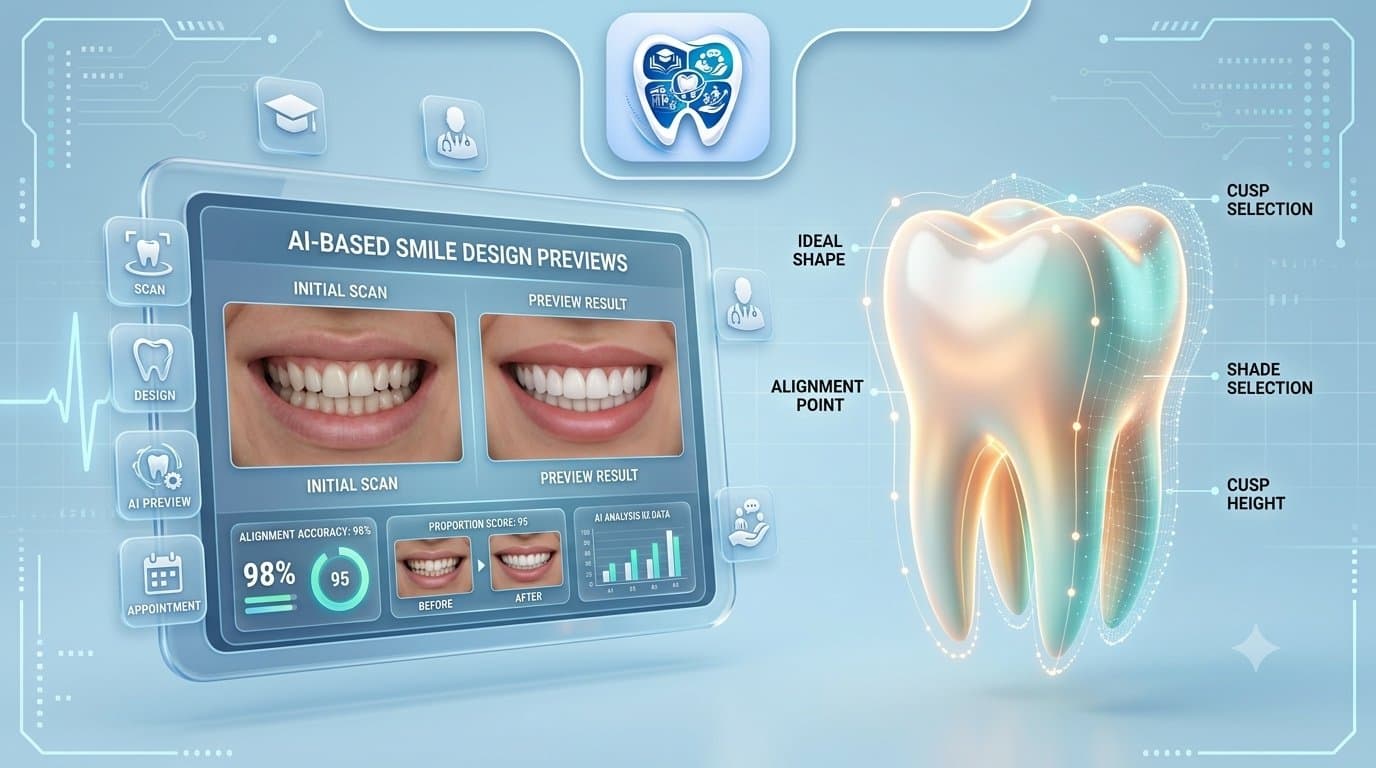
Open any cosmetic dentistry Instagram account and you'll find the same feature: upload a selfie, and an app shows you a version of your smile with straighter, whiter, more uniform teeth. It looks like a preview. It is closer to an advertisement.
What these apps are actually doing
Consumer smile-design apps work by detecting the outline of your teeth in a photo and overlaying a generated set that fits an idealized template — usually straighter, whiter, and more symmetrical than natural dentition. It's a genuinely useful visualization technique borrowed from a real clinical tool (digital smile design, used by dentists and prosthodontists for treatment planning) but stripped of the constraints that make the clinical version useful: your bite, your jaw structure, the amount of enamel that can safely be removed, and what a lab can physically fabricate.
Where the preview and the final result diverge
A selfie-based simulator has no information about your bone structure, gum health, existing restorations, or how your jaw actually closes. It can't tell you whether achieving that preview would need veneers, crowns, orthodontics, or all three, and it has no reason to flag if the "ideal" smile it generated isn't achievable without moving teeth first. The gap between the on-screen preview and a realistic clinical outcome tends to widen exactly where the case is more complex — which is also where the preview is most likely to be shown to convince you to book.
Why dentists use a similar tool differently
Research comparing AI-assisted and conventional digital smile design methods has been an active area of study through 2026, largely because the professional version of this technology is genuinely valuable — when it's built on a full clinical exam, X-rays, and a dentist's judgment about what's structurally possible, not just a photo filter. The difference isn't the underlying technology; it's what data goes into it and who is interpreting the output.
Questions worth asking before you book based on a preview
- Was this preview generated from a photo alone, or from an actual clinical exam and scans?
- What specific treatment would be needed to get from my current teeth to this result — veneers, orthodontics, or both?
- Is the whiteness and shape in the preview something a dentist has confirmed is achievable given my enamel and bite?
- Can I see the same simulation done on a real patient with a similar starting point, and their actual outcome?
A smile preview is a marketing tool before it's a diagnostic one. That doesn't make it useless — it's a reasonable way to start a conversation. It's just not a quote, a treatment plan, or a promise.
Frequently asked
Frequently asked questions
Can an AI smile app accurately predict my final results?
Not reliably on its own. It works from a photo and has no information about your bite, jaw structure, or what's structurally achievable, so the on-screen result can diverge significantly from what treatment can actually deliver.
Are AI smile design tools used by dentists the same as consumer apps?
The underlying idea is similar, but clinical digital smile design is built on a full exam, scans and X-rays, and is interpreted by a dentist — which is what makes it useful for actual treatment planning.
Should I avoid clinics that use smile-preview apps?
Not necessarily — they're a reasonable starting point for a conversation. Be cautious if a preview is presented as a guarantee rather than a rough visualization.
- smile design
- AI in dentistry
- veneers
- cosmetic dentistry
Keep reading