Diastema: Why There's a Gap Between Your Front Teeth, and How It's Treated
A gap between the two front teeth is sometimes a genetic trait and sometimes a sign of an underlying habit or bone issue. Here's how dentists tell the difference, and which fix actually matches the cause.
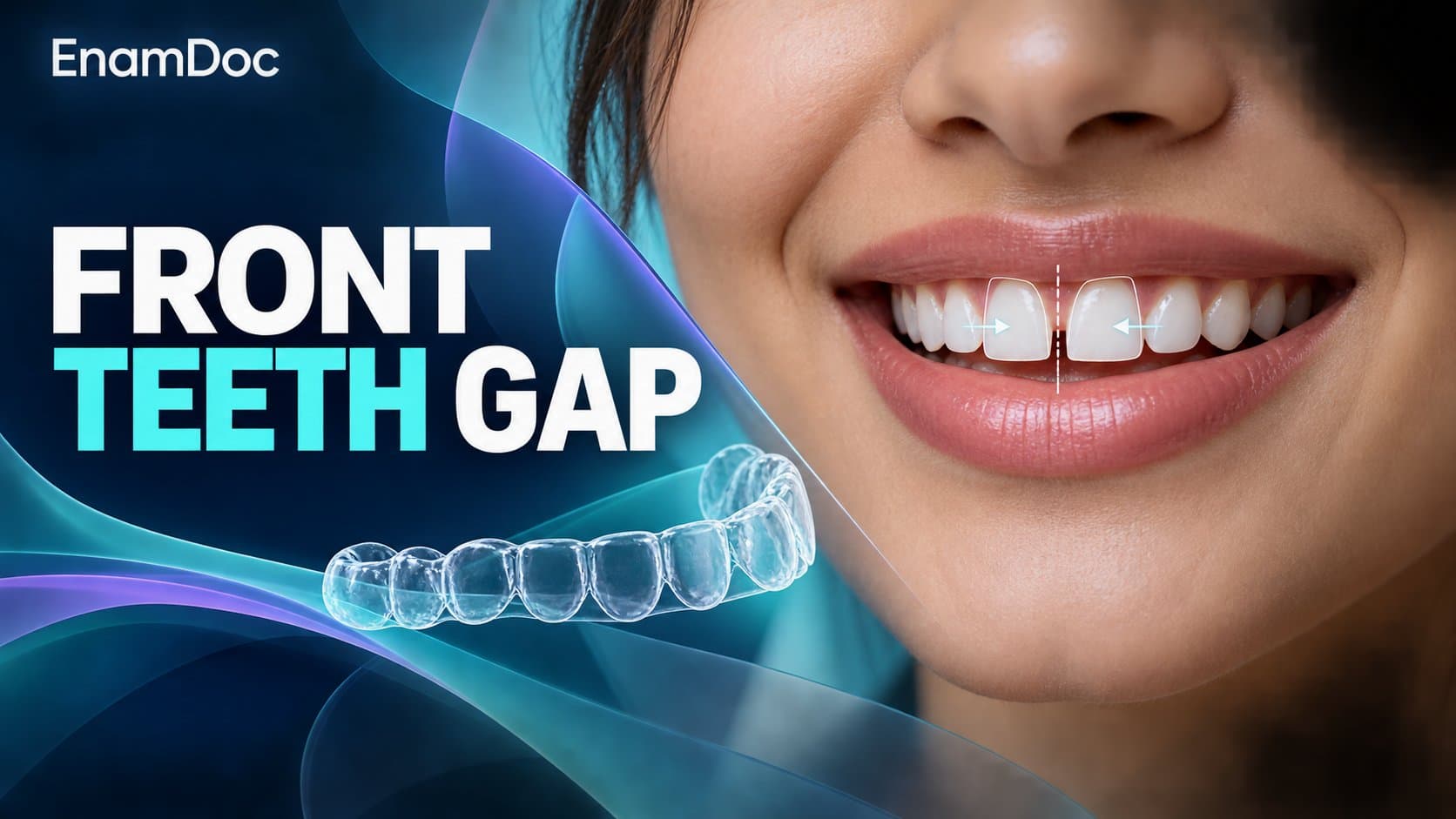
A visible gap between the two upper front teeth — medically called a diastema — is common enough that plenty of people keep it by choice; a few well-known smiles have made it almost fashionable. But when patients ask about closing one, the real question underneath is usually "is this normal, or is something causing it?" The answer depends on where the gap comes from.
What Causes a Diastema
A gap between the front teeth can come from several different sources, and identifying which one applies changes the treatment entirely:
- Tooth-to-jaw size mismatch: When the teeth are smaller than the jawbone that holds them, there is simply extra space, and the front teeth can drift apart. This is one of the most common causes and often runs in families.
- An oversized labial frenum: The frenum is the small tissue band connecting the inside of the upper lip to the gum. If it extends too far down between the front teeth, it can physically hold them apart.
- Missing or undersized teeth: If a tooth (commonly the lateral incisors next to the front teeth) is missing or unusually small, the remaining teeth can shift and leave gaps.
- Tongue thrusting or thumb-sucking: A habit of pushing the tongue against the front teeth during swallowing, or prolonged thumb-sucking in childhood, applies steady forward pressure that can widen a gap over time.
- Gum disease: In adults, bone and gum loss from periodontal disease can loosen teeth and let them drift, including apart at the front. This is different from a developmental gap and needs the gum disease treated first.
How Dentists Tell the Difference
A clinical exam and an X-ray typically settle which cause applies. Dentists check the size and position of the frenum, look for missing or peg-shaped lateral incisors, assess bone levels around the teeth, and ask about swallowing and childhood habits. Getting this right matters — closing a gap caused by gum disease with veneers, for instance, without treating the underlying bone loss, sets the restoration up to fail.
Treatment Options, Matched to Cause
Orthodontics (Braces or Clear Aligners)
The most direct approach for a gap caused by tooth-to-jaw size mismatch or drifting: braces or aligners gradually move the teeth together and hold them there with a retainer afterward. This is usually the first choice when the teeth themselves are otherwise healthy, since it does not require removing any tooth structure.
Frenectomy
If an oversized frenum is the cause, a short, minor procedure removes or repositions the tissue band. This is frequently combined with orthodontic treatment — closing the gap with braces or aligners while the frenum is still attached often just leads to it reopening later.
Composite Bonding or Veneers
For smaller gaps, especially where the surrounding teeth are already a good shape, a dentist can add tooth-coloured composite resin (bonding) or thin porcelain veneers to the edges of the teeth to visually close the space in a single visit for bonding, or two visits for veneers. This does not move the teeth — it changes their shape and width.
Dental Implant or Bridge
When the gap exists because a tooth (like a lateral incisor) is missing altogether, an implant or bridge replaces the missing tooth rather than just closing space around it.
Does a Diastema Need to Be Treated at All?
No — if it is not linked to gum disease or a functional problem like tongue thrust, a diastema is a cosmetic feature, not a health issue. Plenty of people choose to keep theirs. Treatment becomes worth discussing when the gap is widening over time (a sign something is actively pushing the teeth apart), when it is linked to a missing tooth, or simply when a patient wants it closed for appearance.
What It Costs in India
Composite bonding to close a small gap typically runs ₹1,500 to ₹5,000 per tooth. Porcelain veneers run considerably higher, from about ₹8,000 to ₹40,000 per tooth depending on material and lab quality. Orthodontic treatment for gap closure varies widely, from around ₹25,000 for limited clear aligner treatment to ₹1,50,000+ for comprehensive braces or aligners, and a frenectomy is usually a minor, comparatively low-cost procedure on its own.
Frequently asked
Frequently asked questions
Will a diastema close on its own?
Sometimes, in children, a small gap between baby teeth or early permanent teeth can close naturally as the rest of the adult teeth erupt. In adults, a diastema will not close on its own and needs treatment if closure is wanted.
Does closing a gap with veneers require filing down healthy teeth?
A small amount of enamel is typically prepared for porcelain veneers, though composite bonding usually needs little to no removal. Your dentist can tell you which approach applies once the gap size and tooth shape are assessed.
Can a diastema come back after treatment?
Yes, especially after orthodontic closure, if a retainer is not worn as directed or if an oversized frenum was not addressed. That is why a frenectomy is often done alongside orthodontic treatment when the frenum is the underlying cause.
- diastema
- gap teeth
- orthodontics
- cosmetic dentistry
- veneers
Keep reading