Bad Breath Even After Brushing? Causes & Dental Fixes
Bad breath that returns minutes after brushing is almost always a sign of something happening deeper in your mouth or body. Here is what is really causing it and how a dentist can fix it for good.
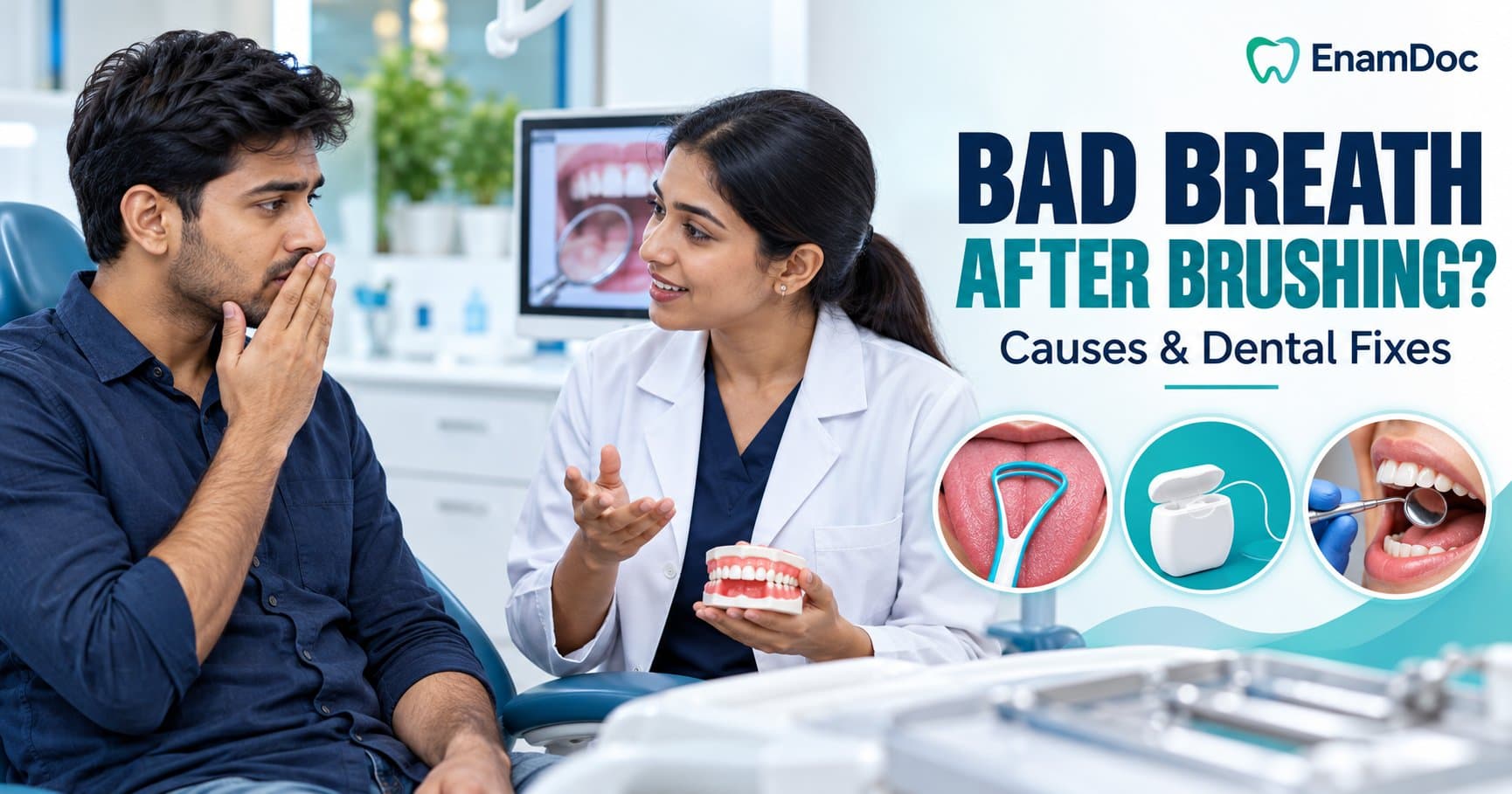
You brush your teeth every morning. You floss. You use mouthwash. And still, by mid-morning, the bad breath is back. If this sounds familiar, you are not alone — and more importantly, you are not doing anything wrong. The problem is that chronic bad breath, known as halitosis, almost never comes from the teeth themselves. It comes from somewhere else in your mouth or body, and brushing cannot reach it.
This article explains what is actually causing your halitosis, why standard oral hygiene falls short, and what a dentist can do to genuinely fix the problem.
What is Halitosis and How Common is It?
Halitosis is the clinical term for persistent, unpleasant breath that does not go away with routine brushing. Temporary bad breath after eating garlic or onions is different — that clears on its own. True halitosis lingers throughout the day regardless of what you eat or how often you brush.
Studies suggest that approximately 25 to 30 percent of adults worldwide experience some form of chronic halitosis. In India, poor awareness of the underlying causes often means people spend years masking the odour with mints and sprays rather than treating the source.
Why Brushing Does Not Solve the Problem
Most people assume bad breath comes from the teeth. In reality, the bacteria responsible for halitosis produce odorous compounds called volatile sulphur compounds, or VSCs. These compounds are produced primarily:
- On the back of your tongue — where a thick, whitish coating harbours millions of anaerobic bacteria
- Below the gumline — where gum disease creates deep pockets full of bacteria that a toothbrush cannot reach
- In dry areas of the mouth — where reduced saliva allows bacteria to multiply unchecked
Your toothbrush cleans tooth surfaces well. But it touches only a fraction of the total surface area of your mouth, and it barely disturbs the tongue coating where most odour originates.
The Most Common Causes of Chronic Halitosis
1. Tongue Coating and Bacteria
The back third of your tongue is the single biggest source of bad breath in most patients. This area is rough and uneven, trapping dead cells, food particles, and bacteria in a biofilm that brushing alone cannot remove. The bacteria in this biofilm are anaerobic — they thrive without oxygen — and they break down proteins into sulphur compounds that smell like rotten eggs or sewage.
A dedicated tongue scraper, used daily from back to front, removes this coating far more effectively than a toothbrush. Most patients who start tongue scraping notice a significant difference within a week.
2. Gum Disease (Periodontitis)
Gum disease is the second most common cause of halitosis. When the gums become infected and pull away from the teeth, they form periodontal pockets — gaps between the gum and the tooth root that can reach 4 to 8 millimetres deep. These pockets are ideal anaerobic environments where odour-causing bacteria multiply in vast numbers.
Bleeding gums, swollen or red gum tissue, and teeth that feel loose or sensitive at the gum line are signs that gum disease may be behind your halitosis. Mouthwash cannot penetrate these pockets. Only professional dental treatment — scaling, root planing, or periodontal therapy — can resolve this source of odour.
3. Dry Mouth (Xerostomia)
Saliva is a natural antibacterial fluid that constantly washes bacteria and dead cells from the mouth. When saliva flow is reduced — a condition called xerostomia — bacteria are free to multiply and produce VSCs without interruption.
Dry mouth is caused by many factors: certain medications (antihistamines, antidepressants, blood pressure drugs), mouth breathing, dehydration, and stress. People who breathe through their mouths at night often notice that their breath is worst first thing in the morning, precisely because saliva production slows during sleep.
4. Tonsil Stones (Tonsilloliths)
If you have tonsils, small pockets in their surface can trap food debris, dead cells, and bacteria over time. These deposits calcify into pale, hard lumps called tonsil stones. Tonsil stones have a particularly foul odour — disproportionate to their small size — because they are densely packed with the same anaerobic bacteria responsible for other forms of halitosis.
People with tonsil stones often report a persistent bad taste as well as bad breath that does not respond to brushing at all. An ENT specialist or dentist can identify and remove tonsil stones, and a dentist can advise on whether tonsil removal might be appropriate in recurrent cases.
5. Systemic and Medical Causes
A smaller proportion of halitosis cases — roughly 5 to 10 percent — originate outside the mouth altogether. Conditions that can cause systemic halitosis include:
- Acid reflux (GERD) — stomach acid and partially digested food reach the oesophagus and throat, producing a sour, acidic odour
- Diabetes — when blood sugar is poorly controlled, the breath may develop a sweet or fruity smell (from ketones) or an ammonia-like smell
- Kidney disease — impaired kidneys lead to a build-up of urea, which the body partially excretes through the breath as an ammonia or fish-like odour
- Respiratory infections — sinusitis, post-nasal drip, and chest infections all contribute to halitosis
- Liver disease — advanced liver disease produces a distinctive musty or sweet-rotten odour called fetor hepaticus
If a dentist has treated your gum disease and tongue coating but the odour persists, it is worth investigating systemic causes with a physician.
What Does Not Work
It is worth being direct about the things that most people try and that genuinely do not address the underlying problem:
- Mints and chewing gum — these mask the odour for 10 to 20 minutes and are gone. They do nothing to reduce bacterial load.
- Standard mouthwash — alcohol-based mouthwashes dry out the mouth, which worsens the problem over time. Even antibacterial mouthwashes only suppress bacteria on surfaces they contact; they cannot penetrate gum pockets or the back of the tongue biofilm effectively.
- Drinking coffee or tea — these are acidic and drying, and actually worsen halitosis in most people.
- More frequent brushing — brushing twice a day is appropriate. Brushing four or five times a day does not improve halitosis and can erode enamel.
What Actually Helps
The treatments that produce real, lasting improvement are all aimed at the actual sources of odour:
- Daily tongue scraping from back to front, two to three passes, using a dedicated tongue scraper (not the toothbrush bristles)
- Professional scaling and root planing if gum disease is present — this removes the bacteria below the gumline that no home care tool can reach
- Staying hydrated and managing dry mouth — drinking water throughout the day, using alcohol-free mouthwash, and addressing medications that cause dryness with your doctor
- Treating tonsil stones if present, either at home with gentle irrigation or by a specialist
- Using a water flosser in addition to string floss to flush interdental spaces more thoroughly
- Addressing underlying medical conditions like acid reflux or blood sugar management if systemic causes are suspected
When Should You See a Dentist About Bad Breath?
You should book a dental appointment if:
- Your bad breath has persisted for more than a few weeks despite good home hygiene
- Your gums bleed when you brush or floss
- You have noticed your gums receding or your teeth feeling loose
- You can see white or yellowish lumps in the back of your throat (possible tonsil stones)
- The odour is accompanied by a persistent bad taste in your mouth
- Nothing — mouthwash, brushing, mints — makes any noticeable difference
A dentist will assess the likely cause of your halitosis, check for gum disease, examine your tongue and tonsils, and refer you to a physician if a systemic cause is suspected. Most cases of halitosis are completely treatable once the source is correctly identified.
Finding Help at EnamDoc
At EnamDoc, our dentists take halitosis seriously as the dental and medical issue that it is. We assess patients for gum disease, tongue health, dry mouth, and other oral causes of bad breath, and we create a treatment plan tailored to the specific source of the problem.
If you have been managing bad breath with mints and mouthwash for longer than you would like to admit, it may be time to find out what is actually causing it. Book a consultation through EnamDoc and speak with a dentist who will take the problem seriously from the first appointment.
Frequently asked
Frequently asked questions
Why does my breath smell bad even though I brush twice a day?
Brushing cleans the surfaces of your teeth but does not reach the main sources of bad breath. The back of the tongue harbours a thick biofilm of anaerobic bacteria that produce sulphur compounds, and gum pockets below the gumline also shelter large numbers of odour-causing bacteria. Neither of these is disturbed by a toothbrush. Adding daily tongue scraping and getting a professional dental check for gum disease addresses the actual problem rather than masking it.
Can mouthwash cure bad breath permanently?
No. Standard mouthwash — especially alcohol-based varieties — suppresses bacteria temporarily and can worsen dry mouth over time, which is itself a major cause of halitosis. Even antibacterial mouthwashes cannot penetrate gum pockets or the tongue biofilm where most odour-causing bacteria live. Mouthwash is a supplement to good oral care, not a treatment for the underlying cause. If bad breath keeps returning, the source needs to be identified and treated by a dentist.
When should I see a dentist for bad breath rather than trying to manage it at home?
See a dentist if your bad breath has persisted for more than a few weeks despite good oral hygiene, if your gums bleed or feel tender when you brush, if you have noticed white or yellow lumps at the back of your throat (possible tonsil stones), or if mints and mouthwash make no noticeable difference. A dentist can identify the specific cause — gum disease, tongue bacteria, dry mouth, or a systemic issue — and recommend the treatment that will actually resolve it.
- bad breath
- halitosis
- chronic halitosis
- oral hygiene
- tongue coating
- gum disease
- patients
Keep reading