Why Your Gums Bleed When You Brush — And When It's Something Serious
Bleeding gums when brushing is one of the most overlooked warning signs in dental health. Dr. Aditya Swami explains the common causes, what the blood is actually telling you, and when you need to see a dentist urgently.
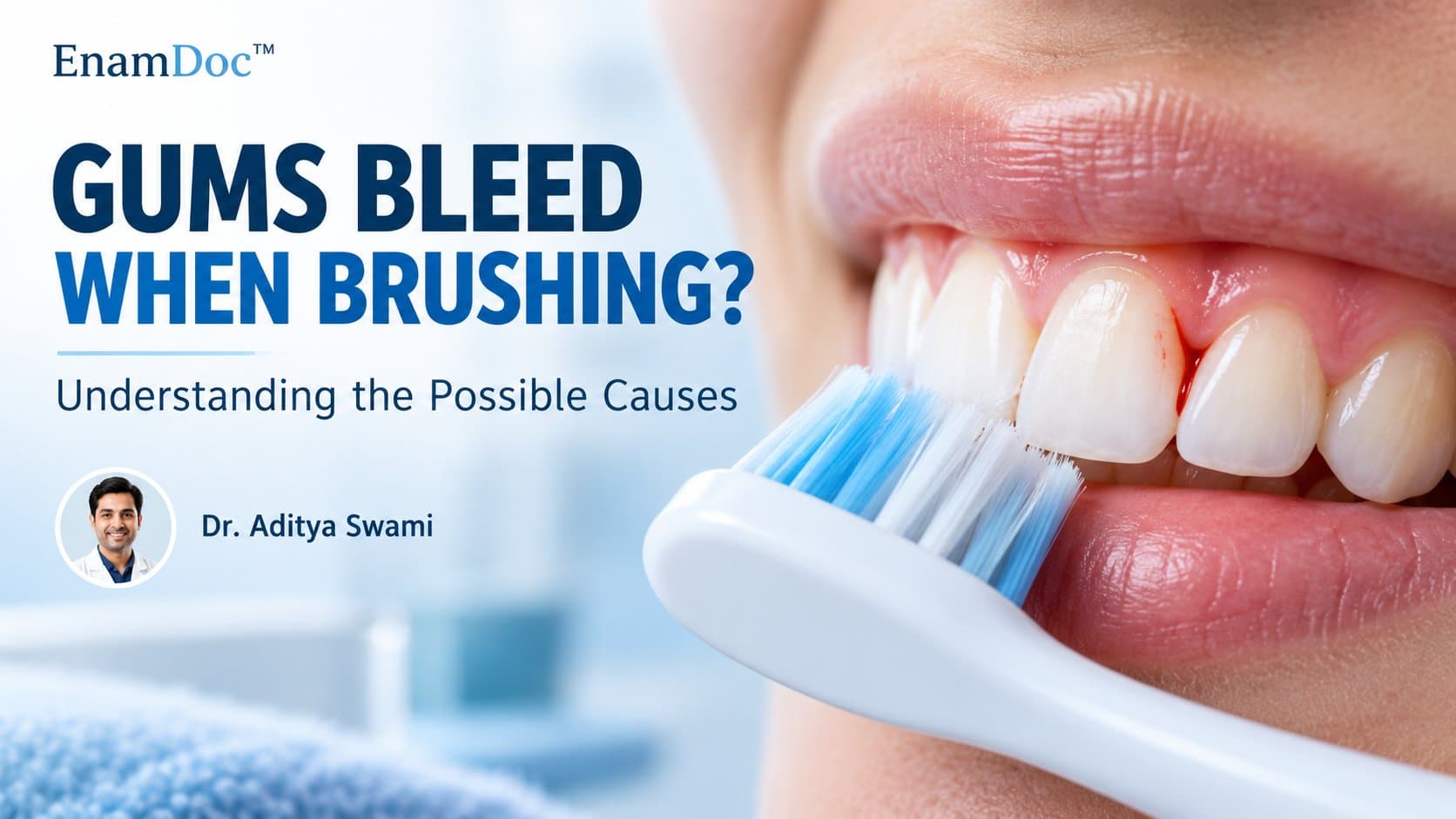
You spit out toothpaste and notice a pink tinge in the sink. You brush a little more gently, hoping it goes away. Then it happens again the next morning. And the next. Most people either ignore bleeding gums entirely or panic unnecessarily — and neither response is ideal. Understanding what is causing the bleeding puts you in a position to actually fix it.
The truth is that bleeding gums are almost always telling you something. Sometimes it is a simple message: you need to floss more. But other times it is a warning sign of a deeper problem that, left unaddressed, can lead to tooth loss, systemic health complications, and expensive treatment. Here is how to tell the difference.
Why Gums Bleed: The Basic Biology
Healthy gum tissue is firm, pink, and does not bleed when touched or brushed. When gums bleed, it is almost always because they are inflamed. That inflammation is the body's immune response to something it perceives as a threat — usually the bacteria that live in dental plaque.
When plaque is not regularly removed by brushing and flossing, the bacteria in it release toxins that irritate the gum tissue. The body responds by sending extra blood flow to the area to fight the infection. Inflamed gum tissue becomes swollen, tender, and full of blood vessels near the surface. Any minor friction — a toothbrush, floss, even a hard piece of food — ruptures those vessels and causes bleeding.
The Most Common Reasons Gums Bleed
1. Gingivitis
Gingivitis is the earliest and most reversible stage of gum disease. It is characterised by red, swollen, bleeding gums — with no damage yet to the bone or connective tissue supporting the teeth. The key fact about gingivitis is this: it is almost entirely caused by inadequate plaque removal, and it is almost entirely reversible with better home care and a professional clean.
If your gums have been bleeding for a few days and you have not been brushing or flossing consistently, gingivitis is the most likely culprit. The good news is that with twice-daily brushing, daily flossing, and a dental clean, gingivitis typically resolves within two to three weeks.
2. You Just Started Flossing Again
This is one of the most common situations. If you go weeks or months without flossing and then resume, your gums will bleed — sometimes dramatically — for the first few days. This does not mean flossing is damaging them. It means the gum tissue has become inflamed from plaque accumulation, and flossing is disturbing that inflamed tissue.
Push through it. With consistent daily flossing, the bleeding should stop within one to two weeks as the gum tissue becomes healthier and less inflamed.
3. Brushing Too Hard
Vigorous scrubbing does not clean teeth better — it traumatises the gum tissue and can cause mechanical bleeding. Use a soft-bristled toothbrush and gentle, circular motions rather than aggressive back-and-forth scrubbing. Electric toothbrushes with pressure sensors are particularly useful for people who habitually brush too hard.
4. Hormonal Changes
Pregnancy, puberty, and hormonal contraceptives can all make gum tissue more reactive to plaque. Pregnant women in particular are susceptible to "pregnancy gingivitis" — bleeding, swollen gums caused by elevated progesterone levels making the gum tissue more sensitive to bacterial toxins. This is why dental care during pregnancy is especially important.
5. Medications
Several common medications can cause gum bleeding or make it worse. Blood thinners such as warfarin and aspirin reduce the blood's clotting ability, so even minor gum irritation causes more visible bleeding. Some blood pressure medications and antidepressants cause dry mouth, which allows plaque to accumulate faster. Always tell your dentist what medications you are taking — it changes how they interpret your gum health.
6. Vitamin Deficiencies
Severe deficiency in Vitamin C (scurvy) causes bleeding gums, though this is rare in India unless diet is very restricted. More commonly, low Vitamin K levels can impair clotting and make bleeding more likely. A varied diet that includes fresh vegetables and fruit covers most people adequately.
When Bleeding Gums Become Serious: Signs of Periodontitis
When gingivitis is not treated, the infection can spread below the gumline and begin destroying the bone and connective tissue that hold teeth in place. This is periodontitis — a more severe, progressive form of gum disease that can lead to tooth loss.
Signs that suggest you may have periodontitis rather than simple gingivitis include:
- Gums that bleed spontaneously, not just when brushed or flossed
- Gum recession — your teeth look longer than they used to
- Persistent bad breath that does not improve with brushing
- Pus between the gum and tooth
- Teeth that feel loose or have shifted
- Pain when chewing
- Deep pockets around teeth — your dentist will measure these during an examination
Periodontitis is not reversible in the way gingivitis is. The bone that is lost does not regenerate on its own. Treatment typically involves deep cleaning procedures (scaling and root planing), sometimes surgery, and lifelong maintenance. The earlier it is caught, the better the outcome.
The Link Between Gum Disease and Your Overall Health
The connection between oral health and systemic disease is one of the most important and underappreciated areas of dentistry. Chronic gum infection allows bacteria to enter the bloodstream, where they can contribute to or worsen several serious conditions:
- Heart disease — Studies have found associations between periodontitis and an increased risk of heart attack and stroke. The bacteria from infected gum tissue can attach to heart valves and arterial walls.
- Diabetes — Gum disease and diabetes have a two-way relationship. High blood sugar promotes bacterial growth in the mouth, worsening gum disease. At the same time, gum infection makes blood sugar harder to control. Treating gum disease has been shown to improve HbA1c levels in people with diabetes.
- Preterm birth — Some studies have linked severe periodontitis in pregnant women to a higher risk of premature delivery and low birth weight.
- Respiratory disease — Bacteria from the mouth can be aspirated into the lungs, contributing to pneumonia and worsening COPD.
This does not mean that bleeding gums will definitely cause a heart attack. But it does mean that chronic gum infection is not simply a "dental problem" — it has whole-body implications worth taking seriously.
When to See a Dentist About Bleeding Gums
See a dentist promptly if:
- Your gums bleed every time you brush, for more than two weeks despite improving your technique
- Your gums bleed spontaneously — without any brushing or flossing
- You notice significant gum swelling, pain, or pus
- Your gums have receded noticeably, or your teeth feel loose
- You have bad breath that does not resolve
- You are pregnant and experiencing gum bleeding
- You have diabetes and notice any gum changes
Do not wait for a tooth to wobble before acting. By the time a tooth feels loose, significant bone loss has usually already occurred. Early treatment is far simpler and less expensive than advanced periodontitis management.
Clinics using EnamDoc can track gum pocket depths across visits, giving both you and your dentist a clear picture of whether your gum health is improving, stable, or deteriorating — so that small problems are caught and addressed before they become big ones.
What You Can Do Right Now
If your gums are bleeding, start with the basics: brush twice daily with a soft-bristled brush using gentle pressure, floss every day, and book a professional clean. Most cases of gingivitis respond quickly to this approach. If the bleeding does not improve within two weeks, or if you have any of the warning signs of periodontitis listed above, see a dentist as soon as possible.
Your gums are not supposed to bleed. When they do, they are asking for attention — and the earlier you respond, the simpler the solution.
Frequently asked
Frequently asked questions
Is it normal for gums to bleed when you start flossing?
Yes, it is common for gums to bleed when you resume flossing after a break — this happens because the gum tissue has become inflamed from plaque buildup. It is not a sign that flossing is harmful. With daily flossing, the bleeding should stop within one to two weeks as the inflammation subsides. If it persists beyond two weeks, see a dentist to rule out gingivitis or gum disease.
Can gum disease affect my heart or overall health?
Yes. Research has found links between chronic gum disease (periodontitis) and an increased risk of heart disease, stroke, and complications in diabetes. The bacteria from infected gums can enter the bloodstream and contribute to inflammation in blood vessels. Treating gum disease has been shown to improve blood sugar control in people with diabetes. This is why dentists take gum health seriously — it is not just about your mouth.
- bleeding gums
- gum disease
- gingivitis
- periodontitis
- oral hygiene
Keep reading