Bleeding Gums: What Causes Them and When You Should See a Dentist
Gums that bleed when you brush are not always a dental emergency — but they are always a signal worth paying attention to. Here are the most common causes and when the problem can be fixed at home versus when you need professional treatment.
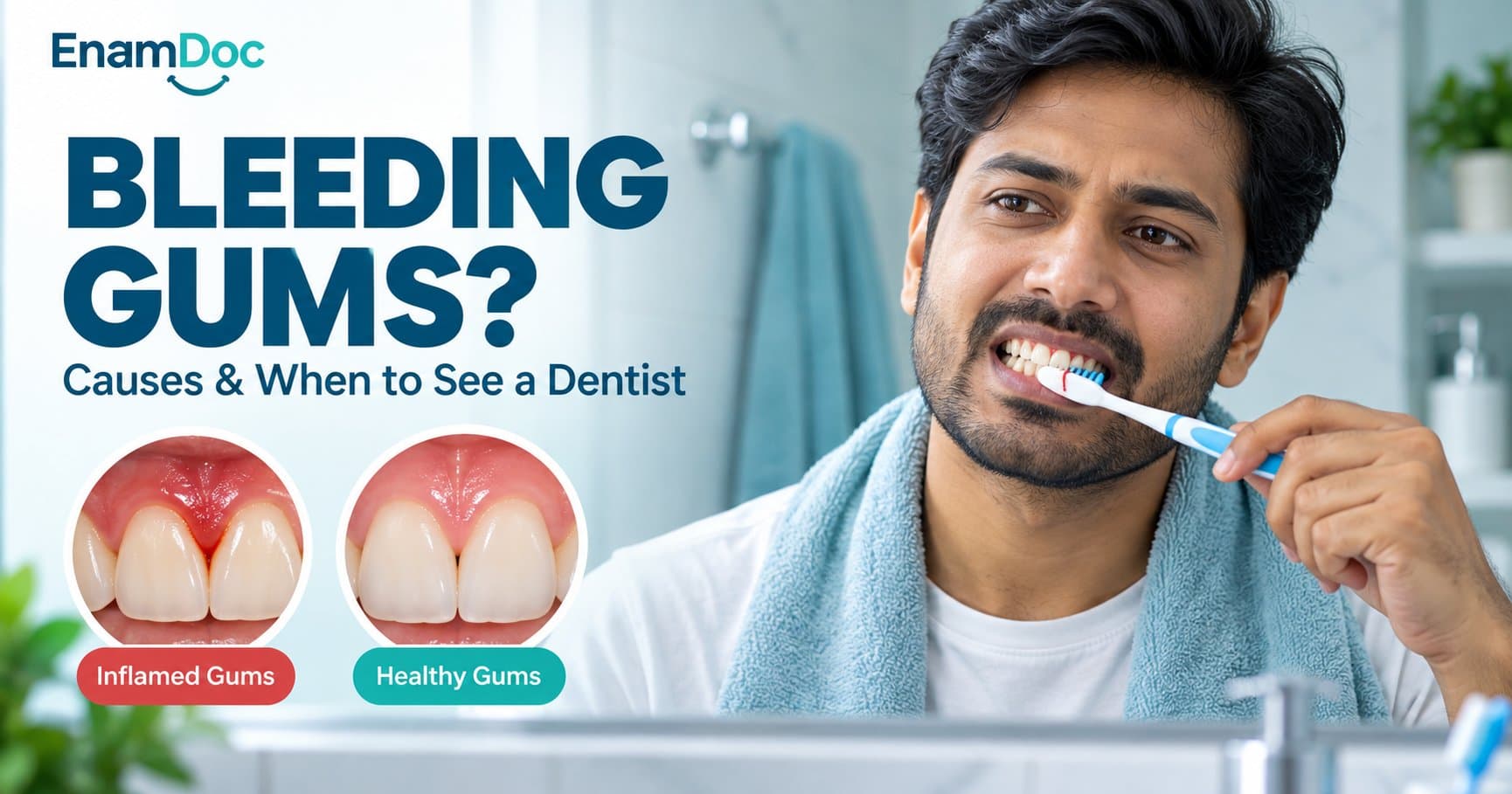
Noticing blood in the sink when you brush your teeth is unsettling, but it is also very common. In India, studies suggest that up to 90% of adults have some form of gum disease — and bleeding gums are often the first sign. The good news is that caught early, most gum problems are entirely reversible.
Why Do Gums Bleed?
Healthy gum tissue does not bleed during normal brushing or flossing. When gums bleed, it usually means inflammation is present. Inflammation of the gums — called gingivitis — is the body's immune response to bacteria that build up in the space between the tooth and gum.
That bacterial build-up, called plaque, hardens into tartar (calculus) within 24 to 72 hours if not removed. Tartar cannot be removed by brushing alone and can only be cleaned off by a dentist or hygienist. As long as tartar stays on the tooth, the gum remains inflamed and continues to bleed.
Common Causes of Bleeding Gums
1. Gingivitis
The most common cause. Gingivitis is reversible gum inflammation with no bone or ligament damage yet. It is caused by plaque accumulation and responds quickly to improved brushing, flossing, and a professional dental cleaning.
2. Brushing Too Hard or Using the Wrong Technique
Aggressive horizontal scrubbing with a hard-bristle brush can injure gum tissue and cause bleeding, independent of infection. Using a soft-bristle brush and a gentle circular or modified Bass technique usually resolves this within two weeks.
3. Starting Flossing After a Long Break
If you haven't flossed in months, the gums may bleed the first few times. This generally settles within a week if you keep flossing daily. If bleeding continues beyond two weeks, see a dentist.
4. Medications
Blood thinners (aspirin, warfarin, clopidogrel), some blood pressure medications, and antiepileptics can cause or worsen gum bleeding. Inform your dentist about all medications before any procedure.
5. Pregnancy Gingivitis
Hormonal changes during pregnancy make gum tissue more sensitive to plaque, causing heightened inflammation known as pregnancy gingivitis. It typically peaks in the second trimester and resolves after delivery, but needs professional monitoring.
6. Vitamin C Deficiency
Severe vitamin C deficiency (scurvy) causes fragile gums that bleed easily. While rare, it is occasionally seen in people with very restricted diets. Correcting the deficiency resolves the bleeding.
7. Periodontitis (Advanced Gum Disease)
If gingivitis is not treated, it can progress to periodontitis — a deeper infection where bacteria damage the bone and ligaments that support the tooth. Periodontitis causes persistent bleeding, gum recession, tooth loosening, and bad breath. It is not reversible like gingivitis, but it can be controlled with specialist periodontal treatment.
When Can You Handle Bleeding Gums at Home?
Minor bleeding that started recently and has no other symptoms can usually be improved at home:
- Switch to a soft-bristle toothbrush
- Brush twice daily using gentle circular strokes along the gumline
- Floss once daily — keep going even if it bleeds initially
- Use a fluoride toothpaste and an antibacterial mouthwash (chlorhexidine, for short-term use only)
- Improve diet: reduce sugary snacks, increase fresh fruits and vegetables
If bleeding does not improve within two to three weeks of consistent home care, book a dental appointment.
When Should You See a Dentist Urgently?
See a dentist promptly if:
- Gums bleed spontaneously (without brushing)
- Bleeding is heavy or does not stop within a few minutes
- Gums are swollen, dark red, or pulling away from the teeth
- You have pain when chewing or sensitivity around a tooth
- There is a foul taste or persistent bad breath despite good hygiene
- A tooth feels loose
These signs may indicate periodontitis or a dental abscess, both of which need professional treatment.
How Bleeding Gums Are Treated
Treatment depends on the cause and severity. For gingivitis, a professional cleaning (scaling) removes plaque and tartar, and the gums usually heal within weeks. For periodontitis, deep cleaning (scaling and root planing) under the gumline is required, sometimes combined with antibiotic therapy or surgical intervention in severe cases.
Can Bleeding Gums Affect Overall Health?
Research increasingly shows links between untreated gum disease and conditions including cardiovascular disease, diabetes complications, preterm birth, and respiratory infections. The mouth is not isolated from the rest of the body — chronic oral inflammation has systemic effects.
Tracking Your Gum Health with EnamDoc
For patients whose dentists use EnamDoc, gum health scores, periodontal charting, and treatment notes are stored in a digital record. This makes it easier to track whether gum health is improving between visits and to share records with a periodontist if a referral is needed.
Final Thoughts
Bleeding gums are a warning — not a normal part of dental care. Most early-stage gum problems respond remarkably well to better brushing technique and one professional cleaning. The window to reverse gingivitis before it becomes periodontitis is wide open — the only requirement is acting on it. If your gums bleed regularly, the right time to address it is now, not after a tooth becomes loose.
Frequently asked
Frequently asked questions
Why do my gums bleed even though I brush every day?
Regular brushing removes soft plaque, but if plaque has hardened into tartar (calculus) along the gumline, brushing alone cannot remove it. Tartar keeps bacteria in contact with the gum, causing ongoing inflammation and bleeding. A professional dental cleaning to remove tartar, combined with consistent flossing, usually stops the bleeding within two to three weeks. If it does not, consult your dentist for a periodontal assessment.
Is bleeding gums during pregnancy normal?
Pregnancy gingivitis is very common due to hormonal changes that make gums more sensitive to plaque. About 60–75% of pregnant women experience some degree of gum bleeding. While it is a normal response to hormonal shifts, it should not be ignored. If left untreated, pregnancy gingivitis can progress to periodontitis, which has been linked to preterm birth and low birth weight. Visiting a dentist during pregnancy is safe and recommended — routine cleanings and scaling are considered safe in the second trimester and beyond. Good brushing, flossing, and a balanced diet rich in vitamin C and calcium can significantly reduce bleeding during pregnancy.
Can bleeding gums lead to tooth loss if not treated?
Yes, untreated bleeding gums can eventually lead to tooth loss. Bleeding gums are often the first sign of gingivitis, which, if not addressed, can progress to periodontitis — a serious infection of the gum tissue and the bone that supports your teeth. As the infection deepens, it destroys the bone around the roots of your teeth. Over time, teeth may become loose, shift position, or fall out entirely. The good news is that gingivitis is completely reversible with proper professional cleaning and home care. Even moderate periodontitis can be managed effectively with scaling and root planing, followed by regular maintenance visits. Early treatment is critical — do not wait until the bleeding becomes painful, as pain often signals advanced damage.
- bleeding gums
- gum disease
- gingivitis
- periodontitis
- gum health
- patients
Keep reading