Gingivitis vs Periodontitis: Understanding the Stages of Gum Disease
Understand the difference between gingivitis and periodontitis, how gum disease progresses in stages, and what you can do to stop it before it damages your teeth.
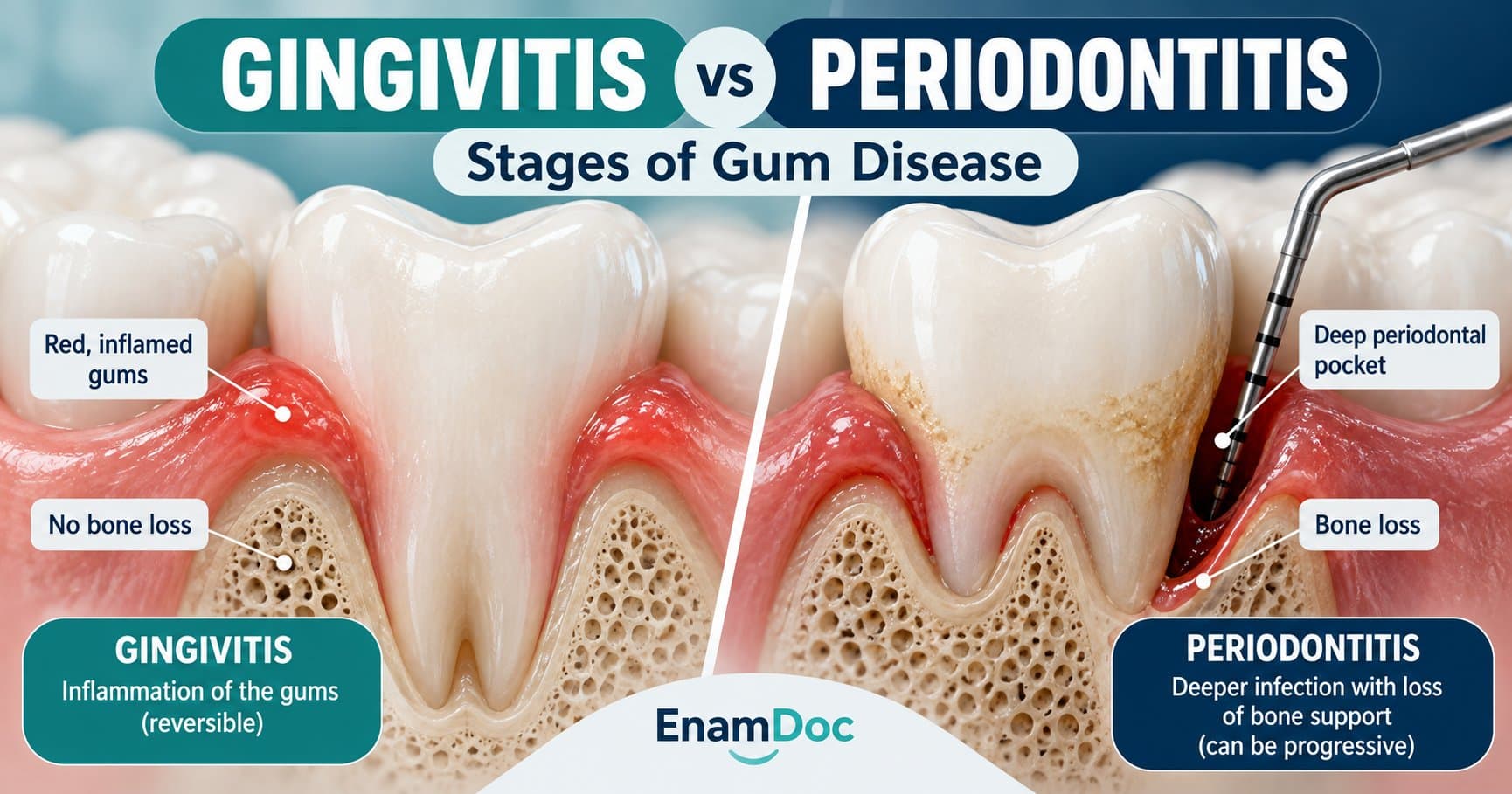
Most people know that bleeding gums are "not good." But very few know why — or how quickly a minor gum problem can turn into something that threatens the teeth themselves. The difference between gingivitis and periodontitis is the difference between a problem you can reverse at home and one that requires surgery to manage. This guide explains both conditions, how one leads to the other, and exactly what you can do to stop gum disease at any stage.
What Is Gum Disease?
Gum disease — also called periodontal disease — is an infection of the tissues that hold your teeth in place. It is caused primarily by plaque, a sticky film of bacteria that forms on teeth every day. When plaque is not removed through brushing and flossing, it irritates the gums, triggers inflammation, and eventually damages the bone and ligaments that anchor your teeth.
Gum disease exists on a spectrum, from early and reversible (gingivitis) to advanced and irreversible (periodontitis). The line between the two is not always obvious, which is why regular dental check-ups are so important.
Gingivitis: The First Stage
Gingivitis is inflammation of the gums caused by plaque buildup at and below the gumline. At this stage, the infection has not yet reached the bone or supporting ligaments — it is confined to the soft gum tissue.
Signs of Gingivitis
- Gums that bleed when you brush or floss
- Red or purplish gums instead of healthy pink
- Swollen or puffy gums
- Gums that feel tender when touched
- Persistent bad breath
- Gums that look shiny rather than matte
Importantly, gingivitis is usually painless. This is one reason so many people ignore it — there are no alarming symptoms, just subtle changes that are easy to dismiss as normal.
The Good News: Gingivitis Is Fully Reversible
Because the damage in gingivitis has not yet reached the bone, it can be completely reversed with proper care. A professional cleaning (scaling) removes the built-up tartar that toothbrushes cannot reach, and consistent brushing and flossing at home keep it from returning. Most cases of gingivitis resolve within two to three weeks of proper treatment.
Periodontitis: When Gingivitis Progresses
When gingivitis is left untreated, the infection moves deeper. Bacteria invade below the gumline and begin destroying the bone and connective tissue that hold teeth in their sockets. This is periodontitis. Unlike gingivitis, the bone loss that occurs in periodontitis is permanent — the body does not regenerate lost jaw bone on its own.
Signs of Periodontitis
- Gums that have pulled away from the teeth (recession), making teeth look longer
- Deep pockets forming between the gum and tooth
- Teeth that feel loose or have shifted position
- Pus visible between the gums and teeth
- Severe or chronic bad breath that does not go away with brushing
- Pain when chewing
- Sensitivity to hot and cold near the gumline
Stages of Periodontitis
Modern dentistry classifies periodontitis into four stages based on severity:
| Stage | Description | Bone Loss |
|---|---|---|
| Stage I (Initial) | Early periodontitis, shallow pockets (1–2 mm below normal) | Less than 15% |
| Stage II (Moderate) | Deeper pockets, early bone loss, some bleeding | 15–33% |
| Stage III (Severe) | Deep pockets, significant bone loss, possible tooth mobility | 33% or more |
| Stage IV (Very severe) | Tooth loss has occurred or is likely; chewing affected | Extensive |
How Gingivitis Becomes Periodontitis
The transition is not sudden — it happens gradually over months or years of unchecked plaque accumulation. Here is the typical progression:
- Plaque forms on teeth within 24 hours of brushing, especially near the gumline
- Tartar (calculus) builds up when plaque is not removed and hardens — tartar can only be removed by a dentist
- Gums become inflamed in response to bacteria (gingivitis)
- Pockets form as the gum separates from the tooth, creating space for more bacteria
- Bacteria reach the bone and begin dissolving the structures that hold teeth (periodontitis)
Risk factors that accelerate this process include smoking, uncontrolled diabetes, dry mouth (often medication-related), hormonal changes during pregnancy, stress, and certain genetic predispositions.
Key Differences at a Glance
| Feature | Gingivitis | Periodontitis |
|---|---|---|
| Involves bone? | No | Yes |
| Reversible? | Yes | No (manageable, not reversible) |
| Tooth loss risk? | Very low | High if untreated |
| Pocket depth | Normal (up to 3 mm) | 4 mm or deeper |
| Gum recession? | Uncommon | Common |
| Pain? | Rare | Can occur in advanced stages |
Treatment Options by Stage
Treating Gingivitis
- Professional scaling: Removes tartar from above and just below the gumline
- Improved home care: Brushing twice daily with a soft-bristle brush, flossing once daily
- Antibacterial mouthwash: Chlorhexidine rinse prescribed by a dentist can help reduce bacterial load
Treating Periodontitis
- Scaling and root planing (deep cleaning): Goes deeper than a standard cleaning to remove tartar from below the gumline and smooth the root surface so gums can reattach
- Antibiotics: Topical or systemic antibiotics reduce bacterial infection in pockets
- Surgical options (for advanced cases): Flap surgery to reduce pocket depth; bone grafting to restore lost support; guided tissue regeneration
- Maintenance programme: Periodontal patients need professional cleanings every 3–4 months, not once a year
Can You Tell If You Have Gum Disease Without a Dentist?
You can spot warning signs at home, but you cannot diagnose gum disease yourself. The most reliable indicator is pocket depth — measured with a thin probe during a dental exam. Most patients with early periodontitis have no symptoms they notice on their own. By the time pain or tooth mobility appears, the disease is usually advanced.
A yearly dental check-up with X-rays is the most practical way to catch gum disease before it progresses.
Prevention: The Only Thing That Actually Works Long-Term
- Brush for two minutes twice a day using a fluoride toothpaste
- Floss once a day — the single most effective way to disrupt plaque between teeth where brushes cannot reach
- Attend professional cleanings every six months (or three to four months if you have a history of gum disease)
- Avoid smoking — smoking is the single largest modifiable risk factor for periodontitis
- Manage diabetes — poorly controlled blood sugar dramatically worsens gum disease
- Drink water and stay hydrated to avoid dry mouth
When to See a Dentist for Gum Concerns
Do not wait for pain to appear. See a dentist promptly if you notice any of the following: bleeding gums that persist for more than a week despite improved home care, gums that look darker red or swollen, any looseness in your teeth, a sudden change in how your bite feels, or visible recession where your teeth look longer than they used to.
At EnamDoc, you can search for periodontists and dental hygienists near you, book same-week appointments, and read verified patient reviews — so you can act quickly when your gums need attention.
Frequently asked
Frequently asked questions
Can gingivitis be reversed?
Yes — gingivitis is the only stage of gum disease that is completely reversible. Because the infection has not yet reached the bone, the damage is limited to the soft gum tissue. With a professional scaling to remove tartar, combined with consistent brushing twice daily and flossing once daily, most cases of gingivitis resolve within two to three weeks. The key is to act before it progresses into periodontitis, where the bone loss becomes permanent.
What are the early signs of gum disease?
The most common early signs are gums that bleed when you brush or floss, redness or swelling of the gum tissue, and persistent bad breath that does not go away after brushing. Gums may also look darker than usual or feel tender. Importantly, early gum disease is often painless, which is why many people miss it. If you notice any of these signs, book a dental check-up soon — caught at the gingivitis stage, gum disease is fully reversible.
Is periodontitis curable?
Periodontitis cannot be fully cured in the way gingivitis can, because the bone loss it causes is permanent. However, it can absolutely be controlled and stabilised with the right treatment. Scaling and root planing, combined with a regular maintenance programme (professional cleanings every three to four months), can stop the disease from progressing. Surgical options exist for more advanced cases. With consistent care, most people with periodontitis can keep their natural teeth for life.
- gum disease
- gingivitis
- periodontitis
- gum disease treatment
Keep reading