Charcoal Toothpaste & DIY Whitening: What Dentists Actually Think
Thinking of using activated charcoal or DIY concoctions to whiten your teeth? Discover why dentists warn against enamel abrasion and explore safer, evidence-based alternatives.
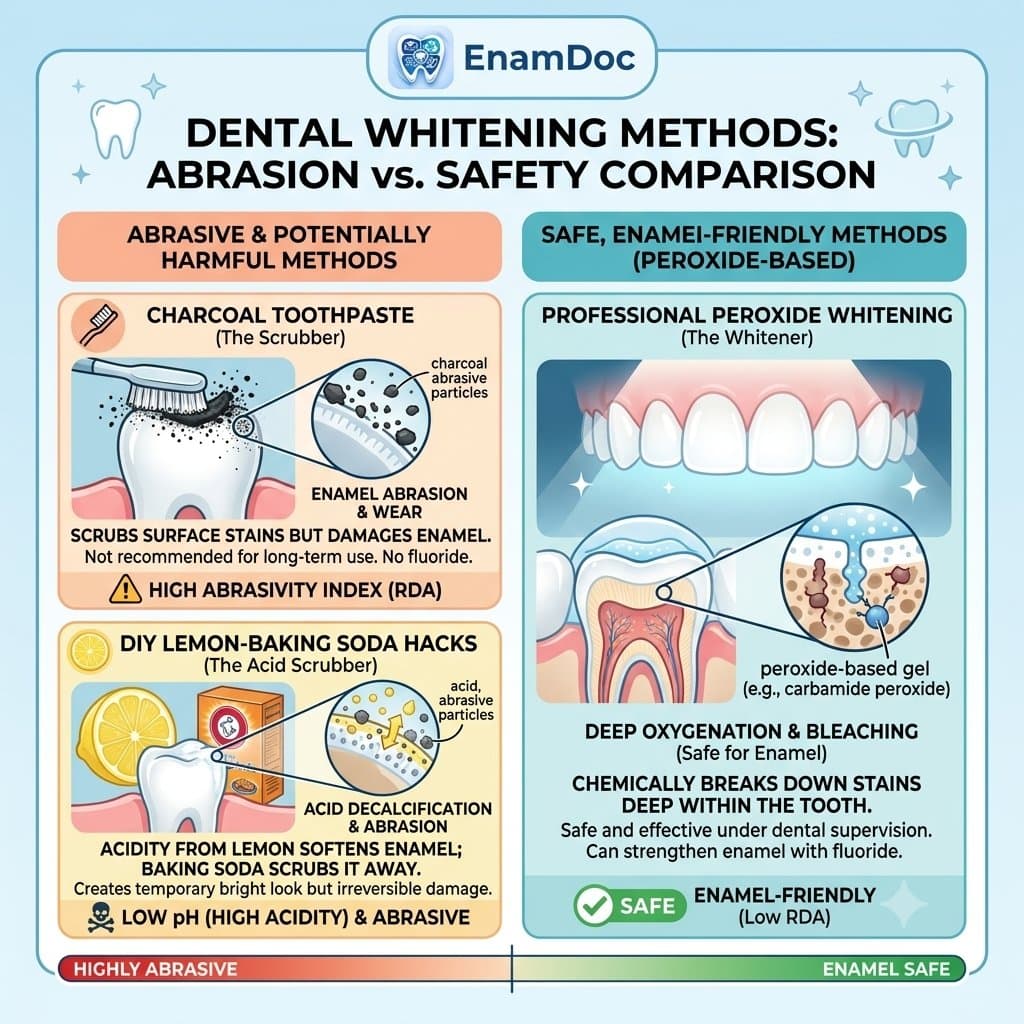
Social media feeds are flooded with viral home-whitening trends: black activated charcoal toothpastes, baking soda scrub pastes, turmeric rubs, and lemon juice concoctions promising a Hollywood smile in minutes. Marketed as "natural" and "chemical-free," these DIY alternatives look tempting compared to professional clinic treatments.
However, from a clinical dentistry perspective, many popular DIY whitening hacks do more harm than good. While they may create a short-lived illusion of brightness, they often cause irreversible micro-damage to your protective enamel.
The Abrasiveness Trap: How Charcoal "Whitens" Teeth
Activated charcoal works purely through physical mechanical abrasion. Its microscopic jagged particles act like fine sandpaper, scrubbing off superficial extrinsic stains caused by coffee, tea, red wine, or tobacco.
The danger lies in what happens next:
- Irreversible Enamel Wear: Tooth enamel does not regenerate. Daily scrubbing with abrasive particles wears down the outer crystalline layer, permanently thinning your enamel.
- The "Yellowing Paradox": Directly beneath translucent enamel lies dentin, which is naturally yellowish. As abrasive pastes strip away your enamel, the yellow dentin becomes more visible—leaving your teeth looking yellower than before.
- Chronic Tooth Sensitivity: Thin enamel exposes microscopic dentinal tubules, leading to sharp pain when eating hot, cold, acidic, or sweet foods.
- Restoration Staining: Charcoal particles can lodge into micro-margins around fillings, crowns, and veneers, creating stubborn gray or black outlines that are difficult to polish away.
Extrinsic vs. Intrinsic Stains: Why DIY Hacks Fail
To understand why DIY whitening falls short, you must distinguish between the two types of dental discoloration:
| Stain Type | Location & Cause | Effective Treatment |
|---|---|---|
| Extrinsic Stains | Outer enamel surface (coffee, dark tea, wine, smoking, food dyes). | Routine dental prophylaxis (scaling/polishing) and gentle low-RDA whitening toothpastes. |
| Intrinsic Stains | Deep inside the tooth matrix/dentin (aging, trauma, fluorosis, tetracycline medications). | Oxidizing agents (Hydrogen Peroxide or Carbamide Peroxide) that penetrate and break apart deep chromophore bonds. |
Charcoal, baking soda, and fruit peels cannot penetrate beneath the enamel surface. They cannot alter your tooth’s natural internal shade—only chemical oxidation via controlled peroxides can lift intrinsic stains.
Other Common DIY Trends to Avoid
- Lemon Juice & Acidic Rubs: Citric acid has a dangerously low pH (around 2.0 to 2.5). Rubbing fruit acids directly on teeth causes chemical demineralization and acid erosion, dissolving enamel.
- Baking Soda & Salt Pastes: While baking soda alone has moderate abrasivity, combining it with table salt or citrus juice creates an intensely abrasive, acidic scrub that strips the protective pellicle and enamel margin.
- Fluoride-Free Formulations: Most charcoal pastes lack bioavailable fluoride, leaving teeth vulnerable to acid attacks and cavity formation.
Safe, Evidence-Based Whitening Alternatives
If you want a noticeably brighter smile without compromising enamel integrity, stick to clinically proven options:
- Low-Abrasivity ADA-Accepted Whitening Toothpastes: These contain mild polishing agents (like hydrated silica) and chemical stain-dissolvers that lift surface discoloration while delivering fluoride to strengthen enamel.
- Custom In-Office or Take-Home Trays: Fabricated by your dentist, custom trays ensure high-grade carbamide or hydrogen peroxide gel stays in contact with enamel while keeping caustic bleach off delicate gum tissue.
- In-Office Laser/Power Bleaching: Fast, professionally monitored treatments that lift teeth several shades in a single hour using protective gingival barriers to prevent soft-tissue burns.
The Takeaway
True teeth whitening requires gentle chemistry, not rough abrasion. Skip the abrasive charcoal powders and kitchen DIY mixtures. If you want a brighter smile, speak to your dentist about tailored, enamel-safe whitening protocols that deliver lasting results without sacrificing tooth structure.
Frequently asked
Frequently asked questions
Does charcoal toothpaste actually whiten teeth permanently?
No. Charcoal only removes surface-level stains through friction. It cannot change the internal natural shade of your teeth, and chronic use can wear away outer enamel, making teeth look yellower as the underlying dentin shows through.
Can I use charcoal toothpaste once a week safely?
While occasional use is less damaging than daily brushing, most dentists recommend avoiding charcoal powders entirely. Gentle, ADA-approved whitening toothpastes or professional dental cleanings remove surface stains far more safely without risking micro-scratches.
- teeth whitening
- charcoal toothpaste
- enamel health
- cosmetic dentistry
- DIY whitening
- dental safety
- oral hygiene
Keep reading