Crowns After Root Canal: Is It Always Mandatory?
Wondering if you truly need a crown after a root canal? Learn why molars require full cuspal protection, when front teeth can skip a cap, and the real risks of tooth fracture.
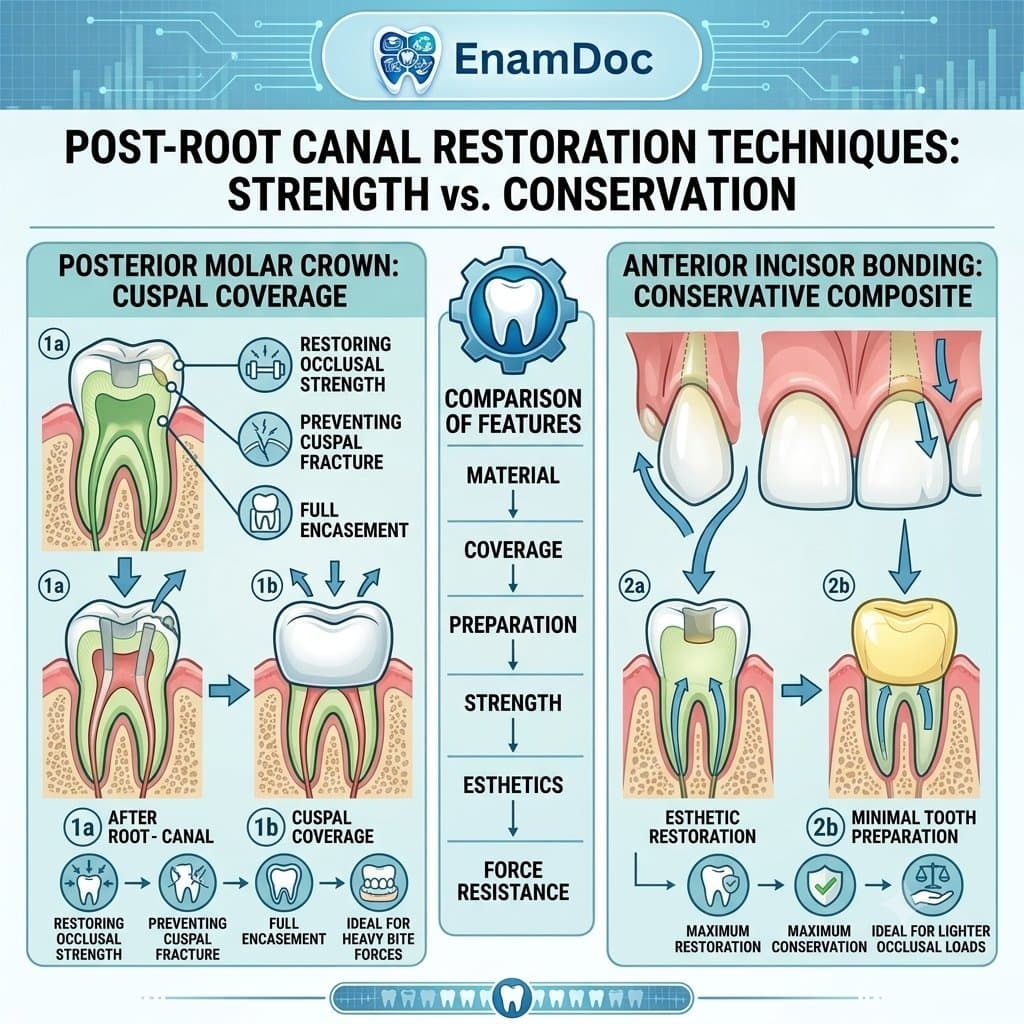
After enduring toothache and completing a multi-step root canal treatment (RCT), hearing that you now need a permanent dental crown often sparks hesitation: "The tooth doesn't hurt anymore, so why do I need to spend more money on a cap? Is a crown always mandatory?"
The reality is that a root canal only cleans and seals the internal root canals—it does not restore the physical strength of the tooth. Whether a crown is strictly mandatory depends entirely on which tooth was treated, the amount of natural tooth structure remaining, and the chewing forces that tooth must bear daily.
Why Root-Canaled Teeth Become Structurally Fragile
There is a common myth that removing the dental pulp turns a tooth "dead and brittle" like dry wood. While minor moisture loss occurs, the primary cause of fragility is structural loss:
- Extensive Decay Removal: A tooth needing a root canal has usually already lost significant enamel and dentin to deep caries or large pre-existing fillings.
- Endodontic Access Cavity: To reach and disinfect the pulp chamber and root canals, the clinician must drill an access opening through the center of the crown, severing internal structural bridges (marginal ridges).
- Loss of Natural Flexure: Hollowed-out tooth walls flex unevenly under heavy bite forces. Without a protective ring or cap holding the walls together, chewing forces act like a wedge, driving tooth cusps outward until they shear off.
Posterior Teeth (Molars & Premolars): Why Cuspal Coverage Is Essential
For back teeth, a full-coverage crown or onlay is considered clinically non-negotiable in over 90% of cases.
- Heavy Occlusal Forces: Molars endure compressive chewing forces ranging from 200 to 500+ Newtons during normal mastication, and even more in individuals who grind or clench.
- Cuspal Protection: A full crown or cuspal-coverage onlay encircles the entire tooth (known as the ferrule effect), distributing biting pressure evenly down the long axis of the root rather than splitting individual cusps.
- Catastrophic Fracture Risk: Leaving a treated molar restored only with a flat composite filling dramatically increases the risk of a vertical root fracture (VRF). A vertical root fracture splits the tooth below the bone line, making it unrestorable and resulting in mandatory tooth extraction.
Anterior Teeth (Incisors & Canines): When Can You Skip a Crown?
Unlike molars, front teeth experience shearing forces rather than heavy vertical crushing forces. A full crown is not always mandatory for anterior teeth after a root canal.
| Clinical Scenario | Recommended Restoration | Clinical Rationale |
|---|---|---|
| Intact Front Tooth (Trauma with small access hole) | Conservative Composite Resin Filling | Preserves precious remaining natural enamel and dentin without aggressive 360-degree crown preparation. |
| Discolored Front Tooth or Large Interproximal Decay | Veneer or Full Ceramic Crown | Restores cosmetic shade uniformity and reinforces weakened lateral walls. |
| Premolar with Moderate Tooth Loss | Partial Onlay / Overlay or Full Crown | Protects delicate premolar cusps from lateral shearing and splitting forces. |
| Molar (Upper or Lower) | Full Coverage Crown (Zirconia/PFM/Gold) | Essential to prevent catastrophic vertical root fractures under heavy daily mastication. |
The Dangerous Delay: The Timeline for Placing a Crown
Delaying a crown after completing your root canal is one of the most common causes of tooth loss. In addition to physical fracture, temporary fillings degrade over weeks, allowing saliva and oral bacteria to seep back down the root canals and cause reinfection.
Dentists strongly recommend placing the core buildup and permanent crown within 2 to 4 weeks of completing endodontic therapy.
Final Recommendation
If you have had a root canal on a molar or premolar, getting a crown is an essential insurance policy that protects your investment and ensures the tooth remains functional for life. If your treated tooth is a front incisor with minimal structural damage, discuss with your clinician whether a conservative composite restoration is suitable to preserve your natural tooth structure.
Frequently asked
Frequently asked questions
What happens if I don't get a crown on a root-canaled molar?
Without a full-coverage crown to absorb bite forces, an endodontically treated molar is highly vulnerable to splitting or vertical root fracture. If a fracture extends below the gumline and bone, the tooth cannot be saved and must be extracted.
Why don't all front teeth need crowns after a root canal?
Front teeth endure lighter lateral forces rather than direct vertical crushing pressures. If an anterior tooth retains most of its natural walls with only a small central access opening, a bonded composite resin filling is often sufficient and preserves more natural tooth structure.
- root canal
- dental crowns
- restorative dentistry
- tooth fracture
- endodontics
- molars
- tooth pain
- dental restorations
Keep reading