Inlays and Onlays: The Middle Ground Between a Filling and a Crown
When a cavity is too large for a filling but not bad enough for a full crown, dentists reach for an inlay or onlay. Here's how the two differ, what they cost in India, and how long they actually last.
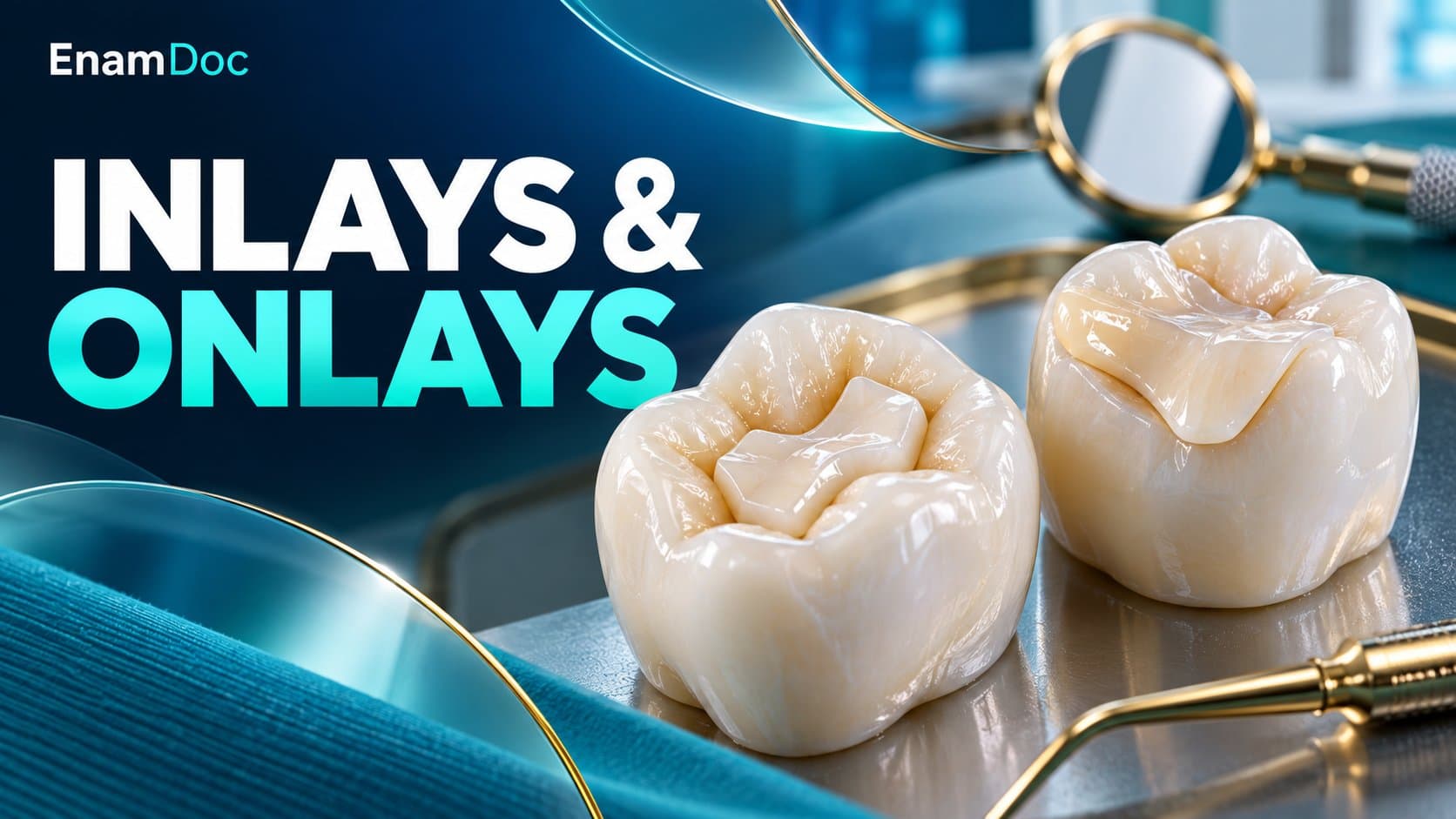
A dentist tells you the filling is too big for a filling. It sounds like a contradiction, but it is one of the most common moments in restorative dentistry — a cavity or old filling has damaged too much tooth structure for a simple composite fix, yet the tooth still has enough healthy structure left that it does not need a full crown. That middle ground is where inlays and onlays live.
What Inlays and Onlays Actually Are
Both are custom-made restorations manufactured outside the mouth — usually from porcelain, composite resin, or gold — and then cemented into place, unlike a filling, which is soft material packed directly into the cavity and hardened in the chair.
The difference between the two comes down to how much of the tooth they cover:
- Inlay: Fits within the cusps (the pointed edges) of the tooth, filling the grooved chewing surface much like a filling would, but as a solid pre-made piece.
- Onlay: Extends over one or more cusps, covering more of the tooth's surface — sometimes called a partial crown because it protects more of the tooth without wrapping around the entire circumference the way a crown does.
Why Not Just Use a Filling?
A direct composite filling is molded into the cavity while it is soft, which works well for small to medium cavities. But once too much tooth structure is missing, a direct filling has two problems: there is not enough surrounding tooth to hold it firmly in place, and a large mass of composite shrinks slightly as it sets, which can create gaps or cracks under the biting force of back teeth.
An inlay or onlay is fabricated separately — either in a dental lab or milled chairside with CAD/CAM technology — and cemented in as a single solid piece. It distributes chewing force more evenly and does not carry the same shrinkage risk, which is why dentists prefer it once a cavity crosses a certain size threshold, typically when it involves more than one cusp or a significant portion of the biting surface.
Why Not Just Use a Crown?
A crown covers the entire tooth, which means shaving down healthy enamel on all sides to make room for it — even the parts that were never damaged. That is a lot of healthy tooth structure to remove when the damage is really confined to one section.
An inlay or onlay is more conservative: it only replaces the part of the tooth that is actually damaged, leaving the rest of the natural enamel untouched. For a tooth where decay or an old filling has failed on one surface but the rest of the tooth is structurally sound, this is usually the better long-term choice.
Materials and What They Cost in India
Three materials are commonly used, each with a different balance of strength, appearance, and price:
- Porcelain/ceramic: Closely matches natural tooth colour and is the most common choice for visible back teeth. In India, porcelain inlays/onlays typically run from about ₹6,000 to ₹15,000 per tooth, depending on the lab and city.
- Composite resin: Tooth-coloured and less expensive than porcelain, usually ₹3,500 to ₹8,000, but generally less wear-resistant over the long run.
- Gold: The longest track record for durability and gentlest on the opposing tooth, but rarely chosen today for cosmetic reasons; pricing varies with gold rates and is usually the most expensive option.
These figures vary by clinic, city, and lab quality, so it's worth asking for a written estimate before treatment.
How the Procedure Works
The process typically takes two visits, unless the clinic has same-day CAD/CAM milling:
- First visit: The dentist removes the decay or old filling, shapes the remaining tooth structure, and takes an impression or digital scan. A temporary filling protects the tooth in the meantime.
- Lab fabrication: The inlay or onlay is custom-made to fit the exact shape of the prepared tooth, usually over one to two weeks.
- Second visit: The temporary is removed, the fit and bite are checked, and the restoration is bonded into place with dental cement.
How Long They Actually Last
Porcelain and gold inlays/onlays commonly last 15 to 30 years with reasonable care, considerably longer than the average 7 to 10 years expected from a large direct composite filling in the same location. Composite inlays/onlays tend to fall in between, often lasting 10 to 15 years. Longevity depends heavily on bite force, grinding habits, and how well the surrounding tooth and gums are maintained — a nightguard is often recommended for patients who grind their teeth, since it protects the restoration as much as the natural teeth.
Is There Any Discomfort?
The preparation visit uses local anaesthesia, so it should not hurt during the appointment. Mild sensitivity to hot, cold, or biting pressure for a few days afterward is normal while the tooth settles, especially if the cavity was close to the nerve. Persistent or worsening pain after the final restoration is placed is not normal and is worth a follow-up call.
EnamDoc-run clinics often use this stepwise workup — from digital scan to lab tracking to final cementation — to keep patients informed about exactly where their restoration is in the process, which cuts down on the "is my crown ready yet" phone calls that otherwise eat into front-desk time.
Frequently asked
Frequently asked questions
Is getting an inlay or onlay painful?
No. The tooth is numbed with local anaesthesia during preparation, so the appointment itself shouldn't hurt. Mild sensitivity to hot, cold, or pressure for a few days afterward is normal and usually settles on its own.
How is an onlay different from a crown?
An onlay covers one or more cusps of a tooth but leaves the rest of the natural tooth structure untouched, while a crown covers the entire tooth on all sides. Onlays remove far less healthy enamel and are used when damage is limited to part of the tooth.
Does insurance or EnamDoc-run clinics track inlay/onlay lab turnaround?
Most clinics using digital practice management, including EnamDoc, log the lab dispatch and expected return date against the patient's file, so the front desk can tell patients exactly when their second appointment can be scheduled instead of estimating.
- inlays
- onlays
- dental fillings
- dental crowns
- restorative dentistry
- tooth decay
Keep reading