Zirconia vs PFM Crowns: Which Crown Material Is Right for You?
Your dentist recommends a crown — but which material should you choose? Dr. Aditya Swami compares zirconia and PFM crowns on strength, aesthetics, cost, and longevity so you can make an informed decision.
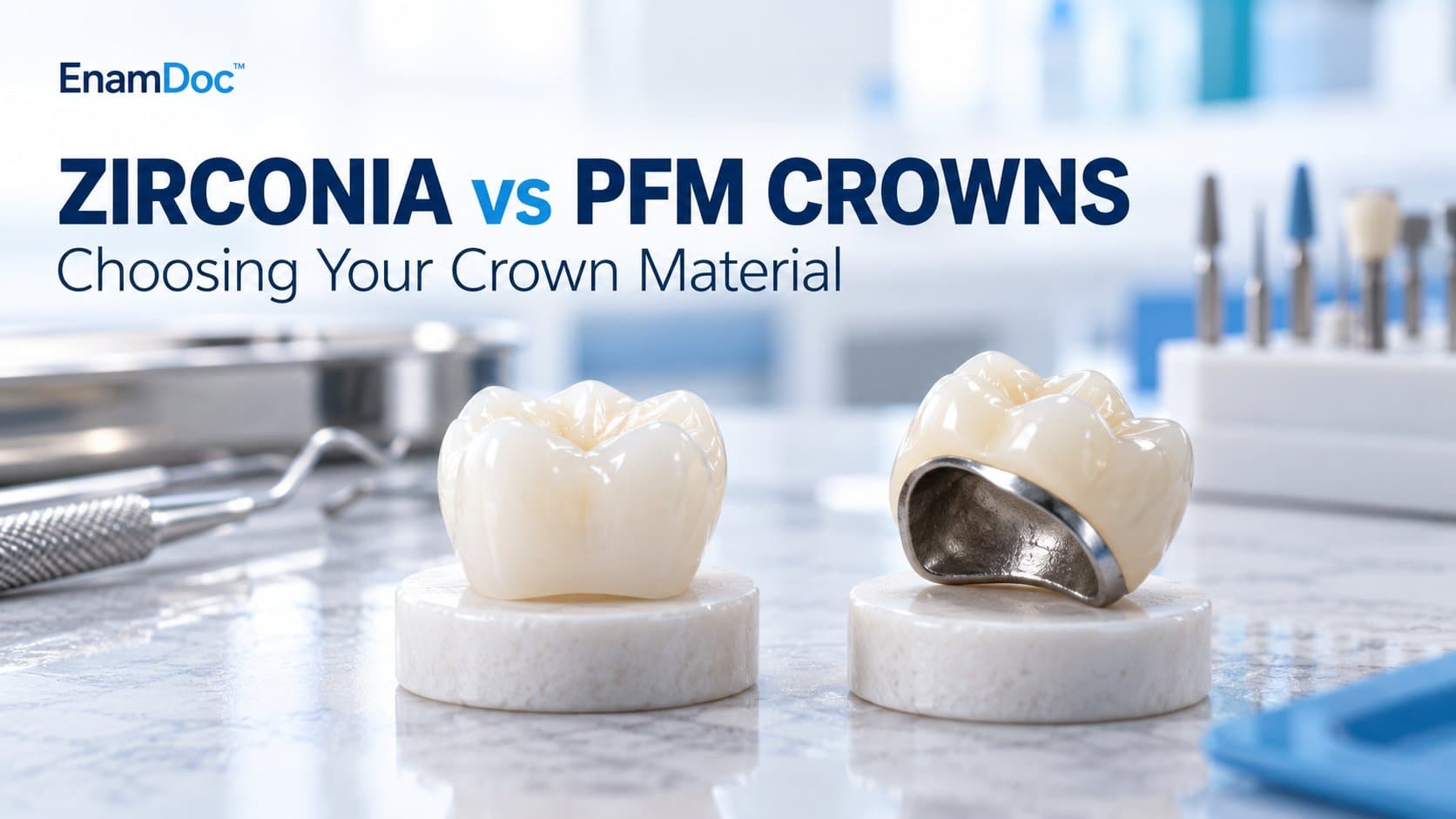
Your dentist has told you that a tooth needs a crown. You have agreed — and then they mentioned something you weren't expecting: a choice between zirconia and PFM. Two materials, two price points, and apparently two very different results. If you walked out of that appointment wondering what the difference actually is and which one is worth your money, this guide is for you.
What Is a Dental Crown?
A dental crown is a tooth-shaped cap that fits over a damaged, weakened, or heavily restored tooth. It restores the tooth's shape, strength, and function. Crowns are used after root canal treatment, for severely cracked or broken teeth, to anchor a dental bridge, or to improve the appearance of a badly damaged tooth.
The crown needs to survive years of biting forces — sometimes very heavy ones on back teeth — while also looking natural enough that you don't feel self-conscious. The material it's made from determines how well it balances both of these demands.
What Is a PFM Crown?
PFM stands for porcelain fused to metal. It is one of the oldest and most established crown technologies in dentistry. A PFM crown has a metal alloy base — usually a mix of gold, nickel, chromium, or cobalt — that is fused with a layer of tooth-coloured porcelain on the outer surface.
The metal base gives PFM its strength. The porcelain surface gives it a reasonably natural appearance. This combination has made PFM the workhorse of restorative dentistry for several decades.
What PFM does well: PFM crowns are extremely durable under heavy bite pressure. They have a well-established long-term track record — many PFM crowns last 15 to 20 years or longer with proper care. They are also generally less expensive than full zirconia crowns and are available at virtually every dental lab in India.
Where PFM falls short: The metal base creates a dark line at the gum margin — the grey or black line you sometimes notice at the base of an older crown. Over time, as gums naturally recede slightly, this metal margin becomes more visible. The porcelain layer can also chip or crack, exposing the metal beneath. In strong light, PFM crowns lack the translucency of a natural tooth, which can make them look slightly artificial in the front of the mouth.
What Is a Zirconia Crown?
Zirconia (zirconium dioxide) is a modern ceramic material that has transformed dental crown fabrication over the last decade. Zirconia crowns are milled from a single block of ceramic using CAD/CAM technology — no metal at all.
There are two main types of zirconia crowns available in India today:
Monolithic zirconia: Milled entirely from high-strength zirconia with no porcelain overlay. Extremely strong, virtually chip-proof, and ideal for back teeth. The appearance is opaque and tooth-coloured, but not as naturally translucent as a real tooth.
Layered zirconia (or BruxZir with porcelain overlay): A zirconia base with a layer of porcelain on top for enhanced aesthetics. Offers the best natural appearance but slightly less chip-resistant than monolithic zirconia in the porcelain layer.
What zirconia does well: No metal means no dark margins at the gum line — ever. The appearance is significantly more natural, especially in the front teeth where aesthetics matter most. Zirconia is also biocompatible and does not cause gum irritation or allergic reactions, which is important for patients with metal sensitivities. Modern full-contour zirconia has compressive strength that exceeds most PFM crowns, making it excellent for both front and back teeth.
Where zirconia has limitations: Zirconia is harder than natural tooth enamel. This means it can cause slightly more wear to the opposing tooth over time, particularly with older high-density zirconia formulations. This is less of a concern with newer medium-translucency zirconia materials. Zirconia crowns are also more expensive than PFM at most Indian clinics, though the gap is narrowing as CAD/CAM technology becomes more widely available.
PFM vs Zirconia: A Direct Comparison
Strength and durability: Both are durable. Monolithic zirconia edges ahead in fracture resistance, especially under heavy occlusal loads.
Aesthetics: Zirconia wins, particularly for front teeth. High-translucency zirconia can be virtually indistinguishable from a natural tooth. PFM shows a metal margin over time.
Metal sensitivity: Zirconia is the clear choice for patients with nickel or metal allergies. PFM may contain metals that trigger reactions in sensitive patients.
Cost in India: PFM crowns typically range from ₹3,000 to ₹8,000. Full zirconia crowns generally range from ₹6,000 to ₹15,000 or more depending on the type and lab used. High-quality layered zirconia for front teeth can be higher.
Which tooth is it on? This matters more than many patients realise. For back molars subjected to heavy grinding, monolithic zirconia is increasingly the professional recommendation. For front teeth, high-translucency zirconia offers the best aesthetic result. PFM remains a practical choice when budget is a primary concern and the tooth is not visible when smiling.
Longevity: Both can last 10 to 20 years with proper care. PFM has a longer clinical evidence base simply because it has existed longer. Zirconia long-term data is very strong and continues to build.
Which Crown Should You Choose?
The right choice depends on three things: where the tooth is, how important aesthetics are to you, and your budget.
If the crown is on a back molar and you grind your teeth heavily, a monolithic zirconia crown is a strong choice — it is extremely hard to fracture and requires no porcelain that could chip. If the crown is on an upper front tooth and you are concerned about how it looks, high-translucency zirconia is almost always the better option. If cost is a major constraint and the tooth is not in a visible position, a well-made PFM crown remains a perfectly reasonable treatment.
Your dentist's skill and the quality of the dental lab used matter enormously regardless of which material you choose. A beautifully crafted PFM crown from a skilled technician will often look and perform better than a poorly executed zirconia crown.
How EnamDoc Can Help
Managing dental treatment across multiple visits — from impressions to final placement — involves coordination that paper-based records handle poorly. EnamDoc's digital patient record system lets your dentist track crown preparation, temporaries, laboratory stages, and final placement with complete documentation in one place, and send you appointment reminders automatically at each stage.
A Word on Care
Both crown types require the same basic care: brushing twice daily, flossing daily around the crown margins, and regular dental check-ups. Avoid biting nails, opening packaging with your teeth, or chewing hard objects. For PFM crowns, avoid very hard foods that could fracture the porcelain layer. For any crown, your gum care around the crown margin determines how long it lasts — gum disease around a crown is the most common cause of premature failure.
Questions to Ask Your Dentist
Before agreeing to a crown material, ask your dentist which tooth is involved, whether they recommend monolithic or layered zirconia for your case, what the total cost including lab fees will be, what the expected lifespan is, and whether there is any warranty on the work. A good dentist will explain their material recommendation based on your specific bite and the tooth's position.
Frequently asked
Frequently asked questions
Is zirconia stronger than PFM?
Monolithic zirconia has higher fracture resistance than most PFM crowns and does not risk the porcelain chipping issue. However, the metal core of a PFM crown is also very strong — the weak point in PFM is the porcelain layer on top, not the crown itself.
Will a zirconia crown look natural?
High-translucency zirconia for front teeth can closely mimic the light transmission of a natural tooth and is considered the gold standard for anterior aesthetics. Monolithic zirconia for back teeth is more opaque but still tooth-coloured and far less visible than a PFM metal margin.
How much does a zirconia crown cost in India?
Costs vary widely by city, clinic, and lab quality. Expect ₹6,000 to ₹15,000 for a standard zirconia crown at a reputable clinic, with high-aesthetic layered zirconia for front teeth potentially higher. Always ask your dentist for a written estimate including lab fees.
- dental crowns
- zirconia
- PFM
- crown material India
Keep reading