Dental Anxiety in Children: Tips for Parents and Pediatric Dentists
Dental anxiety affects a large number of children and can follow them into adulthood. Dr. Aditya Swami explains the causes, how parents can prepare their child before a visit, and what good pediatric dentists do differently.
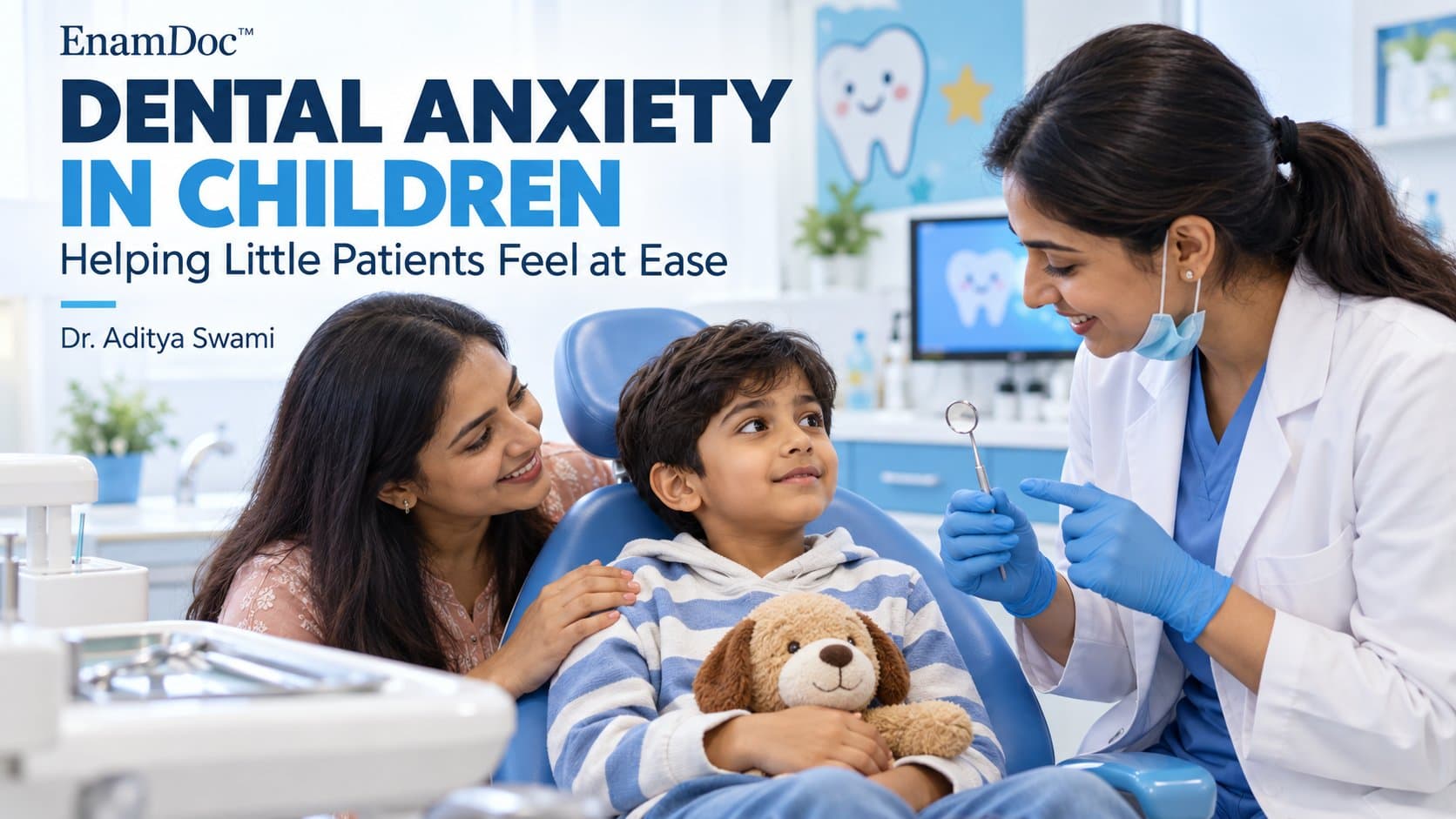
Your child has a dental appointment next week, and you have already started dreading it. Not because you think anything is wrong with their teeth — but because you know how the last visit went. The crying, the refusal to open their mouth, the tearful drive home. Dental anxiety in children is genuinely common, and it can feel like an unsolvable problem for parents who want to do the right thing for their child's oral health.
The good news is that dental anxiety in children is manageable — sometimes completely preventable. Understanding what drives it and how both parents and dentists can respond to it makes a significant difference to a child's lifelong relationship with dental care.
Why Children Develop Dental Anxiety
Dental anxiety in children rarely appears out of nowhere. It usually has one of several origins:
The Learned Fear
Children absorb anxiety from the adults around them. If a parent visibly dreads their own dental appointments, speaks about dentists negatively ("this is going to hurt a bit"), or shows tension in the waiting room, children pick up on all of it. Parents who are themselves dentally anxious are significantly more likely to have children with dental anxiety.
A Negative Previous Experience
A single painful or frightening dental experience — even if it was clinically well-managed — can be enough to create anticipatory anxiety about every future visit. The child's memory of the event becomes the lens through which they approach all subsequent appointments.
The Unknown
For young children who have never been to a dentist, the fear is of an unfamiliar environment, unfamiliar sounds, and an adult they do not know who wants to put instruments in their mouth. This type of anxiety is sometimes the easiest to address because it responds well to positive first experiences.
Sensory Sensitivity
Some children — particularly those with sensory processing differences — find the sounds, smells, bright lights, and intraoral sensations of a dental visit genuinely overwhelming, not just uncomfortable. For these children, standard approaches may not be enough and specialist input may be needed.
What Parents Can Do: Before the Visit
The preparation that happens at home significantly shapes how a child approaches a dental appointment.
Use neutral, accurate language. Avoid phrases like "it won't hurt" (which signals that pain is a possibility), "just a little poke" (which undersells the experience and destroys trust if it is worse than expected), or "be brave" (which implies there is something to be frightened of). Instead: "The dentist is going to look at your teeth and count them." Simple, accurate, and without emotional loading.
Play dentist at home. For younger children, role-playing dentist visits at home — using a toothbrush to count teeth, lying back and opening wide — normalises the physical experience before the real appointment. Make it a game.
Visit for a non-treatment appointment first. Many paediatric dentists offer "meet and greet" visits where the child simply comes in, meets the dentist, sits in the chair, and leaves without any procedure. This first visit is purely about comfort and familiarity — it removes the unknown.
Watch your own body language. In the waiting room, stay relaxed. Bring something the child enjoys — a toy, a book — and keep the atmosphere as normal as possible. Do not look worried on their behalf.
What Dentists Can Do: Techniques That Work
Paediatric dentistry has developed specific behaviour management approaches that are evidence-based and make a measurable difference to anxious children.
Tell-Show-Do
The gold standard technique for young children. The dentist narrates every step before doing it: "I'm going to use this little mirror to count your teeth — look, it feels like this on the back of your hand — now let's count together." By removing surprise, the child stays within their comfort zone.
Voice Control
A firm, confident, calm tone — not harsh, but not overly sympathetic either — communicates that the procedure is manageable and normal. Excessive sympathy ("I know you're scared, it's okay") can actually amplify anxiety by validating the fear. The message should be: this is normal, we do this every day, you are doing fine.
Distraction
Ceiling TVs, music through headphones, or even the dentist narrating something unrelated ("tell me about your school") can redirect attention away from the procedure. Distraction works best when started before the anxiety peaks.
Nitrous Oxide Sedation
For moderately to severely anxious children, or children who need more extensive treatment, nitrous oxide (laughing gas) is a safe and effective option. It reduces anxiety and increases pain threshold while allowing the child to remain awake and cooperative. It is widely available in good paediatric dental practices.
Positive Reinforcement
Consistent, specific praise during and after the procedure — "You kept your mouth open really well when I asked you to" — builds self-efficacy. The child learns that they can manage the experience, which reduces anticipatory anxiety for future visits.
When Standard Approaches Are Not Enough
Some children have anxiety that does not respond to standard behaviour management. For these children, options include:
- Conscious sedation (oral or IV) in a specialist setting
- General anaesthesia for very young children or those with severe dental disease who cannot cooperate for treatment while awake
- Cognitive behavioural therapy (CBT) through a clinical psychologist, which addresses the anxiety at its root for children with significant dental phobia
If your child's anxiety is severe enough to prevent routine dental care, speak to your dentist about a referral to a paediatric dentistry specialist or a specialist anxious-patient service.
The Long View: Building a Positive Dental Relationship
Dental anxiety that is not managed in childhood often persists into adulthood. Adults with dental phobia frequently avoid treatment for years, which leads to more extensive disease, more complex procedures, and a cycle where every visit is worse than the last.
Investing in positive dental experiences for children — even when it takes more time, more visits, and more patience — pays dividends over a lifetime. The child who learns at age 5 that dental visits are manageable becomes the adult who attends check-ups without dread.
EnamDoc can help you find paediatric dentists and dental clinics experienced in managing anxious patients across India.
Frequently asked
Frequently asked questions
At what age should a child have their first dental visit?
Most paediatric dental guidelines recommend a child's first dental visit within 6 months of the first tooth erupting or by age 1, whichever comes first. Many parents wait until age 3 or 4, which means early decay or developmental issues go undetected. Importantly, an early first visit is usually very brief — the dentist checks eruption patterns, assesses oral hygiene at home, and builds the child's comfort with the environment. This early exposure is far more valuable than waiting until there is a problem to solve.
Should I stay in the room with my child during the dental treatment?
This varies by practice and child. Many experienced paediatric dentists prefer to manage children without parents present in the treatment room, because children often behave better one-on-one with a calm, confident professional than when a parent — who the child knows will respond to distress — is watching. That said, for very young children or those with special needs, parental presence may be beneficial. Talk to your dentist before the appointment about what works best for them and for your child — a good paediatric dentist will have a clear approach and a reason for it.
Is it okay to bribe a child with rewards for good dental behaviour?
Small, consistent positive reinforcement after a dental visit — a sticker, a small toy, praise — is appropriate and evidence-based. It builds a positive association with dental visits over time. What to avoid: negotiating rewards before the visit ("if you are good, you will get ice cream"), which shifts the motivation from intrinsic coping to external bribery and teaches the child that dental visits are inherently unpleasant things to be endured for a prize. The distinction is in timing — reinforcement after good behaviour is effective; pre-negotiated payment for compliance is not.
- dental anxiety children
- child dentist fear
- pediatric dentistry
- dental phobia kids
Keep reading