Dental Care During Pregnancy: What's Safe, What to Avoid, and Why Your Gums Change
Pregnancy changes your mouth more than most expectant mothers expect. Hormones make gums bleed more easily, certain treatments need careful timing, and dental emergencies still require treatment. Here is what you actually need to know.
Medically reviewed by Dr. Khanak Jain, BDS
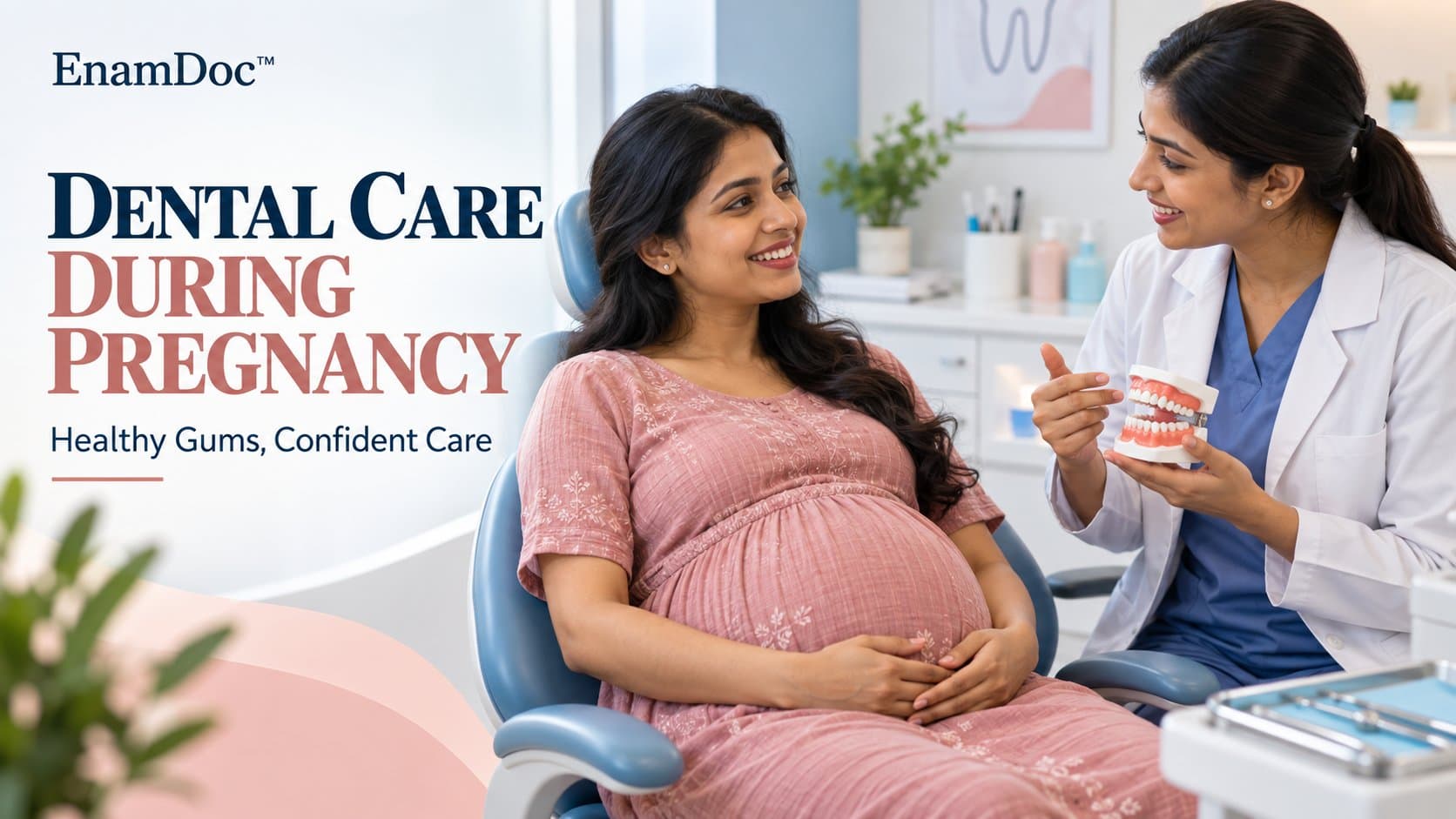
If you've noticed your gums bleeding more since becoming pregnant, you're not imagining it. Pregnancy changes the way your body responds to oral bacteria — and ordinary plaque can trigger a much more intense gum reaction than it normally would. This is one of several ways pregnancy genuinely affects your mouth, and it's worth understanding each of them clearly.
Why Pregnancy Changes Your Mouth
The main driver is hormonal. Elevated oestrogen and progesterone during pregnancy make gum tissue more sensitive to the irritants in dental plaque. Your immune response also shifts to protect the developing baby — one side effect is that gums become more inflamed and bleed more easily, even with routine brushing.
This condition is called pregnancy gingivitis, and it affects up to 70% of pregnant women to some degree. It typically begins around the second month, peaks in the third trimester, and usually improves after delivery. It doesn't mean you've developed gum disease — it means your gums are reacting more strongly to bacteria that are always present.
A less common related condition is a pregnancy epulis — a small red lump on the gum that bleeds easily, usually appearing in the second trimester. It's caused by the same hormonal sensitivity and almost always resolves on its own after delivery. Your dentist can remove it if it causes significant discomfort, but most are managed with good oral hygiene alone.
Is It Safe to Visit the Dentist While Pregnant?
Yes — and this is one of the most important things to understand clearly, because many pregnant women avoid the dentist unnecessarily. Routine dental care — cleanings, check-ups, fillings, and necessary treatments — is safe throughout pregnancy.
The safest window for elective procedures is the second trimester (roughly weeks 14 to 28). By this point, the critical period of organ development has passed, and you're not yet in the final weeks when lying back in a dental chair becomes uncomfortable. That said, if a dental problem is causing pain or risk of infection, it should be treated whenever it arises. Dental infections during pregnancy carry their own risks and should not be left untreated.
The most useful thing you can do: tell your dentist you're pregnant at the start of your appointment. This lets them make informed decisions about timing, materials, and whether X-rays are needed.
Dental X-Rays During Pregnancy
Dental X-rays use very low doses of radiation — far below the level that causes harm — and modern digital systems are lower still. A lead apron over your abdomen is used as standard. For routine check-ups, most dentists defer non-essential X-rays until after delivery as a precaution. When an X-ray is needed to diagnose a specific problem, it is generally considered safe at any stage of pregnancy.
You don't need to refuse X-rays categorically during pregnancy. If your dentist recommends one, ask why — in most cases there's a specific clinical reason that outweighs the very small theoretical risk.
Local Anaesthesia During Pregnancy
Lidocaine — the most commonly used local anaesthetic in Indian dental clinics — is considered safe during pregnancy. The amounts used in dentistry are small, and the drug does not cross the placental barrier in significant quantities at standard doses. If you need a filling or other procedure that requires numbing, there is no need to avoid anaesthesia.
Your dentist will typically minimise or avoid adrenaline (epinephrine) as a vasoconstrictor in the local anaesthetic, or use it in smaller quantities. Discuss any concerns before the appointment so they can plan accordingly.
Medications After Dental Treatment
Paracetamol is the pain reliever of choice during pregnancy. NSAIDs like ibuprofen are generally avoided, particularly in the first and third trimesters. Aspirin is not appropriate. If antibiotics are needed for a dental infection, amoxicillin is generally considered safe, while tetracyclines — which can affect fetal tooth development — are not prescribed during pregnancy. Always confirm any medication is pregnancy-safe before taking it.
What to Avoid or Defer
A few things that are routine in non-pregnant patients are typically postponed:
- Elective cosmetic procedures — teeth whitening, veneers, and purely cosmetic treatments are deferred until after delivery (and breastfeeding). There is limited safety data on bleaching agents during pregnancy.
- Long complex procedures in the third trimester — not because they're unsafe, but because lying fully reclined for extended periods can compress a major blood vessel. If complex treatment is needed, it's typically broken into shorter appointments.
- Nitrous oxide — generally avoided in the first trimester and used cautiously or not at all thereafter.
Morning Sickness and Your Teeth
Frequent vomiting repeatedly exposes tooth enamel to stomach acid, which erodes it over time. The instinct after vomiting is to brush immediately — but this is counterproductive, because brushing when enamel is softened by acid accelerates erosion.
The better approach: rinse your mouth with water (or a dilute bicarbonate rinse), wait 30 minutes, then brush. Using fluoride toothpaste consistently helps remineralise enamel between episodes. If morning sickness is severe and persistent, mention it to your dentist so they can monitor your enamel condition.
Nutrition and Your Teeth During Pregnancy
Despite the popular belief, your teeth do not lose calcium to the fetus — your baby draws calcium from other maternal reserves. However, pregnancy cravings often increase sugar intake, and frequent snacking gives oral bacteria more fuel. Coupled with more sensitive gums, this can increase the risk of cavities.
Calcium-rich foods (dairy, ragi, sesame seeds, leafy greens) support your bone density and your baby's skeletal development. Vitamin D deficiency is common in pregnant women in India and affects calcium absorption — discuss supplementation with your obstetrician. Staying well-hydrated maintains saliva flow, one of the mouth's primary defences against acid and bacteria.
Your Dental Routine During Pregnancy
Brush twice daily with fluoride toothpaste, floss daily, and rinse with a non-alcoholic antiseptic mouthwash if your gums are particularly inflamed. If brushing triggers nausea, try a smaller toothbrush head and a mild-flavoured toothpaste, and brush at a time when nausea is least intense — often in the evening. A professional cleaning during the second trimester is recommended to remove tartar buildup and reduce the bacterial load driving pregnancy gingivitis.
After Delivery
Pregnancy gingivitis typically resolves within a few months as hormones normalise after delivery. If it doesn't, or if gum problems have worsened, a postpartum dental appointment is a good opportunity to assess what's happened and treat anything deferred during pregnancy. Any cosmetic work you've been waiting on can also proceed once you're no longer pregnant and breastfeeding. If you're breastfeeding, always mention this before any dental medications are prescribed — most routine dental medications are fine, but it's worth confirming case by case.
Managing Your Dental Care with EnamDoc
If you're a pregnant patient looking to book a check-up, EnamDoc lets you find verified dentists and book appointments directly — with the option to note your pregnancy in your patient profile so your clinical team is prepared. For dentists managing pregnant patients, EnamDoc's digital patient records can flag pregnancy status, trimester, and relevant medication history, making every appointment safer and better coordinated.
Frequently asked
Frequently asked questions
Is it safe to get a dental filling during pregnancy?
Yes. Fillings are safe during pregnancy. The local anaesthetic (usually lidocaine) is considered safe, and treating decay promptly prevents infections that could be more problematic. The second trimester (weeks 14–28) is the preferred window, but urgent treatment should not be delayed regardless of trimester.
Why do my gums bleed more during pregnancy?
Pregnancy hormones — particularly oestrogen and progesterone — make gum tissue more sensitive to the bacteria in dental plaque. This causes pregnancy gingivitis, which affects the majority of pregnant women. Good brushing, flossing, and a professional cleaning during the second trimester usually keep it manageable. It typically resolves after delivery as hormone levels normalise.
Can I whiten my teeth while pregnant?
No — teeth whitening is generally deferred until after pregnancy and, if breastfeeding, until after that too. There is limited safety data on bleaching agents during pregnancy, and the precautionary recommendation from dental associations is to wait. There are no known serious risks, but as an elective cosmetic procedure, it is simply not worth any potential concern when it can easily be postponed.
- pregnancy
- dental care
- pregnancy gingivitis
- oral health
- gum disease
Keep reading