Why Do Gums Bleed When You Brush? 5 Causes Dentists Actually See Daily
Bleeding gums aren’t normal — and they’re rarely just about brushing too hard. Here are the 5 most common causes dentists see every week, and what to do.
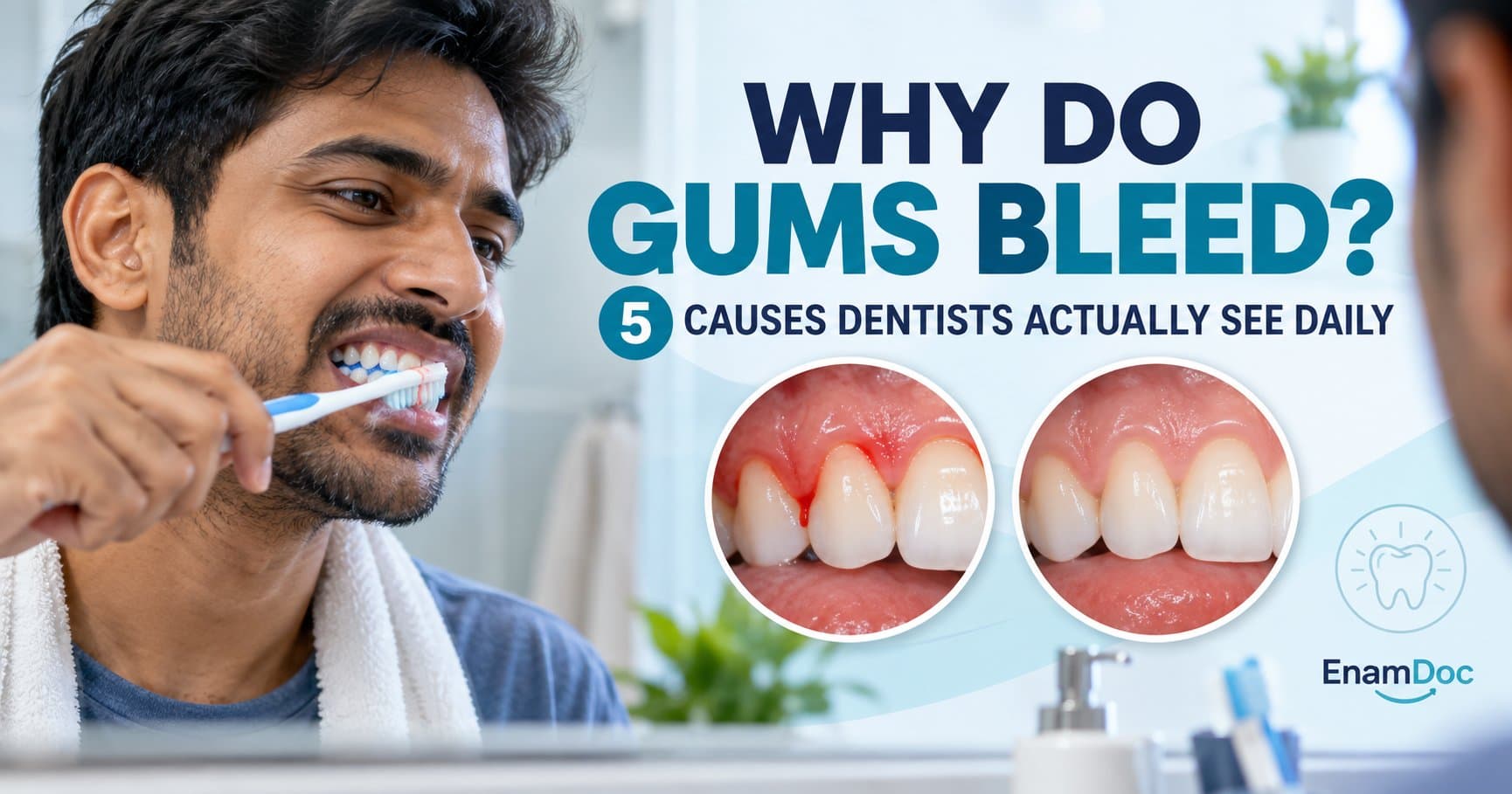
Seeing a little blood in the sink after brushing is so common that many people assume it’s normal. It isn’t.
Healthy gums do not bleed when you brush them. Consistently bleeding gums are a signal that something is off — and ignoring it tends to make things worse, not better.
Here are the five causes dentists most commonly see behind bleeding gums, and what you should actually do about each one.
1. Gingivitis (Early Gum Disease)
This is far and away the most common culprit. Gingivitis is inflammation of the gums caused by plaque buildup at and below the gumline. When plaque isn’t removed through daily brushing and flossing, bacteria irritate the gum tissue, making it red, swollen, and prone to bleeding.
Signs it might be gingivitis:
- Gums look redder than usual, especially near the teeth
- Mild puffiness around the gum line
- Bleeding when brushing or flossing but no pain
- Possible bad breath
The good news: gingivitis is reversible. A professional cleaning (scaling) combined with better home care typically resolves it within 2–4 weeks. Left untreated, though, gingivitis progresses to periodontitis — a more serious infection that damages the bone holding your teeth.
2. You Haven’t Been Flossing (Until Now)
Here’s an irony most dentists explain regularly: if you suddenly start flossing after a long break, your gums will almost certainly bleed for a few days. This isn’t because flossing is harmful — it’s because those gums have accumulated plaque and are already inflamed. Flossing disturbs that inflammation.
If you stick with it consistently for 1–2 weeks, the bleeding typically stops as the gum tissue heals and the plaque is removed daily.
3. Incorrect Brushing Technique
Counterintuitively, brushing too aggressively can cause gum bleeding — but it’s less common than people think. More often, the problem is plaque being missed entirely because of poor technique rather than the force used.
A soft-bristled brush used in small circular motions at a 45-degree angle to the gumline is the dentist-recommended technique. Horizontal scrubbing with a stiff brush damages gum tissue over time and can cause receding gums.
4. Medications
Several common medications cause gum tissue to become more fragile or inflamed. These include:
- Blood thinners (aspirin, warfarin, clopidogrel) — reduce clotting, so any gum bleeding is more noticeable and prolonged
- Calcium channel blockers (amlodipine, nifedipine) — can cause gum overgrowth making them harder to clean
- Phenytoin (anti-seizure medication) — known for causing gum overgrowth
- Some immunosuppressants — can affect gum tissue health
If you’ve started a new medication and noticed gum bleeding, mention it at your next dental appointment.
5. Hormonal Changes
Hormonal fluctuations during pregnancy, puberty, and menopause can make gum tissue significantly more sensitive to plaque. Pregnant women are particularly susceptible — a condition called pregnancy gingivitis affects a large proportion of pregnant women. The gums become more reactive, bleeding more easily even with excellent hygiene.
This doesn’t mean oral care should be skipped during pregnancy — quite the opposite. More frequent professional cleanings during pregnancy are often recommended.
When Should You See a Dentist?
Don’t wait for pain. Pain is often a late sign in gum disease. See your dentist soon if:
- Gums bleed regularly (more than once or twice during flossing adjustment period)
- You notice bleeding without any brushing at all
- Gums look dark red, receded, or swollen
- Teeth feel loose
- There’s persistent bad breath that doesn’t resolve with brushing
What Your Dentist Will Do
A dentist will assess gum pocket depths, check for calculus (hardened plaque), review your medical history and medications, and typically recommend professional scaling. For more advanced cases, a deeper cleaning called root planing may be needed.
Booking through EnamDoc gives you access to dentists who document your gum health history digitally, so every future appointment builds on your prior records — no starting from scratch.
Frequently asked
Frequently asked questions
Is it normal for gums to bleed every time I brush?
No, it is not normal. Occasional bleeding during a rough brush is different from consistent bleeding at every session. Consistent bleeding warrants a dental visit.
Can bleeding gums be a sign of something other than gum disease?
Yes. While gum disease is the most common cause, consistent bleeding can also relate to vitamin C deficiency, blood disorders, diabetes, or certain medications. Your dentist may refer you to a physician if an underlying systemic cause is suspected.
Will my gums stop bleeding if I brush more?
Not necessarily. The key is removing plaque effectively, not brushing more aggressively. Improve your technique, add flossing, and get a professional cleaning. If bleeding persists after 2 weeks of improved home care, see a dentist.
- bleeding gums
- gum disease
- gingivitis
- oral health
- gum bleeding causes
Keep reading