Electric Toothbrush vs Manual: Does Spending More Actually Give You a Cleaner Mouth?
Electric toothbrushes have clear advantages for many people — but they're not always necessary. Here is what the evidence actually shows about plaque removal, gum health, and whether a ₹3,000 brush genuinely outperforms a ₹50 one.
Medically reviewed by Dr. Khanak Jain, BDS
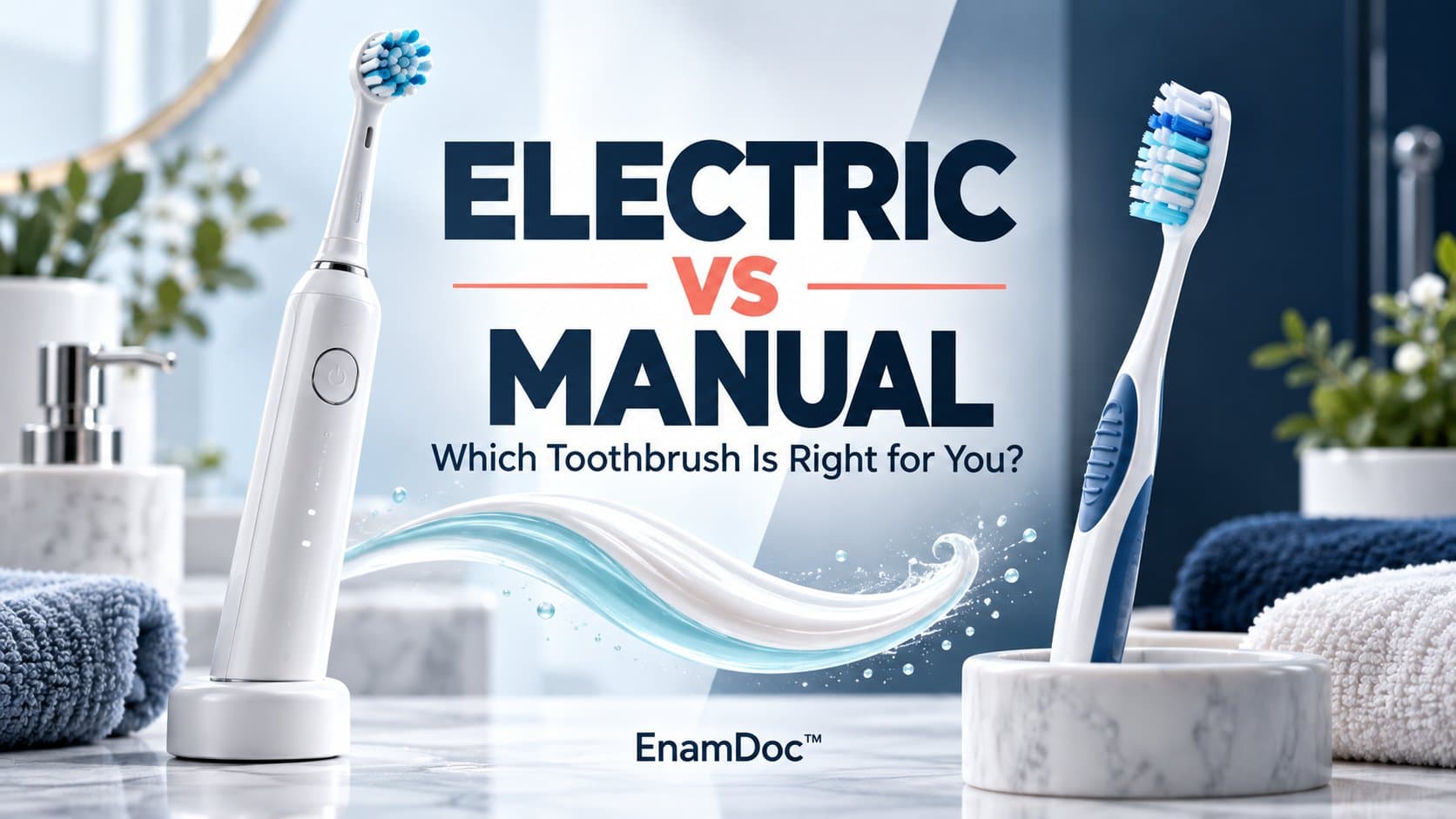
The toothbrush aisle has become surprisingly complicated. Oscillating heads, sonic vibrations, pressure sensors, Bluetooth connectivity, UV sanitisers — and price tags that range from under ₹50 to well over ₹5,000. The obvious question is whether any of this actually makes your teeth cleaner, or whether a disciplined two minutes with a cheap manual brush achieves the same thing. The evidence has a clear answer, with some important nuance.
What the Research Shows
Multiple systematic reviews and meta-analyses have compared electric and manual toothbrushes. The most comprehensive, from the Cochrane Collaboration, found that powered toothbrushes reduced plaque by 21% more than manual brushes after three months of use, and reduced gingivitis (gum inflammation) by 11% more. These aren't trivial differences — they represent meaningful reductions in the two most common dental problems.
Oscillating-rotating brushes (like those from Oral-B) have the strongest evidence base. Sonic brushes (like those from Philips Sonicare) also show good results, though direct head-to-head comparisons show broadly similar efficacy. Cheaper "vibrating" electric brushes that simply vibrate a standard brush head have much weaker evidence.
Why Electric Brushes Often Win
The advantage of a powered brush comes from a few places:
- The head does the work. With a manual brush, technique matters enormously — angle, pressure, time. With an oscillating-rotating brush, you just need to position the head at each tooth and let it do its job. This is forgiving of poor technique in a way a manual brush isn't.
- Consistent pressure. Most electric brushes have pressure sensors that alert you when you're brushing too hard. Brushing too hard is a common cause of gum recession and enamel wear with manual brushes.
- Built-in timer. Most electric brushes have a two-minute timer, often with 30-second interval signals to guide where to brush. Two minutes is the recommended brushing time, but studies consistently show people brush for less than 60 seconds on average without a timer.
- Better for dexterity limitations. Children, older adults, and people with conditions affecting hand or arm function (arthritis, stroke recovery) consistently benefit more from electric brushes than the general population.
When a Manual Brush Is Perfectly Fine
A manual brush used correctly — for two full minutes, twice a day, with proper technique, a soft-bristled head replaced every three months — will produce very good oral hygiene outcomes. The evidence shows electric brushes do somewhat better, but a diligent manual brusher will consistently outperform a careless electric brusher.
If you are already cavity-free, have healthy gums, and have no specific challenges with technique or dexterity, a good manual brush is not failing you. The electric brush is particularly valuable for people who aren't brushing optimally — which, research suggests, is most people.
Choosing an Electric Toothbrush
If you've decided to make the switch, here is what actually matters:
- Oscillating-rotating vs sonic: Both types outperform manual brushes. Oscillating-rotating brushes have the most clinical evidence. Sonic brushes are quieter and some patients find them more comfortable. Either is a good choice.
- Pressure sensor: Strongly recommended, especially if you have sensitive gums or existing recession. Over-brushing damages gums; a sensor makes it hard to do by accident.
- Replacement heads: Check the cost and availability of replacement heads before buying the handle. A brush whose heads cost ₹800 every three months adds up quickly. Generic-compatible heads are available for most major brands.
- Avoid gimmicks: Bluetooth apps, UV sanitisers, and AI features add cost without cleaning your teeth better. The head and motor matter; the connectivity doesn't.
Entry-level electric brushes from reputable brands (Oral-B, Sonicare, and a few Indian market options) start around ₹1,500–₹2,500 and include the core features — oscillation/sonic action, timer, and pressure sensor. You don't need to spend ₹8,000 to get a better clean than a manual brush.
Toothbrush Technique: What Actually Matters Most
Whether you use electric or manual, a few fundamentals determine whether you're actually cleaning your teeth well:
- Hold the brush at a 45-degree angle to the gumline, where the tooth and gum meet — this is where plaque accumulates most harmfully.
- Use gentle, circular or short back-and-forth strokes. Don't scrub — you're dislodging plaque, not sanding wood.
- Brush for two full minutes, covering all surfaces: outer, inner, and biting surfaces of every tooth.
- Don't forget your tongue — it harbours bacteria that cause bad breath.
- Replace your brush head (or manual brush) every three months, or earlier if the bristles are frayed.
Flossing Still Matters
Neither electric nor manual toothbrushes can clean the spaces between teeth. Those gaps — where 35% of your tooth surface lives — can only be reached with floss, interdental brushes, or a water flosser. If you're brushing perfectly and not flossing, you're still missing more than a third of your tooth surfaces every time. Adding even 60 seconds of daily flossing has a larger impact on gum health than switching from manual to electric.
Ask Your Dentist
The best toothbrush is the one you will use correctly, for the full two minutes, twice a day. Your dentist can assess your brushing technique at your next check-up and tell you whether you're achieving good plaque removal or whether a switch would genuinely help. On EnamDoc, you can book a check-up with a verified dentist who can give you personalised advice on your oral hygiene routine.
Frequently asked
Frequently asked questions
Does an electric toothbrush really make a difference?
Yes — clinical studies consistently show that oscillating-rotating electric toothbrushes remove about 21% more plaque than manual brushes and reduce gingivitis by around 11% over 3 months. The biggest advantage is that the brush does the movement for you, making it easier to maintain consistent, correct technique especially along the gumline and between teeth.
How often should I replace my toothbrush head (or manual toothbrush)?
Every 3 months, or sooner if the bristles are visibly frayed or splayed. Worn bristles lose their cleaning effectiveness significantly — studies show a 3-month-old toothbrush is up to 30% less effective than a new one. Many electric brush heads have indicator bristles that fade when it's time to replace.
Is an electric toothbrush safe for sensitive gums?
Yes, and it can actually be gentler. Many people press too hard with a manual brush, which can cause gum recession over time. Most modern electric toothbrushes include a pressure sensor that alerts you when you're applying too much force. For very sensitive gums, look for models with a 'sensitive' mode and soft bristle heads.
- electric toothbrush
- manual toothbrush
- oral hygiene
- plaque removal
- toothbrush comparison
Keep reading