How to Manage Dental Anxiety: Real Tips Before Sitting in the Chair
Feeling nervous about your next dentist visit? Discover actionable breathing techniques, communication tips, and practical steps to ease dental anxiety before you step into the clinic.
Medically reviewed by Dr. Ashay Jain, BDS
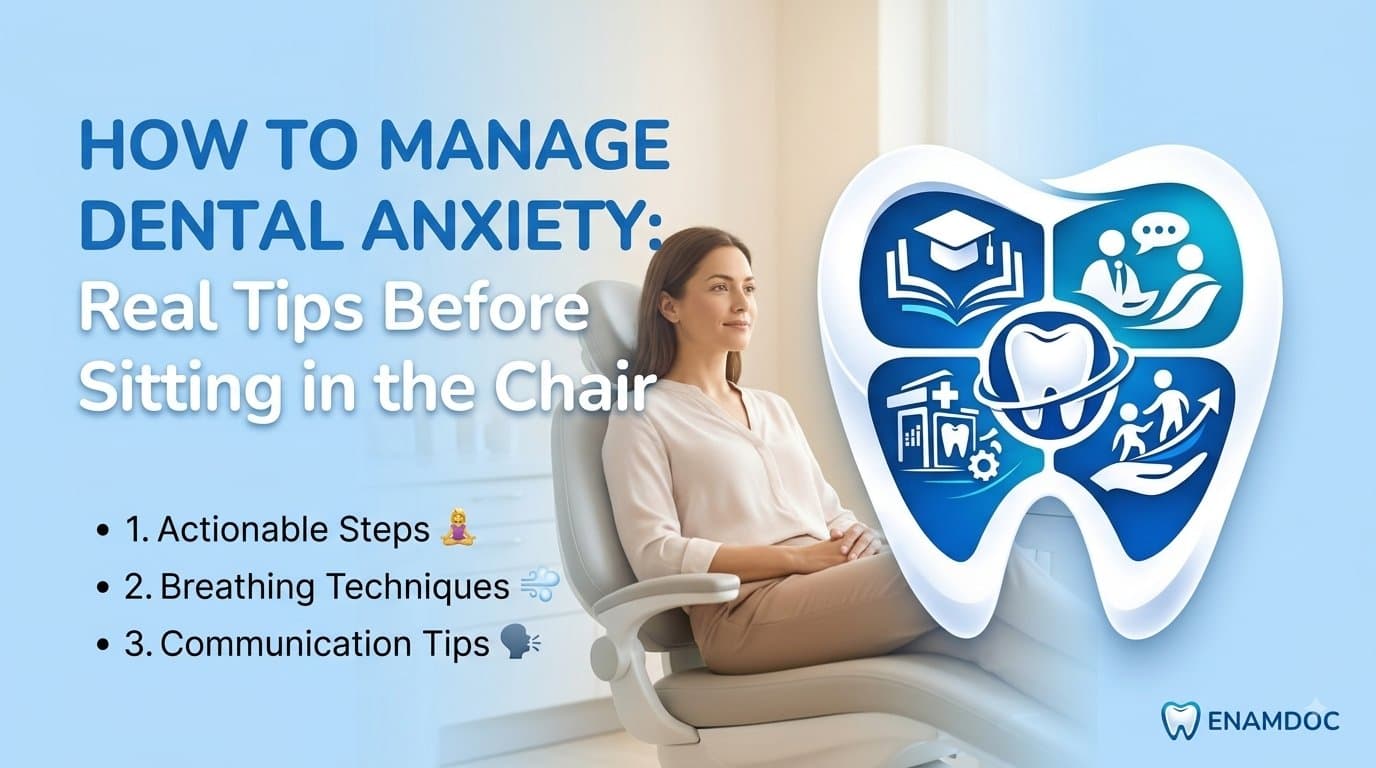
If the thought of sitting in a dental chair makes your heart race or hands sweat, you are far from alone. Dental anxiety affects millions of people, often leading them to delay or skip routine checkups altogether. However, modern dentistry focuses heavily on patient comfort, and managing your fear starts well before you step into the clinic.
Here are actionable, real-world strategies to help you conquer dental nervousness and take control of your next visit.
1. Communicate Openly with Your Dental Team
Your dentist cannot adjust your care if they do not know how you feel. Transparency is one of the most effective tools to reduce dental fear.
- Speak Up Early: Inform the clinic staff when booking your appointment that you experience dental anxiety.
- Establish a Stop Signal: Agree on a simple hand gesture (such as raising your left hand) with your dentist so they know to pause immediately if you need a break or feel overwhelmed.
- Ask Questions: If uncertainty triggers your anxiety, ask the practitioner to explain each step before they begin.
2. Master In-Chair Breathing Techniques
Physical tension amplifies anxiety. Calming your body helps signal to your brain that you are safe.
- Box Breathing: Inhale slowly through your nose for 4 seconds, hold for 4 seconds, exhale through your mouth for 4 seconds, and hold empty for 4 seconds. Repeat 3–4 times.
- Progressive Muscle Relaxation: Focus on consciously relaxing your shoulders, unclenching your jaw, and keeping your hands uncrossed during the procedure.
3. Schedule for Success
When and how you book your visit can significantly impact your stress levels:
- Book Early in the Morning: Scheduling a morning slot leaves less time during the day to overthink or build up anticipation.
- Avoid Rushing: Give yourself extra time to arrive so you aren't sitting in traffic feeling rushed, which elevates heart rate before you even enter the waiting room.
4. Bring Distractions and Comforts
Distracting your senses can keep your mind off the sounds and sights of the dental room.
- Noise-Canceling Headphones: Listen to a soothing podcast, audiobook, or favorite music playlist to block out clinic noise.
- Stress Relief Tools: Bring a small stress ball or fidget toy to hold during the procedure.
When to Consider Professional Support
If your dental fear is severe enough to prevent you from getting basic care, talk to your dentist about sedation options (such as nitrous oxide) or consider consulting a healthcare professional to address phobia management techniques.
Frequently asked
Frequently asked questions
What causes dental anxiety?
Dental anxiety can stem from past painful experiences, fear of needles or pain, a sense of loss of control, or sensitivity to clinic sounds and smells.
Can I ask for a break during a dental procedure?
Yes. Establishing a hand signal with your dentist beforehand allows you to pause the procedure whenever you feel uncomfortable or need a brief break.
- dental anxiety
- dental fear
- patient tips
- dentist appointment
Keep reading