Inventory Control for Dental Clinics: Preventing Expiry and Overstocking
Stop wasting revenue on expired dental materials and cluttering your storage. Learn how to set reorder points for composites, impression materials, and anaesthesia cartridges.
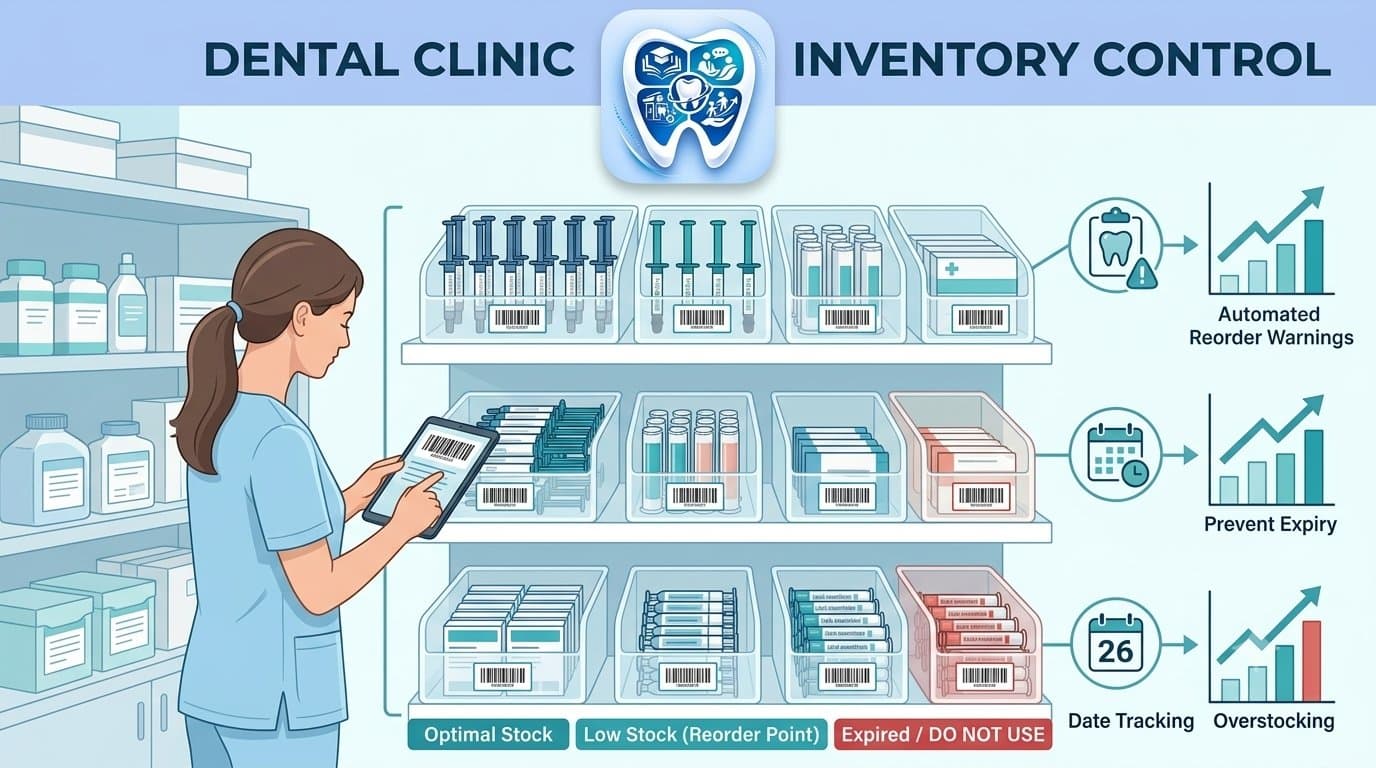
Running a successful dental clinic is as much about precise clinical skill as it is about structured operational management. Among the most critical—yet often overlooked—administrative tasks is **inventory control**. Every tube of composite, cartridge of anaesthesia, and bag of impression material represents a fixed cost that is either utilized to generate revenue or, far too often, sits silently on a shelf past its expiration date.
Poor inventory control leads to two costly extremes: overstocking, which ties up valuable practice cash flow and clutters storage; and stockouts, which disrupt clinical schedules and force stressful, last-minute rush orders. Moving to a systems-based approach ensures you always have what you need without accumulating clinical waste.
The Cost of Inefficient Inventory Management
Inefficient supply tracking directly impacts your clinic's bottom line through three distinct avenues:
- Expired Materials Waste: High-value chemical agents, including bonding resins, light-cured composites, and dental cements, are highly time-sensitive. Using expired materials compromises clinical outcomes, while disposing of them is direct financial loss.
- Tied-Up Cash Flow: Excess inventory is sitting capital that could be better allocated toward advanced equipment, staff training, or patient acquisition marketing.
- Operational Inefficiency: Staff spend excessive time searching for materials, managing clutter, and processing emergent orders instead of focusing on patient care and productivity.
1. Establishing the System: Setting Reorder Points (ROP)
A Reorder Point (ROP) is a predetermined stock level that triggers the need to place a replenishment order before you run out. Your ROP is calculated based on three variables: Average Daily Usage, Lead Time (how long delivery takes), and Safety Stock (your 'buffer').
ROP = (Average Daily Usage × Lead Time) + Safety Stock
2. Clinical-Specific Reorder Profiles: Three Vital Categories
| Supply Category | Usage Character | Reorder Strategy (ROP Tips) | Expiry Risk |
|---|---|---|---|
| Composite Resin Shades (Syringes/Compules) | Highly Variable (A2, A3 are high usage; B1, D2 are low usage) | Set high ROP for 'Universal' shades. For low-use character shades, track individual usage patterns and reorder only when *down to the final syringe*. | High (esp. Low-Use Shades) |
| Impression Materials (Alginate & PVS) | Predictable (Depends on volume of crowns, bridges, and prosthetics) | Set ROP based on *cartridge count*. Calculate how many cartridges are used per case and use lead time to ensure a minimum of a one-week supply is always active. | Moderate (Bulk buy PVS *only* if your clinic uses a high volume monthly) |
| Local Anaesthesia Cartridges (Lignocaine, Articaine, etc.) | Constant & High (Standard part of almost every clinical visit) | High Usage allows for larger, more economical bulk orders. Calculate your weekly cartridge count. Set ROP at a minimum of *one full box remaining* per agent. | Low (High usage means boxes are emptied far before expiry) |
3. Proven Tips to Avoid Overstocking and Expiry
- First-In, First-Out (FIFO) Rotation: Always place newly delivered stock *behind* older stock. This ensures older materials are used first, reducing expiry waste. Ensure all clinical staff adhere to this without exception.
- Standardize Your Materials: Don't allow multiple composite shade systems or three different alginate brands. Consolidate materials wherever possible to reduce inventory complexity and minimize low-use items.
- Color-Code Your ROP Triggers: Use colored sticky dots or specific kanban tags physically on bins to signal a 'Low Stock' ROP. Blue dots = Reorder. Red dots = Urgent.
- Designate a Single Inventory Lead: While all staff report stock levels, only one dedicated team member is responsible for checking thresholds and actually placing orders to prevent confusing duplicates.
Embracing a Lean Dental Supply Chain
Transitioning from a reactive to a proactive, systems-based inventory model stabilizes clinic operations, increases staff morale, and unlocks essential capital for practice development. By mastering reorder points and expiry date monitoring, you transform your supply room from a cost center into a lean, efficient asset.
Frequently asked
Frequently asked questions
What is the 'FIFO' rule in dental inventory?
FIFO stands for First-In, First-Out. It means always rotating stock so that the oldest materials (closest to expiry) are pulled to the front of the shelf for immediate use, while new stock is placed at the back.
How often should a dental clinic check for expired materials?
A dedicated staff member should perform a complete inventory check at least once a month. To make this easier, color-coding supplies by expiry year or using specific color tags on incoming orders helps visually flag items approaching critical dates.
- dental inventory
- dental clinic management
- inventory control
- clinical efficiency
- cost management
- dental supplies
- supply chain dentistry
Keep reading