Root Canal vs. Tooth Extraction: How to Make the Right Decision
Your dentist says you have two options: save the tooth or remove it. Dr. Aditya Swami breaks down the key differences between root canal treatment and extraction — and how to decide what's right for you.
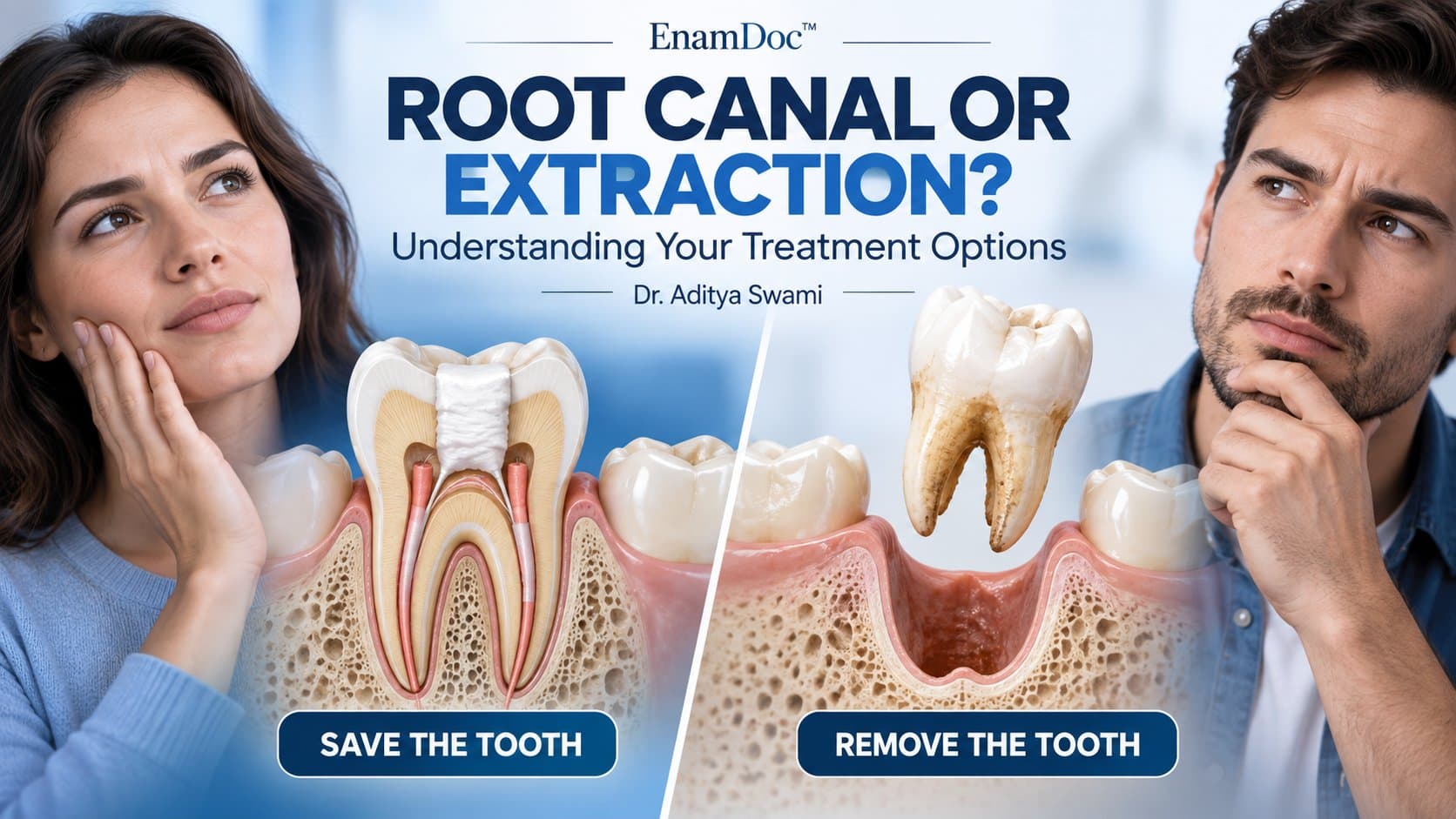
Your dentist has examined your tooth and given you a choice: root canal treatment or extraction. Both options deal with a tooth that is infected, severely damaged, or beyond routine repair — but they lead to very different outcomes. Understanding the difference can help you make a confident, informed decision.
What Is a Root Canal?
A root canal (also called root canal treatment or endodontic therapy) involves removing the infected or inflamed pulp — the soft tissue inside the tooth — cleaning and shaping the root canals, and sealing them to prevent re-infection. The tooth is then usually protected with a crown.
Root canal treatment saves the natural tooth. After treatment, the tooth looks and functions like any other tooth, with no gap in your smile and no effect on nearby teeth.
What Is a Tooth Extraction?
Extraction means the entire tooth is removed from its socket. Simple extractions are done under local anaesthesia for teeth that are visible and accessible. Surgical extractions are needed for impacted, broken, or deeply anchored teeth.
Extraction eliminates the problem immediately, but it leaves a gap. If that gap isn't filled with a dental implant, bridge, or partial denture, the surrounding teeth can shift over time, affecting your bite and jaw health.
Root Canal vs. Extraction: Key Differences
| Factor | Root Canal | Extraction |
|---|---|---|
| Tooth preserved? | Yes | No |
| Number of appointments | 1–3 visits | 1 visit (usually) |
| Pain during procedure | Similar — both done under anaesthesia | Similar |
| Recovery time | 1–3 days | 1–7 days |
| Long-term cost | Higher upfront (crown needed) | Lower upfront, but implant/bridge adds cost |
| Effect on adjacent teeth | None | May cause shifting without replacement |
| Chewing function | Fully restored | Compromised until replaced |
When Is Root Canal Treatment the Better Choice?
Root canal treatment is generally preferred when the tooth can still be saved structurally. This is the case when:
- The root structure is intact and the tooth isn't fractured below the gumline
- There is sufficient tooth structure remaining to support a crown
- The surrounding bone and gum tissue are healthy
- The patient wants to avoid a gap or the cost of replacement options later
In dentistry, we have a phrase: "the best implant is a natural tooth." Keeping your natural tooth is almost always the preferred outcome when it's clinically viable.
When Is Extraction the Better Choice?
Extraction may be the right decision when:
- The tooth is fractured below the gumline or the root is cracked
- There is severe bone loss around the tooth due to advanced gum disease
- The infection is spreading and cannot be controlled by root canal alone
- The tooth is impacted and causing damage to adjacent teeth (common with wisdom teeth)
- There isn't enough tooth structure left to place a crown after a root canal
- The cost of root canal plus crown is not feasible for the patient at the time
Does Root Canal Treatment Hurt More Than Extraction?
This is one of the most common misconceptions in dentistry. Both procedures are performed under local anaesthesia, so neither should be painful during the procedure. Post-procedure discomfort is comparable between the two.
Modern root canal treatment, when performed by a skilled dentist or endodontist, is typically no more uncomfortable than getting a filling.
What About Cost in India?
Root canal treatment in India typically costs between ₹3,000 and ₹15,000 per tooth (depending on the tooth, number of canals, and city), plus ₹3,000–₹10,000 for a crown. A dental implant to replace an extracted tooth costs ₹25,000–₹60,000 or more.
So while extraction seems cheaper upfront, the long-term cost of a quality replacement can be higher than saving the tooth in the first place.
What Should You Ask Your Dentist?
Before deciding, ask your dentist:
- Is the tooth truly saveable? What's the prognosis after root canal?
- If I extract, what are my replacement options and what do they cost?
- What happens if I don't replace the extracted tooth?
- How many root canals does this tooth have, and how complex is the treatment?
On EnamDoc, patients can book consultations with verified dentists across India — including endodontists who specialise in root canal treatment. Getting a second opinion on complex dental decisions is always a reasonable step.
The Bottom Line
Root canal treatment saves your natural tooth and, in most cases, is the better long-term investment. Extraction is sometimes the only practical option — but it should be followed by a replacement plan. When in doubt, ask for a referral to an endodontist who can give you a specialist's assessment of whether the tooth is worth saving.
Frequently asked
Frequently asked questions
Is root canal treatment more painful than tooth extraction?
Modern root canal treatment is performed under local anaesthesia and is no more painful than getting a filling. Most patients report that the anticipation is far worse than the procedure itself. Tooth extraction also uses local anaesthesia, but post-operative soreness from extraction can sometimes last longer than after a root canal, particularly if the socket is deep or the tooth was impacted.
How long does recovery take after a root canal versus an extraction?
Root canal recovery is typically 1–2 days of mild soreness; you can usually return to normal activities the same day. Tooth extraction recovery takes 3–7 days, and the socket can remain sensitive for up to two weeks. If you choose implant replacement after extraction, you are looking at a total treatment time of 3–6 months before the final crown is in place.
What happens if I extract a tooth and do not replace it?
Leaving a gap after extraction causes the adjacent and opposing teeth to drift and tilt into the empty space over months and years. This misalignment can lead to bite problems, increased food trapping, gum disease, and jawbone loss at the extraction site. Replacing the tooth with an implant, bridge, or partial denture prevents these complications and is strongly recommended by dentists whenever possible.
- root canal
- tooth extraction
- dental treatment
- patients
Keep reading