Scaling and Root Planing vs. Regular Cleaning: What's the Difference?
Your dentist has recommended a deep cleaning. Dr. Khanak Jain explains the difference between a regular scale-and-polish and scaling and root planing — what each involves, when you need it, and what to expect.
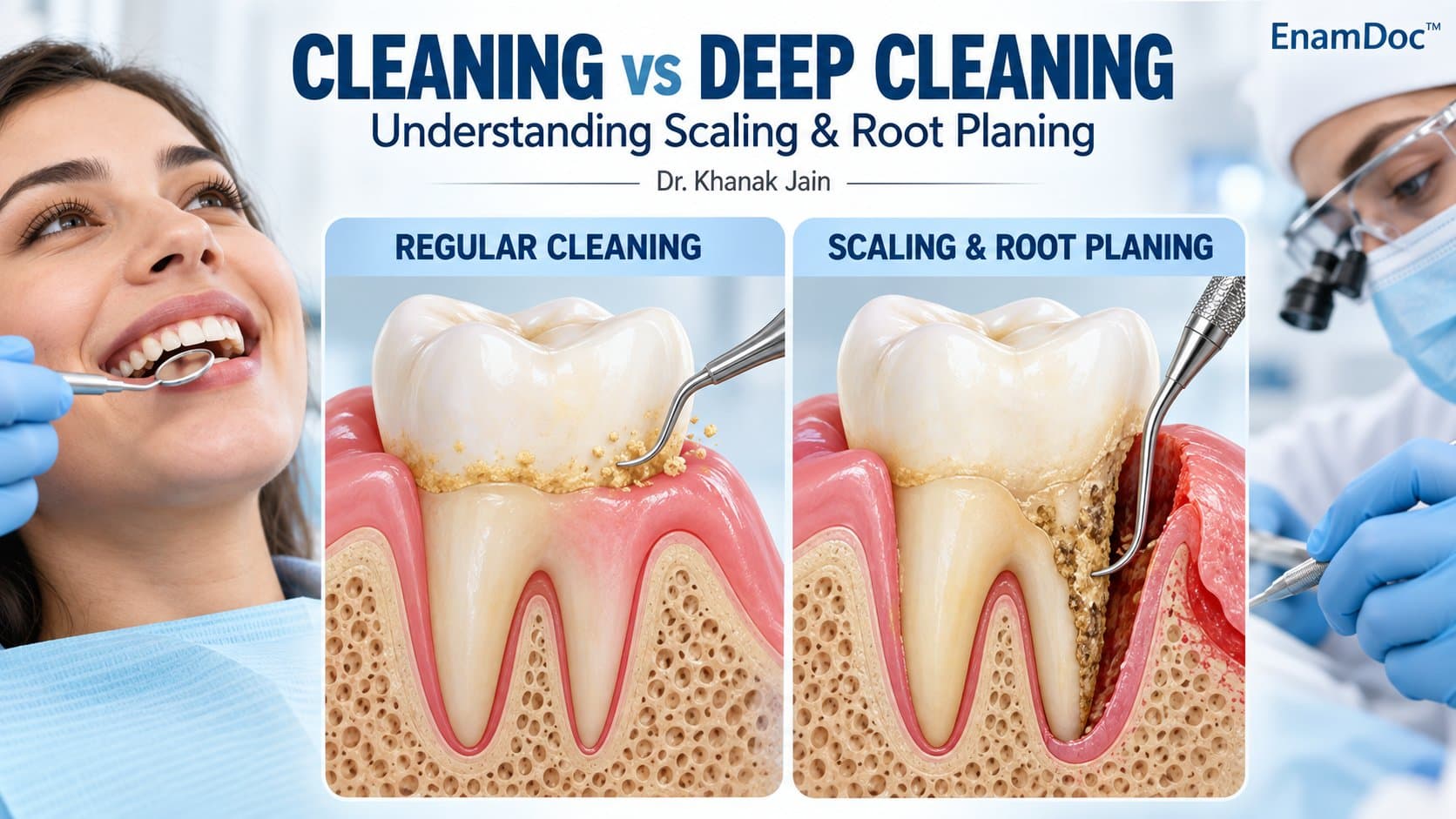
Your dentist has told you that you need a "deep clean." But what exactly does that mean, and how is it different from the regular scale-and-polish you have at every check-up? Understanding the distinction can help you feel more prepared and less anxious about what lies ahead.
At EnamDoc, we believe informed patients make better decisions about their oral health. In this guide, Dr. Khanak Jain walks through both procedures — what they involve, why they are done, and what you can expect during and after treatment.
What Is a Regular Dental Cleaning (Scale and Polish)?
A routine dental cleaning — also called a scale-and-polish or prophylaxis — is a preventive procedure performed by a dentist or dental hygienist, typically every six months. Its goal is to remove the plaque and tartar (calculus) that builds up on teeth above and just below the gum line during everyday life.
What Happens During a Regular Cleaning?
During a standard scale-and-polish, your dental professional will:
- Remove supragingival calculus — tartar deposits above the gum line — using ultrasonic scalers or hand instruments.
- Clean interdental spaces between teeth where a toothbrush cannot reach.
- Polish the tooth surfaces using a mildly abrasive paste to remove surface stains and create a smoother enamel surface that is harder for plaque to stick to.
- Provide oral hygiene advice tailored to your specific habits and gum health.
The entire appointment typically takes 30–45 minutes and requires no anaesthesia for most patients. You may feel some mild sensitivity if your gums are inflamed, but the procedure is generally comfortable.
Who Needs a Regular Cleaning?
A scale-and-polish is suitable for patients with:
- Healthy gums with minimal to no bone loss
- Mild gingivitis (gum inflammation without attachment loss)
- Good or moderate oral hygiene who simply need maintenance
Think of a regular cleaning as servicing your car. It keeps everything running well and prevents bigger problems from developing.
What Is Scaling and Root Planing (Deep Cleaning)?
Scaling and root planing — commonly referred to as a deep cleaning or subgingival debridement — is a non-surgical periodontal treatment. Unlike a routine scale-and-polish, it is a therapeutic procedure specifically designed to treat gum disease (periodontitis).
The key difference lies in where the cleaning happens: deep cleaning goes beneath the gum line, targeting the roots of the teeth and the spaces — called periodontal pockets — that form between the tooth and gum when gum disease develops.
The Two Components Explained
Scaling involves the removal of plaque, tartar, and bacterial biofilm from below the gum line, all the way down to where the root meets the surrounding bone. This is the part that cannot be reached in a standard cleaning.
Root planing smooths out the root surface itself. Bacterial toxins and rough deposits become embedded in the root cementum over time. Planing removes these and creates a clean, smooth surface that is inhospitable to bacteria and easier for gum tissue to reattach to.
How Is the Procedure Performed?
Because scaling and root planing involves working in sensitive areas beneath the gums, local anaesthesia is used to numb the area. The mouth is usually divided into quadrants (four sections), with one or two quadrants treated per appointment. A full course of treatment typically spans two to four visits.
Each session lasts approximately 45–90 minutes depending on the severity of disease and the number of teeth involved.
How Do You Know Which One You Need?
The decision is made by your dentist based on a clinical examination that includes:
Periodontal Probing
Your dentist uses a thin probe to measure the depth of the pockets around each tooth. Healthy gum pockets measure 1–3 mm. Pockets of 4 mm or deeper indicate that gum disease is present and that a standard cleaning will not be sufficient.
Radiographic Assessment
X-rays reveal whether there has been bone loss around the roots — a hallmark of periodontitis. Bone loss cannot be detected by looking at the gums alone.
Signs of Active Infection
Bleeding on probing, purulent (pus) discharge, mobility of teeth, and recession are all clinical signs that point toward a need for deeper treatment.
If your pockets are 4 mm or more and your X-rays show bone loss, your dentist will almost certainly recommend scaling and root planing rather than a standard clean.
After the Procedure: What to Expect
After a Regular Cleaning
You may notice mild gum tenderness or sensitivity to cold drinks for a day or two after a routine scale-and-polish. These settle quickly. There are no restrictions on eating or drinking.
After Scaling and Root Planing
Expect more pronounced sensitivity and soreness for several days after a deep cleaning. Your gums may appear slightly swollen and bleed when you brush. Your dentist will advise:
- Avoiding very hot, cold, or spicy foods for 24–48 hours
- Rinsing gently with warm salt water to soothe the tissues
- Using a soft-bristle toothbrush and brushing gently around tender areas
- Taking over-the-counter pain relief if needed
A follow-up appointment at four to six weeks is standard practice. Your dentist will reassess pocket depths to evaluate how well the gum tissue has responded and whether any further treatment is needed.
Can Deep Cleaning Reverse Gum Disease?
Scaling and root planing cannot reverse bone loss that has already occurred — bone cannot regenerate on its own in most cases without additional surgical intervention. However, it can halt the progression of gum disease, reduce pocket depths, and create an environment where the gum tissue can heal and reattach to a cleaner root surface.
Research consistently shows that scaling and root planing significantly reduces pocket depths and inflammation in patients with moderate periodontitis, particularly when combined with excellent home care.
Maintaining Results Long-Term
Once you have completed a course of scaling and root planing, your dentist will place you on a periodontal maintenance schedule — typically every three to four months rather than the standard six. This more frequent schedule is essential to monitor pocket depths, remove any new deposits before they deepen pockets again, and catch any signs of disease recurrence early.
The single most important factor in long-term success is what you do at home every day: brushing twice daily with a soft-bristle brush, flossing or using interdental brushes, and using any antimicrobial mouthwash your dentist recommends.
A Quick Comparison
| Feature | Regular Cleaning | Scaling & Root Planing |
|---|---|---|
| Purpose | Prevention & maintenance | Treatment of gum disease |
| Area treated | Above gum line | Below gum line (roots) |
| Anaesthesia | Not usually needed | Local anaesthesia used |
| Sessions | Single appointment | 2–4 appointments |
| Recovery | Minimal (1–2 days) | Several days of soreness |
| Frequency | Every 6 months | As needed; followed by 3–4-month maintenance |
The Bottom Line
A regular cleaning keeps healthy gums healthy. Scaling and root planing is a targeted treatment for gum disease that goes deeper — literally — to address infection beneath the gum line. If your dentist has recommended a deep clean, it is because the evidence shows that your gums need more than routine maintenance can provide.
The good news is that with proper treatment and consistent home care, most patients with mild to moderate periodontitis can stabilise their condition and keep their natural teeth for life. The earlier gum disease is caught and treated, the better the outcome — which is why regular check-ups matter so much.
Frequently asked
Frequently asked questions
Is scaling and root planing painful?
The procedure is performed under local anaesthesia, so you should not feel pain during treatment. You may experience some soreness and sensitivity for a few days afterwards, which is easily managed with over-the-counter pain relief. Most patients find the recovery very manageable.
How many sessions does scaling and root planing take?
Typically, the mouth is divided into quadrants and treated over two to four appointments. Each session takes approximately 45–90 minutes depending on the severity of gum disease. Your dentist will advise on the ideal number of visits for your case.
Will I need scaling and root planing again in the future?
After successful treatment, regular maintenance appointments every three to four months and good home care can prevent recurrence. Some patients with a history of periodontal disease may need periodic deep cleanings, but many maintain healthy gums long-term with consistent care.
- scaling root planing
- deep cleaning teeth
- gum disease treatment
- periodontal cleaning
Keep reading