Single-Visit vs Multi-Visit Root Canal: Which One Do You Actually Need?
"Single sitting RCT" gets marketed like an upgrade. Sometimes it is. Sometimes the two-visit version is the one that actually holds up.
Medically reviewed by Dr. Ashay Jain, BDS
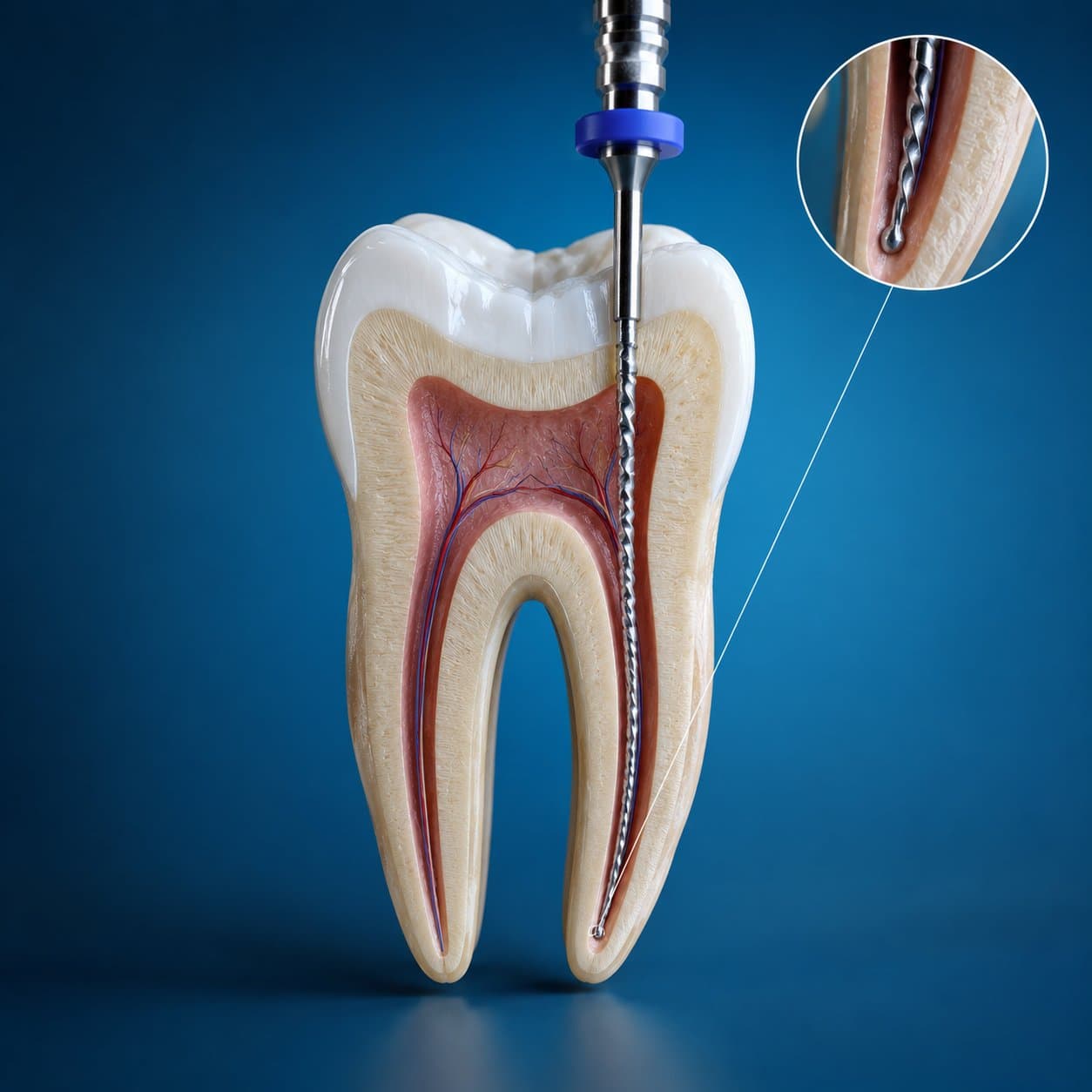
Ask about a root canal and the first thing many people hear is "we can do it in one sitting now." It's marketed like a straightforward upgrade — fewer visits, less hassle. Sometimes that's exactly right. Sometimes it isn't, and the two-visit version is the one giving the tooth a better shot.
What actually happens in each
Both approaches do the same core job: remove infected or inflamed pulp tissue from inside the tooth, clean and shape the canals, then seal them. The difference is timing. In a single-visit RCT, the cleaning, shaping and final filling all happen in one appointment. In a multi-visit RCT, the canals are cleaned and shaped, then packed with a medicated dressing and temporarily sealed — the final filling happens at a second visit, usually a week or so later, once the tooth has settled.
When single-visit works well
Single-visit RCT tends to be a good fit when the pulp is inflamed but not actively infected — a vital or recently-dead pulp without pus, swelling, or a draining sinus. Straightforward canal anatomy helps too: canals that are reasonably easy to clean thoroughly in one sitting give the dentist confidence to seal immediately.
When multi-visit is the safer call
When there's active infection — pus, swelling, or a tooth that's been draining through an abscess — many dentists prefer to place a medicated dressing and let the infection settle before sealing the tooth permanently. Complex or curved canal systems, retreatment of a previously failed root canal, and teeth where thorough cleaning is genuinely uncertain in one visit are also reasons to spread the treatment across two appointments. It isn't about the dentist being cautious for no reason — sealing an actively infected canal too early can trap infection inside.
Does it affect success rate or cost?
For properly selected cases, research generally shows similar long-term success between single- and multi-visit RCT — the deciding factor is case selection, not the number of visits. Cost differences are usually small; single-visit isn't automatically pricier, since the total materials and chair time used are often comparable. What changes is convenience, not necessarily outcome.
The number of visits isn't the thing to optimise for. Whether the case was right for that approach is. A dentist recommending two visits for an infected tooth isn't giving you the downgraded version — they're giving the infection room to resolve before permanently sealing it in.
Frequently asked
Frequently asked questions
Is single-visit root canal more painful afterward?
Not consistently. Post-treatment discomfort depends more on how inflamed or infected the tooth was going in than on whether it took one visit or two — both are typically managed with the same over-the-counter pain relief.
Why would a dentist ask me to come back for a second visit?
Usually because there's active infection — swelling, pus, or drainage. Placing a medicated dressing and letting that settle before sealing the tooth gives the treatment a better chance of holding long-term.
Does single-visit RCT cost more than multi-visit?
Not necessarily. The bigger cost drivers are the tooth's location, the number of canals, and materials used — not how many appointments it takes. Ask for the total quote rather than assuming one option is automatically cheaper.
- root canal
- endodontics
- patients
Keep reading