Tooth Sensitivity After Teeth Whitening: What's Normal and What's Not
Teeth whitening often causes temporary sensitivity — but how do you know when it's normal and when it signals a problem? Dr. Khanak Jain explains the causes, timeline, and when to call your dentist.
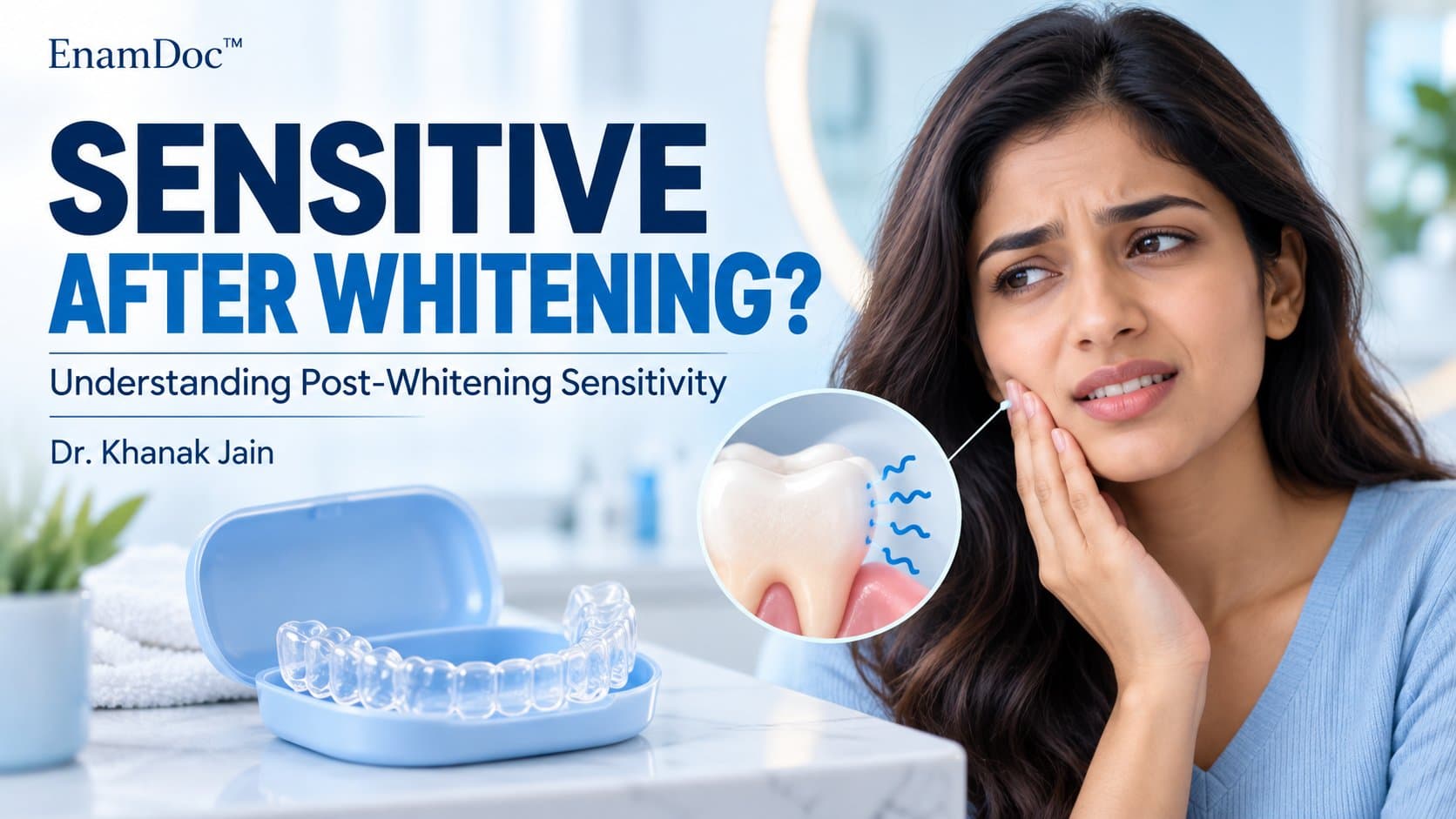
Teeth whitening is one of the most requested cosmetic dental procedures in India — and one of the most common follow-up questions dentists hear is: why do my teeth hurt after whitening?
Whether you used an over-the-counter kit, whitening strips, or had an in-office bleaching session, some sensitivity afterwards is normal. But how do you know when it's just a passing discomfort versus a sign of something more serious?
Why Does Teeth Whitening Cause Sensitivity?
Most whitening products contain hydrogen peroxide or carbamide peroxide as the active bleaching agent. These chemicals penetrate the enamel — the hard outer layer of the tooth — and reach the dentin underneath to break apart stain molecules.
Dentin contains microscopic tubules that connect to the tooth's pulp (where the nerve lives). When whitening agents reach these tubules, they temporarily stimulate the nerve, triggering that sharp, shooting sensitivity.
You're most likely to feel it when you eat or drink something cold, sip hot tea or coffee, breathe through your mouth in cold air, or consume sweet or acidic foods.
How Long Does Post-Whitening Sensitivity Last?
For most people, sensitivity resolves within 24 to 72 hours of completing treatment.
- In-office whitening (Zoom, LED-activated gels): Sensitivity peaks on the day of the procedure and fades over 1–3 days.
- At-home trays or whitening strips: Sensitivity may build gradually over several days of use and typically subsides within 2–4 days after stopping.
Normal vs. Concerning Sensitivity: How to Tell the Difference
Normal post-whitening sensitivity includes mild to moderate sharp pain triggered by cold or heat, brief "zingers" rather than constant pain, discomfort that fades each day, and general sensitivity across treated teeth.
See your dentist if sensitivity lasts longer than 7–10 days, pain is constant or throbbing, discomfort is getting worse rather than better, or pain is concentrated in one specific tooth. Prolonged sensitivity can suggest enamel is thin or worn, or there's an underlying issue like a cavity, crack, or exposed root.
How to Manage Tooth Sensitivity After Whitening
Use a desensitising toothpaste. Look for potassium nitrate or stannous fluoride. Start using it 2 weeks before whitening for best results. Brands like Sensodyne are widely available.
Apply fluoride gel after each session. Your dentist may provide a remineralising fluoride gel to apply after whitening — this helps re-harden enamel and soothe nerve activity.
Avoid trigger foods for 48–72 hours. Skip extremely hot or cold drinks, citrus, coffee, carbonated beverages, and very sweet foods immediately after whitening.
Take OTC pain relief if needed. Ibuprofen (400mg) or paracetamol (500mg) can ease post-whitening discomfort. Follow the recommended dose.
Reduce treatment frequency. If sensitivity is significant, take a 2–3 day break between whitening sessions rather than using the product daily.
Does Whitening Damage Your Enamel Permanently?
When used as directed, clinically tested whitening products do not permanently damage enamel. The sensitivity is caused by peroxide temporarily irritating the nerve — not by eroding the enamel. However, overuse of highly concentrated DIY products can lead to mineral loss, so always follow your dentist's guidance on frequency and duration.
Who Is More at Risk for Significant Sensitivity?
Patients with naturally thin or worn enamel, gum recession (exposed root surface), pre-existing dental sensitivity, untreated cavities or cracks, or recent dental work in the smile zone are more likely to experience significant sensitivity. A checkup before starting whitening treatment helps rule out conditions that could worsen the experience.
A Note on Whitening and Dental Restorations
Whitening products don't change the colour of crowns, veneers, bonding, or tooth-coloured fillings. If you whiten after having these restorations, you might end up with a colour mismatch. Speak with your dentist before beginning any whitening treatment if you have existing dental work in the front teeth.
On EnamDoc, patients across India can connect with verified dentists who offer professional teeth whitening consultations. If post-whitening sensitivity is worrying you, you can book an appointment digitally and get expert advice quickly.
Conclusion
Mild tooth sensitivity after whitening is normal and usually clears up within 2–3 days. The key is recognising when it crosses into concerning territory: sensitivity lasting more than a week, constant throbbing pain, or discomfort in a specific tooth. When in doubt, talk to your dentist — a quick evaluation can rule out underlying issues and help you whiten safely.
Frequently asked
Frequently asked questions
How long does tooth sensitivity last after teeth whitening?
For most people, sensitivity after teeth whitening resolves within 24 to 72 hours. With in-office whitening, it typically peaks on the day of the procedure and fades over 1–3 days. With at-home kits or strips, it may last 2–4 days after stopping treatment. If sensitivity persists beyond 7–10 days or gets worse, see your dentist.
Can teeth whitening permanently damage your enamel?
No — when used as directed, clinically approved whitening products do not permanently damage enamel. The sensitivity you feel is caused by peroxide temporarily irritating the nerve inside the tooth, not by eroding the enamel. However, overusing highly concentrated DIY whitening products can cause mineral loss over time, so always follow your dentist's guidance on frequency.
Is it safe to use teeth whitening products if I already have sensitive teeth?
It depends on the cause of your sensitivity. If your sensitivity is due to thin enamel, gum recession, or an untreated cavity, whitening can make it significantly worse. A dental checkup before starting any whitening treatment is strongly recommended. Your dentist can identify any underlying issues, recommend a gentler product strength, and advise you on using desensitising toothpaste before and during the treatment.
- teeth whitening
- tooth sensitivity
- whitening side effects
- patients
Keep reading