Why Teeth Are Sensitive to Cold: 6 Causes and Treatments
Tooth sensitivity to cold isn't just annoying — it can signal real dental issues. Here's what's actually causing that sharp pain and what dentists can do about it.
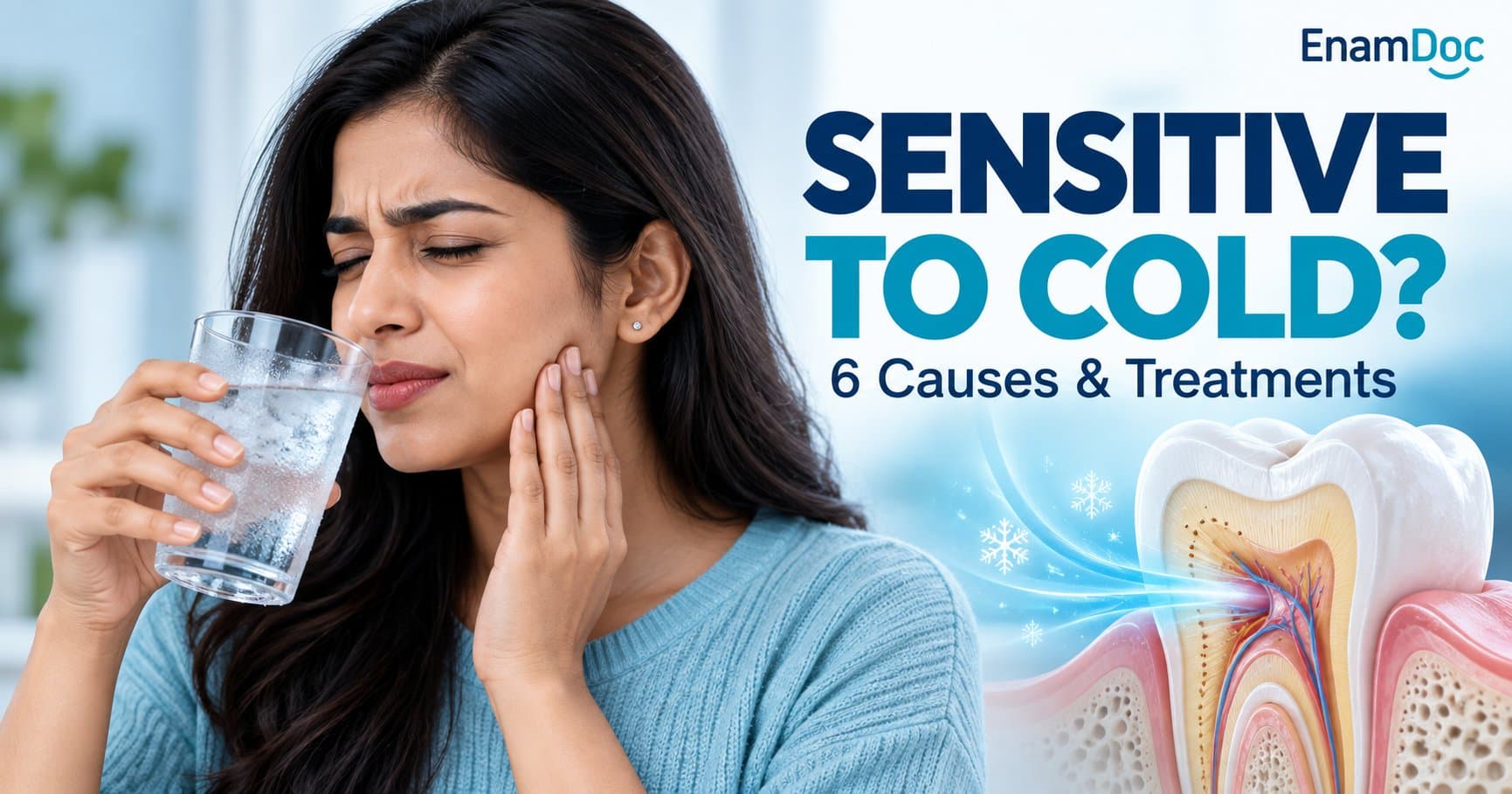
That sharp, sudden pain when you sip cold water or bite into ice cream — most people dismiss it as "just sensitivity." But tooth sensitivity is one of the most common dental complaints, and it almost always has a specific cause. Understanding that cause is what makes treatment actually work.
What Is Tooth Sensitivity?
Your teeth have a hard outer layer called enamel. Beneath it lies dentin — a softer tissue filled with thousands of microscopic tubules that lead directly to the nerve at the centre of the tooth. When enamel wears away or the root becomes exposed, these tubules are open to the outside world. Temperature changes stimulate fluid movement inside those tubules, which triggers the nerve. That's the sharp, shooting pain you feel.
The medical term is dentinal hypersensitivity. Most patients just say "my teeth hurt when I drink anything cold."
6 Common Causes of Cold Sensitivity
1. Enamel Erosion
Frequent consumption of acidic foods and drinks — citrus, fizzy drinks, vinegar-based foods — gradually dissolves enamel. Once gone, enamel doesn't grow back. Patients who drink lemon water throughout the day are particularly prone to this type of sensitivity.
2. Gum Recession
When gums pull back from the tooth due to aggressive brushing, gum disease, or ageing, the root surface becomes exposed. Root surfaces have no enamel — they're covered by cementum, which offers far less protection. Even moderate temperature changes can trigger pain on exposed roots.
3. Teeth Grinding (Bruxism)
People who clench or grind their teeth — often at night without realising — wear down enamel mechanically. Bruxism is one of the most commonly missed causes of sensitivity because patients rarely connect night grinding with daytime cold pain.
4. Cracked or Chipped Teeth
A crack in the enamel — even a hairline crack too small to appear on an X-ray — can transmit thermal sensations directly to the nerve. Pain from a cracked tooth often comes and goes unpredictably, which makes it difficult to diagnose without careful clinical examination.
5. Tooth Decay
In early-stage decay, patients sometimes experience temperature sensitivity before any visible cavity forms. The bacteria erode enamel and dentin from inside the tooth, exposing the tubular network. If cold sensitivity is new or worsening, a cavity should always be ruled out first.
6. Recent Dental Work
Fillings, crowns, scaling, and bleaching can all cause temporary sensitivity. This type of sensitivity typically resolves within a few days to two weeks. If it persists longer, let your dentist know — it's worth checking.
What Your Dentist Can Do About It
Treatment depends entirely on the underlying cause, which is why a proper diagnosis matters far more than grabbing the nearest desensitising toothpaste.
Desensitising toothpastes containing potassium nitrate or stannous fluoride block tubules over time. They work for mild, diffuse sensitivity — but only if used consistently for several weeks and only if the actual cause permits it.
Fluoride varnish or gel applied in-clinic reinforces enamel and seals exposed dentin. This is a fast, painless option for localised sensitivity.
Bonding agents or sealants physically cover exposed root surfaces with a protective layer. These are especially useful when gum recession has left significant root area unprotected.
Night guards are essential when sensitivity stems from bruxism. Without addressing the grinding, any other treatment offers only temporary relief.
Gum grafting is considered when recession is severe. A small piece of tissue from the palate is placed over the exposed root, restoring the natural protective barrier.
Root canal treatment is reserved for cases where sensitivity has progressed to persistent, unprovoked pain — a clear sign that the nerve is inflamed or damaged beyond repair with desensitisation alone.
What Not to Do
Ignoring sensitivity rarely makes it better. Untreated enamel erosion continues. Untreated decay progresses. Many patients apply desensitising toothpaste to what turns out to be a cavity, delaying proper treatment until the tooth needs a root canal or extraction.
If sensitivity is sudden, severe, limited to one specific tooth, or accompanied by visible gum changes, see a dentist rather than self-treating.
When to Book an Appointment
- Sensitivity that started recently or is getting worse week by week
- Pain that lingers for more than 30 seconds after the cold is removed
- Sensitivity that's making you avoid certain foods or drinks
- Visible gum recession, a chipped tooth, or a known cavity you've left untreated
A clinical examination — sometimes with X-rays — can identify the exact cause and point to the right treatment. EnamDoc helps clinics keep complete digital patient records, so your dentist has your full dental history at every visit, making follow-up care more targeted and more accurate.
Frequently asked
Frequently asked questions
Is tooth sensitivity to cold a sign of nerve damage?
Not necessarily. Sensitivity to cold is more often caused by exposed dentin — from enamel erosion, gum recession, or a small crack — than by nerve damage. Nerve damage typically causes persistent pain that lingers even after the cold is removed. If that's what you're experiencing, see a dentist promptly.
Can I treat sensitive teeth at home with toothpaste?
Desensitising toothpastes can reduce mild sensitivity over several weeks of consistent use, but they do not address the underlying cause. If sensitivity is new, worsening, or specific to one tooth, a dental check is far more useful than home treatment alone.
How long does sensitivity last after dental scaling?
Post-scaling sensitivity is normal and usually settles within 3 to 7 days. The cleaning removes tartar and exposes areas of the root that had been covered, which can cause temporary sensitivity. If it persists beyond two weeks or is severe, let your dentist know.
- sensitive teeth
- tooth sensitivity
- cold teeth
- enamel erosion
- gum recession
- patients
Keep reading