Tooth Sensitivity to Cold and Sweets: Why It Happens and What Actually Helps
That sharp zing when you sip cold water or bite into something sweet is called dentinal hypersensitivity. Here is what causes it, which treatments actually work, and when to see a dentist.
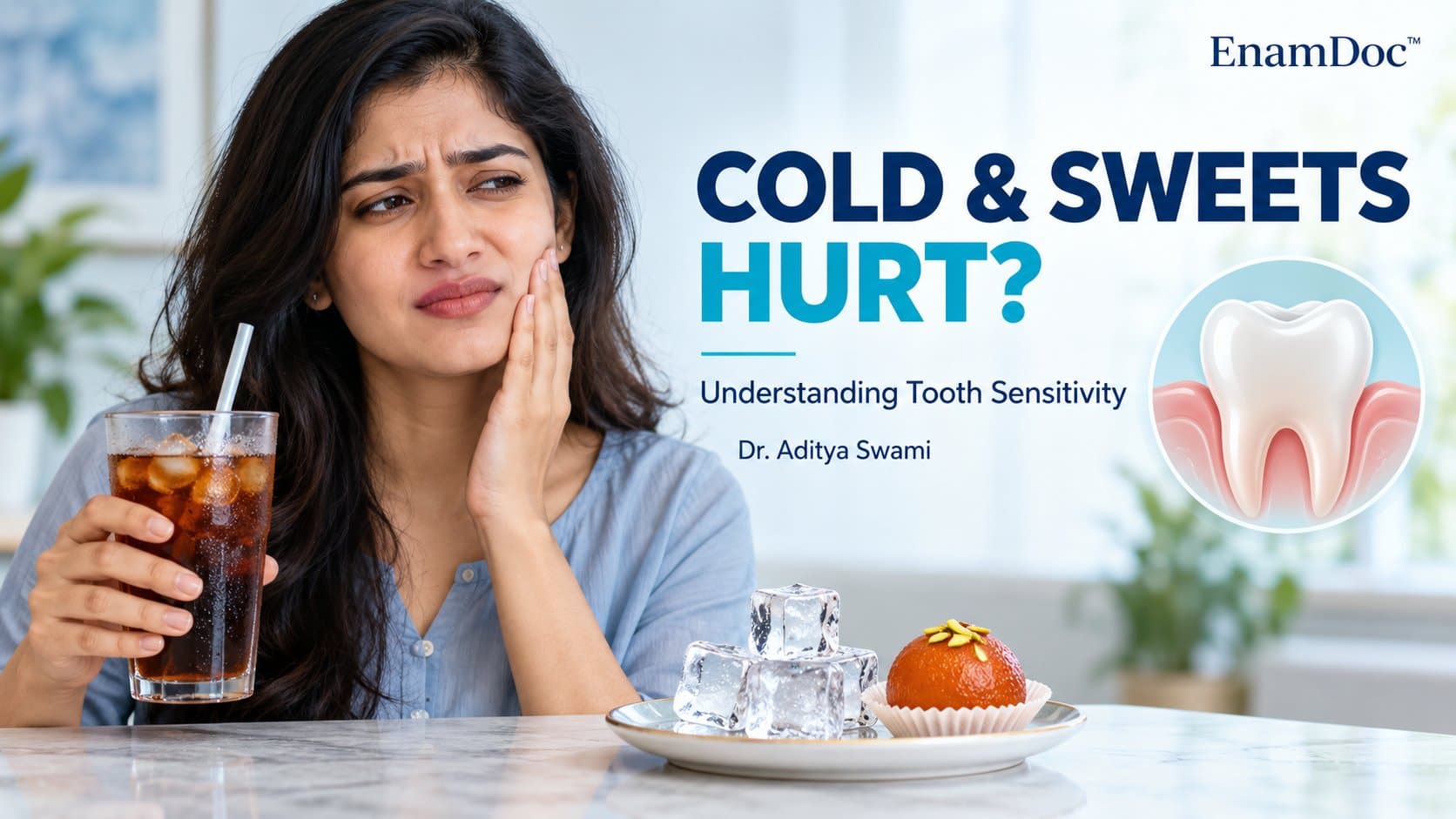
That sharp jolt when you drink cold water, breathe in cold air, or bite into something sweet is one of the most common dental complaints — and one of the most misunderstood. Tooth sensitivity is not just an inconvenience. It is a signal from your teeth, and understanding what they are trying to tell you can save you from unnecessary suffering and, sometimes, from a more serious problem going undetected.
What Is Dentinal Hypersensitivity?
Inside each tooth, beneath the hard enamel, is a layer called dentin. Dentin is filled with microscopic fluid-filled channels called dentinal tubules, which connect to the nerve at the tooth's centre. When the protective enamel is worn or the gumline recedes, these tubules become exposed. Temperature changes, sweet foods, and even air pressure cause fluid movement in the tubules, which the nerve interprets as pain.
This is why sensitivity to cold is usually sharp and brief — it triggers the fluid movement, the nerve fires, then the sensation passes. Heat sensitivity that lingers longer is a different signal and may point to an infected or dying nerve, which warrants prompt dental assessment.
Common Causes of Tooth Sensitivity
- Enamel erosion. Acidic foods and drinks (citrus, fizzy drinks, vinegar-based foods) gradually dissolve enamel, the tooth's outer protective layer. Once gone, enamel does not regenerate.
- Gum recession. When gum tissue pulls back — due to gum disease, aggressive brushing, or ageing — the root surface becomes exposed. Roots have no enamel and are immediately sensitive.
- Tooth grinding (bruxism). Clenching and grinding wears down enamel, often at the chewing surfaces, leading to widespread sensitivity.
- Cracked or chipped teeth. A crack can expose dentin and also allow bacteria to reach the pulp, causing sensitivity that worsens with pressure.
- Tooth whitening products. Most whitening agents temporarily increase sensitivity by opening dentinal tubules. This usually resolves within a few days of stopping use.
- Recently placed fillings. New fillings can cause temporary sensitivity as the tooth adjusts. This generally resolves within two to four weeks.
- Gum disease (gingivitis or periodontitis). Inflammation causes gum recession and exposes root surfaces.
Which Toothpastes and Treatments Actually Work
Not everything marketed for sensitivity delivers meaningful results. Here is what the evidence supports:
Desensitising Toothpastes
Look for toothpastes containing potassium nitrate or stannous fluoride. Potassium nitrate calms the nerve directly, while stannous fluoride blocks the dentinal tubules. These work, but they require consistent daily use for two to four weeks before you notice significant relief. Do not expect overnight results.
Fluoride Treatments
Professional fluoride varnishes applied by a dentist can temporarily seal exposed dentinal tubules and strengthen enamel. They are more effective than over-the-counter fluoride alone for moderate-to-severe sensitivity.
Dental Bonding or Varnishes
For severe or localised sensitivity caused by exposed root surfaces, a dentist can apply a bonding agent or desensitising varnish directly to the area. This provides more immediate and durable relief than toothpaste alone.
Gum Grafting
When significant gum recession is the cause, a surgical gum graft — where tissue is taken from another area and placed over the exposed root — can restore the gumline and eliminate the sensitivity entirely.
What Not to Do
- Don't brush harder. Scrubbing more aggressively worsens enamel wear and gum recession. Use a soft-bristle brush and gentle pressure.
- Don't rinse immediately after brushing. Rinsing washes away the fluoride that needs time to remineralise enamel. Spit but don't rinse.
- Don't sip acidic drinks slowly over long periods. Swallow quickly or use a straw to limit contact time with teeth.
- Don't delay seeing a dentist. Sensitivity that is worsening, spreading to multiple teeth, or accompanied by visible swelling or pain when biting needs professional evaluation. It may indicate something more serious than surface-level sensitivity.
When to See a Dentist
Over-the-counter desensitising products work for mild, stable sensitivity. See a dentist if:
- Sensitivity is severe or waking you from sleep
- Pain lingers for more than 30 seconds after cold stimulus
- You notice sensitivity to heat as well as cold
- Sensitivity is concentrated in one specific tooth
- You see visible cracks, chips, or darkening in any tooth
EnamDoc connects patients with verified dentists who can identify the precise cause of sensitivity — whether that is enamel erosion, gum recession, a crack, or an underlying infection — and recommend targeted treatment rather than generic products. Dental records are stored digitally, so your history is always available at your next visit.
The Short Answer
Tooth sensitivity happens because exposed dentin sends pain signals in response to triggers like cold, sweet, or acid. A desensitising toothpaste with potassium nitrate or stannous fluoride, used consistently, works for mild cases. For anything more than mild sensitivity, or sensitivity that is changing, professional evaluation is the right step — because what feels like sensitivity can occasionally be a sign of something that needs more than toothpaste to fix.
Frequently asked
Frequently asked questions
How long does it take for a desensitising toothpaste to work?
Most desensitising toothpastes require consistent daily use for two to four weeks before providing noticeable relief. They work best when you brush with them, spit out the excess, and do not rinse — allowing the active ingredients to remain on the tooth surface.
Can enamel grow back once it wears away?
No. Unlike bone, enamel cannot regenerate because it contains no living cells. Once enamel is worn away, it is gone. However, remineralisation — strengthening partially demineralised enamel using fluoride and calcium — is possible. This is why fluoride toothpaste and limiting acidic food and drink matters.
Is tooth sensitivity a sign of a cavity?
Not necessarily. Sensitivity is commonly caused by exposed dentin from gum recession, enamel erosion, or grinding — none of which involve decay. However, a cavity can also cause sensitivity, particularly to sweet foods or when biting. If sensitivity is focused on one tooth or is worsening, a dental examination is the only way to rule out decay.
- tooth sensitivity
- sensitive teeth
- dentin hypersensitivity
- cold sensitivity
Keep reading