Sensitive Teeth: Why They Hurt, What Causes It, and How to Actually Fix It
If cold water, sweet foods, or even breathing cold air makes your teeth ache, you have dentin hypersensitivity. It is one of the most common dental complaints in India — and one of the most treatable. Here is what causes it and what genuinely works.
Medically reviewed by Dr. Khanak Jain, BDS
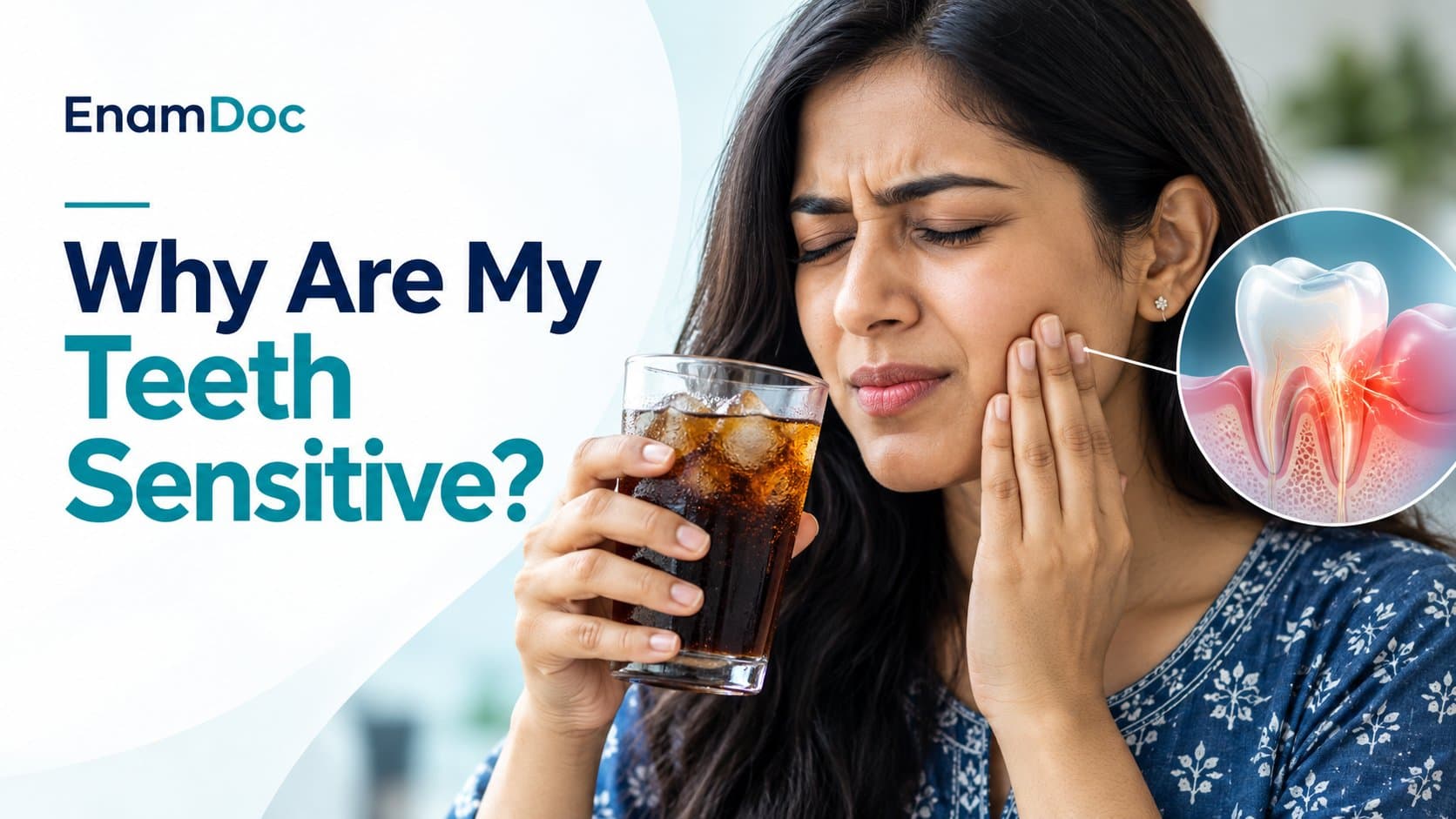
A sharp, fleeting zing when you drink cold water. A wince at ice cream. The unpleasant jolt that comes from breathing cold air through your mouth. If any of this sounds familiar, you have tooth sensitivity — medically called dentin hypersensitivity — and you are far from alone. Studies suggest it affects up to 57% of adults at some point, making it one of the most prevalent dental conditions worldwide. The good news: it is also one of the most treatable, once you understand what is actually causing it.
Why Do Teeth Become Sensitive?
Under normal circumstances, your teeth have two layers of protection: the hard enamel on the crown and the cementum on the root surface. Beneath these lies dentin — a softer layer full of microscopic fluid-filled tubes called dentinal tubules, which connect directly to the nerve inside the tooth. When enamel or cementum wears away and dentin is exposed, external stimuli (cold, heat, sweet, acidic, touch) cause fluid movement inside these tubules, which the nerve registers as pain.
The triggers are predictable: cold liquids or air, hot drinks, sweet or acidic foods, toothbrushing on exposed areas, and sometimes even pressure.
The Most Common Causes of Tooth Sensitivity
1. Enamel Erosion from Acidic Foods and Drinks
Frequent consumption of acidic foods and drinks — citrus fruits, fizzy drinks, sports drinks, wine, kombucha, vinegar-based foods — gradually dissolves tooth enamel. This is one of the fastest growing causes of sensitivity in India as dietary patterns have shifted. The key is frequency: having lemon in your water throughout the day is more damaging than having lemon with one meal.
2. Gum Recession
When gums pull back from the tooth (due to gum disease, aggressive brushing, or natural ageing), the root surface is exposed. Root surfaces have no enamel — just cementum, which is thinner and wears down easily. Exposed root sensitivity is often sharper and more persistent than crown sensitivity.
3. Over-Aggressive Brushing
Brushing too hard, with a hard-bristle brush, or with an abrasive toothpaste causes both enamel abrasion and gum recession over time. The irony is that many people who brush most vigorously are doing their teeth the most damage. A soft-bristle brush and light pressure is always the correct technique.
4. Teeth Grinding (Bruxism)
Grinding wears down the biting surfaces of teeth, eventually exposing dentin. Many people grind at night without knowing it. Signs include worn flat teeth, morning jaw soreness, and unexplained sensitivity. A night guard from your dentist protects the teeth from further damage.
5. Cracked Teeth
A crack in a tooth can expose dentin or even reach the pulp. Cracked tooth syndrome often causes sensitivity on biting — a sharp pain on one particular spot when chewing. This requires dental evaluation, as it may need a crown or, if the crack reaches the pulp, a root canal.
6. Whitening Treatments
Both professional and at-home whitening treatments temporarily increase sensitivity in many patients, because the whitening agent opens dentinal tubules. This typically resolves within a few days of stopping treatment. Using a desensitizing product before whitening can help.
7. Recent Dental Work
It is completely normal to experience some sensitivity after fillings, crowns, professional cleaning, or other dental procedures. This usually settles within 2–4 weeks. Persistent sensitivity beyond that warrants a follow-up with your dentist.
Treatments That Actually Work
Desensitizing Toothpaste
The most accessible first-line treatment. Toothpastes containing potassium nitrate (like Sensodyne Rapid Relief or Colgate Sensitive Pro-Relief) work by blocking dentinal tubules or calming the nerve. They need to be used consistently — results build over 2–4 weeks of regular use. Using them correctly matters: apply directly to sensitive areas with your finger and leave it for a minute before brushing, rather than rinsing it away immediately.
Fluoride Treatments
Professional fluoride varnish applied by your dentist strengthens enamel and plugs exposed tubules far more effectively than toothpaste alone. A single in-office fluoride varnish application (costs roughly ₹500–₹1,500 in India) often provides noticeable relief. Regular applications (every 3–6 months) are ideal for ongoing sensitivity management.
Bonding Agents and Desensitizers
Dentists can apply resin-based bonding agents or glass ionomer materials directly to exposed root surfaces, physically blocking the tubules. This is particularly useful for severe or localised sensitivity that toothpaste alone hasn't resolved.
Gum Grafting
For significant gum recession exposing root surfaces, a surgical gum graft (typically using tissue from the palate or donor tissue) can cover the exposed root and permanently eliminate that source of sensitivity. It is a minor surgical procedure but provides a long-term solution for recession-related sensitivity.
Night Guard for Bruxism
If grinding is the cause, a custom-fitted night guard from your dentist is the correct treatment. Over-the-counter guards provide some protection but do not fit as precisely and can actually worsen jaw joint issues if poorly fitted.
What You Can Do at Home
- Switch to a soft-bristle toothbrush and reduce brushing pressure
- Use a fluoride desensitizing toothpaste consistently (not just occasionally)
- Reduce the frequency of acidic food and drink consumption — rinse with plain water after eating citrus or drinking fizzy drinks
- Wait 30–60 minutes after consuming acidic foods before brushing (brushing immediately after acid exposure makes erosion worse)
- Avoid whitening products if sensitivity is severe until the underlying cause is treated
When to See a Dentist
If sensitivity has been present for more than 2–3 weeks, is worsening, is localised to one tooth, or is accompanied by any spontaneous pain (pain without a trigger), you need a dental evaluation. These signs can indicate a cavity, cracked tooth, or pulpal involvement that requires treatment beyond desensitizing products.
Sensitivity is your teeth telling you something. Most causes are very manageable — the mistake is ignoring it for months and allowing the underlying problem to progress. Book a check-up through EnamDoc to identify the cause and get the right treatment started.
Frequently asked
Frequently asked questions
Does sensitive toothpaste actually work?
Yes, but it takes consistent use over 2–4 weeks to work properly. Toothpastes containing potassium nitrate or stannous fluoride gradually desensitize the nerve and occlude exposed dentinal tubules. The key is using them correctly: apply to sensitive spots with your finger and leave briefly before brushing, rather than rinsing the toothpaste off immediately. Using a desensitizing toothpaste occasionally provides minimal benefit — it needs to be your daily toothpaste. If 4–6 weeks of consistent use brings no improvement, see a dentist.
Can sensitive teeth be permanently cured?
It depends on the cause. Sensitivity from enamel erosion can be slowed and managed but not fully reversed, since enamel does not regenerate. Sensitivity from gum recession can be permanently addressed with a gum graft procedure. Sensitivity from a specific structural cause (a crack, a cavity, an old failing restoration) is cured by treating that cause directly. In many cases, a combination of identifying the cause, eliminating the trigger, and using fluoride and desensitizing treatments brings symptoms down to a tolerable or absent level.
Why are my teeth suddenly sensitive to cold?
Sudden onset sensitivity that wasn't there before is the most important kind to get checked promptly. It could indicate a new cavity, a cracked tooth, early pulp involvement, a failing old filling or crown, or significant new gum recession. It is less likely to be simple enamel erosion (which develops gradually). Sudden sensitivity — especially if it is in one specific tooth, worsens, or is accompanied by any spontaneous pain — warrants a dental appointment rather than just reaching for desensitizing toothpaste.
- sensitive teeth
- tooth sensitivity
- dentin hypersensitivity
- sensitive teeth treatment India
- desensitizing toothpaste
Keep reading