Viral Dental Advice on Social Media: What's Actually Safe (and What Isn't)
A 2026 review of dental misinformation found fluoride myths and DIY dentistry cause the most harm — and neither trends because it's true.
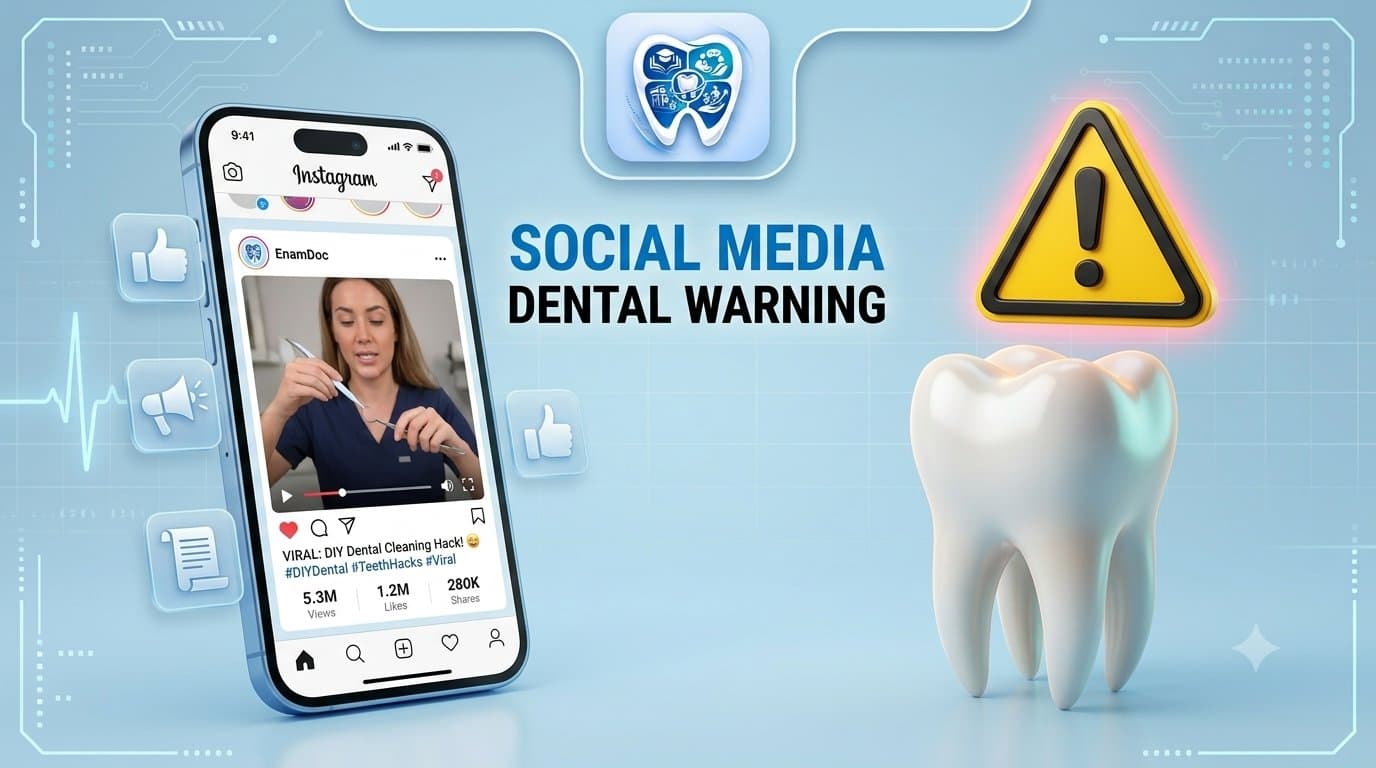
A 2026 scoping review in BDJ Open looked at 61 studies on dental misinformation and found a consistent pattern: the myths that spread the furthest are not the ones that are hardest to check, they're the ones that are easiest to package into a 30-second video.
What the research actually looked at
Researchers scanned Scopus, Web of Science and Ovid Medline through mid-2025, narrowing 864 initial records down to 61 studies specifically on dental misinformation across social platforms. YouTube was the most-studied platform, appearing in over a third of the research; Instagram showed up in nearly 28%, mostly around aesthetic marketing and fluoride claims. The pattern that stood out most: how much a post was liked or shared had no relationship to whether the information in it was accurate. Algorithms reward engagement, not correctness.
Fluoride: the most common myth by far
Fluoride misinformation came up more than any other category. The claims range from "fluoride is a toxin" to "fluoride-free toothpaste works just as well," and they spread easily because fluoride sounds like a chemical additive rather than what it actually is — a mineral that gets incorporated into enamel and makes it measurably more resistant to acid and decay. The evidence for fluoride's role in preventing cavities is among the most established in all of dentistry. That doesn't stop the myth from re-appearing every few months in a new format.
DIY dentistry: filing, "at-home veneers," and rubber-band braces
The second major category is content that shows people doing dental work on themselves — filing down teeth with a nail file to fix unevenness, using orthodontic rubber bands to close a gap, or ordering press-on "veneers" fitted at home with no impression taken by a professional. Filing enamel is irreversible; unlike a fingernail, it does not grow back, and removing too much exposes the softer layer underneath, which is far more sensitive and prone to decay. Rubber bands used to move teeth without professional supervision have documented cases of the band slipping under the gumline and causing tooth loss, because there's no way to control the direction or amount of force from a household elastic.
Why the worst advice gets the most engagement
The review found that only a minority of studies — 29 of 61 — actually measured whether misinformation changed patient behavior, and just 17 documented real harm or delayed care. That's a genuine gap in the evidence: most of what's known is that misinformation exists and spreads, not exactly how much damage it does. But the studies that did track harm found real cases of delayed treatment and self-inflicted injury traceable directly to viral advice.
A simple filter for anything you see online
Before trying anything shown in a dental video, ask one question: is this reversible if it goes wrong? Whitening strips, an extra floss habit, or an oil-pulling routine are low-risk even if they don't do much. Filing teeth, DIY orthodontics, or skipping fluoride entirely are not — the downside is permanent, and the upside claimed in the video is usually exaggerated.
Frequently asked
Frequently asked questions
Is fluoride in toothpaste actually safe?
Yes. Fluoride at the concentrations used in toothpaste and public water supplies is one of the most well-evidenced tools in preventive dentistry for reducing cavities, and major health bodies worldwide continue to recommend it.
Can filing my own teeth at home fix minor unevenness?
No. Enamel does not regenerate once removed, and filing at home risks exposing the more sensitive layer underneath, increasing sensitivity and decay risk permanently.
Do rubber bands work to close a gap between teeth?
They can move teeth, but without professional supervision the force and direction can't be controlled, and there are documented cases of bands slipping under the gumline and causing tooth loss.
Why does inaccurate dental advice spread so easily online?
Research shows that how much content is liked or shared has no relationship to how accurate it is — platforms tend to amplify whatever gets engagement, regardless of correctness.
- dental myths
- social media
- fluoride
- DIY dentistry
Keep reading