Dental Scaling: What to Expect Before, During & After
Dental scaling removes hardened tartar your toothbrush can't touch. Here's exactly what the procedure involves and how to care for your gums after.
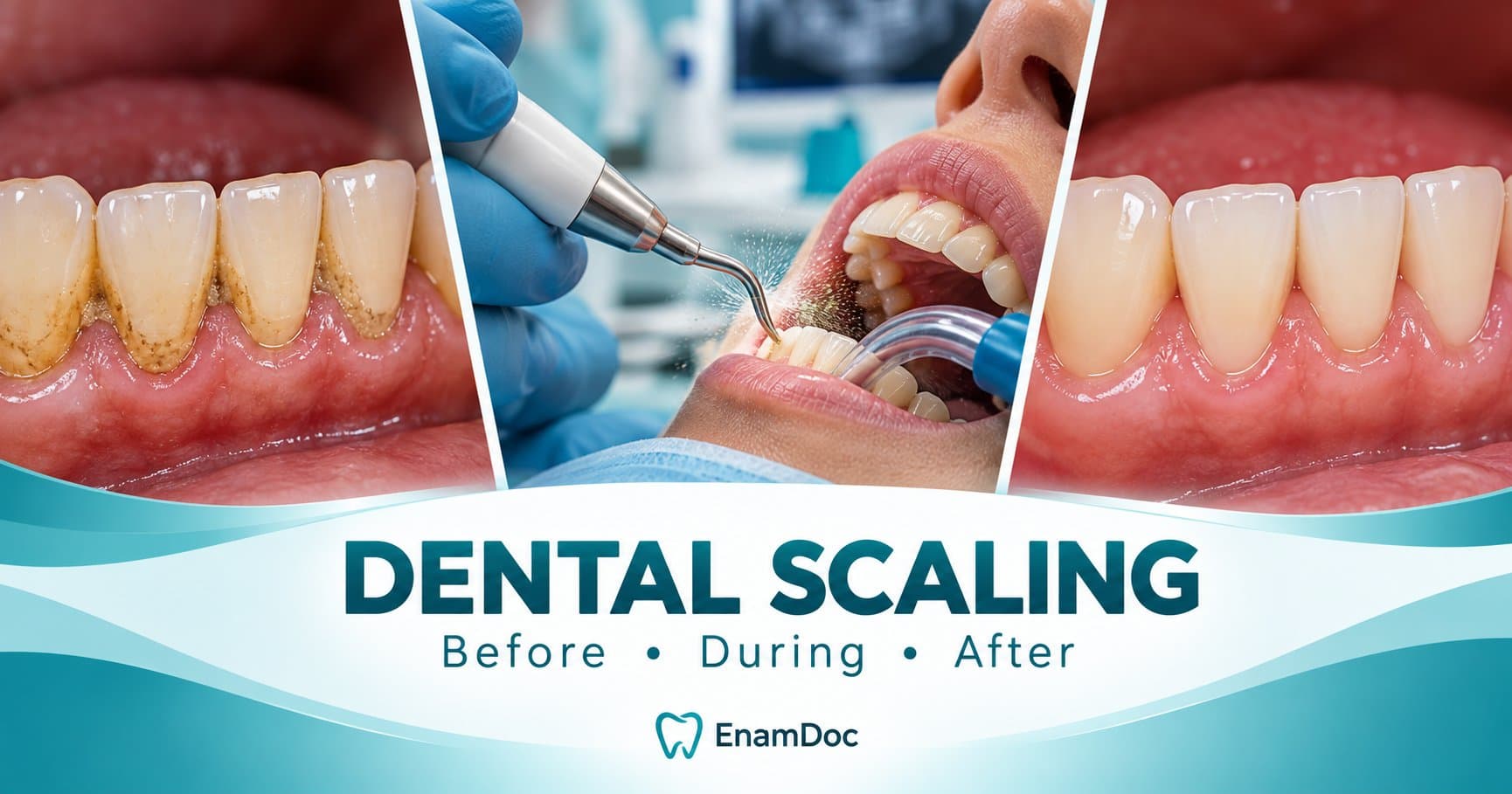
What Is Dental Scaling — and Why Does It Matter?
You've probably had a dentist or hygienist recommend a "scaling" at some point, especially if it's been a while since your last visit. But what exactly is it, and why can't a regular polish do the same job?
Dental scaling is the professional removal of tartar (also called calculus) — the hard, calcified deposits that form when plaque is left on teeth long enough to mineralise. Once plaque hardens into tartar, no amount of brushing or flossing at home will shift it. Only a professional with specialised instruments can remove it safely.
Left untreated, tartar acts as a scaffold for more bacteria, which irritate the gums, cause inflammation, and eventually lead to gum disease (periodontitis). Scaling breaks that cycle before it becomes a bigger — and more expensive — problem.
Two Types of Scaling You Should Know About
Not all scaling is the same. Depending on where the tartar has built up, your dentist may recommend one or both of the following approaches:
Supragingival Scaling (Above the Gumline)
This is the standard cleaning most people are familiar with. The hygienist or dentist removes tartar from the visible surfaces of your teeth — the parts you can see when you smile. It's generally quick and causes minimal discomfort. If your gums are healthy and you've been keeping up with regular visits, supragingival scaling is usually all you'll need.
Subgingival Scaling (Below the Gumline)
When gum disease has set in or your gums have started to pull away from the teeth, tartar can accumulate in the periodontal pocket — the gap between the tooth root and gum tissue. Subgingival scaling targets these deeper deposits. It's a more involved procedure, often done in sections across multiple appointments, and may require local anaesthesia for comfort.
Some clinics also use ultrasonic scalers — instruments that vibrate at high frequencies and use a water spray to loosen and flush away tartar. These can reach places that hand instruments miss and are particularly effective for deeper cleanings.
What Actually Happens During a Scaling Appointment
Here's a step-by-step breakdown of what most scaling appointments look like:
1. Examination
Before any instruments come out, your dentist or hygienist will examine your gums using a small probe to measure the depth of the pockets around each tooth. This tells them how serious the tartar build-up is and what level of cleaning is needed.
2. Tartar Removal
Using either hand scalers, an ultrasonic device, or a combination of both, the clinician systematically works across your mouth — removing hardened deposits from tooth surfaces and, if needed, below the gumline. You'll hear scraping sounds; this is normal. The ultrasonic scaler also produces a fine mist of water that helps flush debris away as it works.
3. Root Planing (If Needed)
If subgingival scaling is necessary, your dentist may also perform root planing — smoothing the root surface so it's harder for bacteria to cling to it and easier for gum tissue to reattach. This is often done as part of a "deep cleaning" treatment for gum disease.
4. Polish
After scaling, the teeth are typically polished with a slightly gritty paste that removes surface stains and leaves your enamel smooth. This step also makes it harder for new plaque to stick as quickly.
5. Fluoride Treatment (Optional)
Some clinics finish with a fluoride application to help remineralise enamel and reduce temporary sensitivity after scaling. Ask your dentist if this is recommended for you.
Does Dental Scaling Hurt?
Mild discomfort is normal — especially if it's been a long time since your last cleaning, if you have sensitive gums, or if subgingival scaling is being done. Most patients describe the sensation as pressure, vibration, or a brief sharp feeling near the gumline.
For a standard supragingival clean, most people don't need anaesthesia. For deeper cleanings, local anaesthetic gel or an injection can make the experience completely comfortable. Don't hesitate to ask your dentist for this — there's no reason to sit through discomfort.
Gums may bleed during the procedure, particularly if they're inflamed. This is not a cause for alarm; it usually reduces significantly with regular cleaning.
How Long Does Dental Scaling Take?
A standard supragingival scaling usually takes 30 to 60 minutes, depending on how much tartar is present. A deep cleaning (subgingival scaling with root planing) may take 60 to 90 minutes per quadrant, often spread across two or more appointments to allow your mouth time to rest.
What to Expect After Dental Scaling
Some after-effects are normal and should resolve within a few days:
- Gum soreness – Your gums may feel tender for 24–48 hours. Over-the-counter pain relief (ibuprofen or paracetamol) is usually sufficient.
- Tooth sensitivity – Especially to cold, heat, or sweet foods. This is because the tartar that was covering parts of the root is now gone, exposing dentine temporarily. Sensitivity toothpaste can help.
- Bleeding – Light bleeding or pinkish saliva for a day or two is normal. If it persists beyond 72 hours, contact your dentist.
- Gum recession appearance – Your teeth may look slightly "longer" because swollen gum tissue has now reduced to a healthier level. This is a good sign, not a problem.
For the first 24 hours: stick to soft, cool foods, avoid smoking, skip alcohol-based mouthwash, and rinse gently with warm salt water to soothe the gums.
Is Dental Scaling Safe?
Yes — when performed by a trained dental professional, scaling is a safe, routine procedure. Contrary to a common myth, it does not weaken teeth or strip enamel. What it removes is tartar (not tooth structure), and removing it actively protects your teeth from decay and gum disease.
If you've been told to avoid scaling due to a bleeding disorder, on anticoagulant medication, or have an active oral infection, your dentist will adjust the timing or approach accordingly.
How Often Should You Get Scaling Done?
For most adults with reasonably good oral health, a professional cleaning every 6 months is sufficient. If you have a history of gum disease, are a smoker, or tend to accumulate tartar quickly, your dentist may recommend every 3 to 4 months.
The single biggest predictor of how often you'll need scaling is your at-home brushing and flossing routine. Regular flossing removes interdental plaque before it can harden — reducing how much work the hygienist has to do each visit.
When to See a Dentist About Scaling
Book an appointment if you notice:
- Gums that bleed when you brush or floss
- Persistent bad breath despite good oral hygiene
- Gums that look red, puffy, or are pulling away from your teeth
- Visible brown or yellow deposits at the base of teeth
- Teeth that feel rough or look discoloured near the gumline
These are all signs that tartar has accumulated and professional scaling is overdue. Catching gum disease early — at the gingivitis stage — means the damage is fully reversible. Once it progresses to periodontitis, the goal shifts from reversal to management.
Book a Scaling at EnamDoc
At EnamDoc, you can search and compare verified dental clinics offering professional scaling and deep cleaning across India. Filter by location, experience, and patient reviews to find a periodontist or hygienist who suits your schedule and budget. No calls, no guesswork — just a straightforward booking.
Your gums do more for your overall health than most people realise. Keeping them clean is one of the simplest, highest-value investments you can make in your wellbeing.
Frequently asked
Frequently asked questions
Does dental scaling damage or weaken your teeth?
No — this is one of the most common misconceptions about scaling. The procedure removes tartar and plaque deposits from tooth surfaces; it does not touch or remove enamel. Properly performed scaling by a trained dentist or hygienist is entirely safe and actually protects teeth by eliminating bacteria that cause decay and gum disease.
How long does sensitivity last after dental scaling?
Tooth sensitivity after scaling typically lasts 2 to 5 days. It occurs because tartar had been covering parts of the tooth root, and once removed, those surfaces are briefly exposed. Using a sensitivity toothpaste (containing potassium nitrate or stannous fluoride) and avoiding very hot, cold, or sweet foods for a few days usually resolves it. If sensitivity persists beyond a week, let your dentist know.
How often should I get dental scaling done?
For most adults in good oral health, scaling every 6 months (twice a year) is recommended. If you have a history of gum disease, smoke, or accumulate tartar quickly, your dentist may suggest every 3 to 4 months. The best interval for you depends on your personal rate of plaque build-up, gum health, and how consistently you floss at home — ask your dentist to assess this at your next visit.
- dental scaling
- teeth cleaning
- tartar removal
- gum health
- polishing
- patients
Keep reading