Creating a Patient Loyalty & Preventative Recall Program That Works
Discover how to build patient retention, streamline 6-month preventative checkup reminders, and design an in-house dental membership plan that drives recurring revenue.
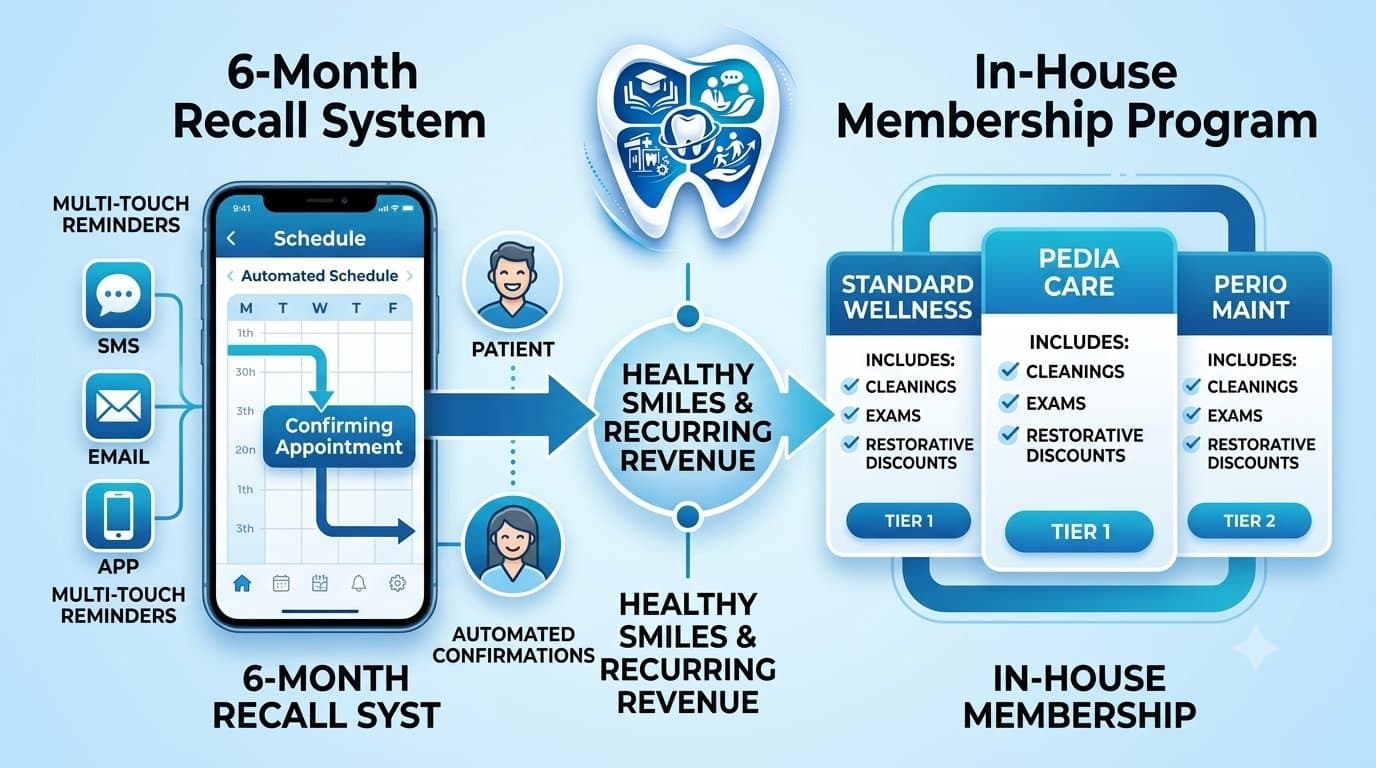
In modern dental practice management, acquiring a new patient costs five to seven times more than retaining an existing one. Despite this, many clinics face a silent revenue leak: the "one-and-done" patient cycle. Patients complete an urgent filling or routine cleaning and vanish from the schedule until emergency pain strikes months or years later.
Transitioning from reactive dentistry to predictable preventative care requires a structured patient retention framework. By pairing an automated, multi-channel recall system with an attractive in-house membership model, dental clinics can maintain healthy patient outcomes and build stable recurring revenue.
The True Value of Preventative Recall in Modern Dentistry
Preventative recall isn't merely an administrative task—it is the foundation of patient oral wellness and consistent chair utilization. Consistent 6-month hygiene visits allow clinicians to:
- Detect early demineralization and micro-cavities before they require invasive restorations.
- Monitor periodontal pockets and manage gingivitis before irreversible bone loss occurs.
- Build trusted, long-term provider-patient relationships that boost treatment plan acceptance.
1. Building a Multi-Touch 6-Month Recall Cadence
Relying on a single postcard or an unexpected phone call results in low response rates. A modern recall workflow utilizes timely, automated, multi-channel nudges:
- Pre-Booking at Checkout (Day 0): Always schedule the next preventative visit before the patient leaves the operatory. Frame it around their health: "Let’s secure your spot for October so your cleaning stays on schedule."
- 30 Days Prior: Send a polite email or WhatsApp update prompting the patient to confirm or adjust their reserved appointment time.
- 7 Days Prior: Deliver an interactive SMS or app alert allowing one-click confirmation.
- 48–24 Hours Prior: Send a concise reminder with logistics (directions, parking, pre-visit screening details).
- The Overdue Re-Engagement Sequence: For patients who miss their window, initiate a graduated 3-step reactivation sequence at 30, 60, and 90 days overdue, focusing on preventative health rather than sales.
2. In-House Membership Plans: Eliminating the Cost Barrier
The primary reason patients delay routine checkups is financial friction—especially uninsured or underinsured patients who fear unexpected expenses. In-house dental membership plans solve this by creating transparent, subscription-based preventative packages.
| Plan Tier | Typical Inclusions | Best Suited For |
|---|---|---|
| Standard Adult Wellness | 2 Cleanings/yr, 2 Exams, Annual X-rays, 15% discount on restorative treatments | Healthy adults needing routine preventative care |
| Pediatric Care | 2 Cleanings/yr, 2 Exams, Fluoride applications, 15% discount on sealants & fillings | Children under 14 years |
| Periodontal Maintenance | 3–4 Perio maintenance cleanings/yr, Periodontal charting, 20% discount on deep scaling | Patients managing active or stabilized gum disease |
3. Key Metrics to Measure Program Success
To ensure your loyalty and recall system delivers sustainable practice growth, track these key performance indicators monthly:
- Pre-Appointment Rate: Aim for over 75% of departing hygiene patients scheduling their next appointment at checkout.
- Recall Effectiveness Rate: Percentage of active patients who complete a preventative visit within 6–7 months.
- Membership Retention Rate: Percentage of subscription members who renew their annual or monthly plan.
- Reactivation Conversion: How many lapsed patients return after receiving overdue automated reminders.
Transforming Patients into Lifelong Advocates
A successful loyalty program does not rely on discounts; it relies on consistency, clear communication, and friction-free access to care. When patients know exactly when their next checkup is and have a simple, affordable way to pay for it, compliance soars and practice revenue stabilizes.
Frequently asked
Frequently asked questions
What is an ideal patient recall interval for standard hygiene patients?
For most healthy adults, a 6-month recall interval is clinically recommended. Patients with active periodontal disease or high caries risk generally require shorter 3- to 4-month maintenance intervals.
How do in-house membership plans benefit dental clinics?
Membership plans generate predictable monthly or annual recurring revenue, reduce reliance on third-party insurance fee schedules, and increase patient treatment acceptance by eliminating unexpected cost barriers.
What is the best way to handle patients who do not pre-book at checkout?
Enroll them immediately in an automated digital recall sequence via SMS, WhatsApp, or email that reaches out at 5 months with a direct online booking link to select their preferred time slot.
- patient loyalty
- preventative recall
- dental memberships
- patient retention
- dental practice management
- recall systems
- recurring revenue
Keep reading