Dental Crown vs Filling: When Does Your Tooth Actually Need a Crown?
Your dentist recommends a crown — but couldn't they just do a filling? Here's how dentists decide, what each option does to your tooth, and when a crown really is the better choice.
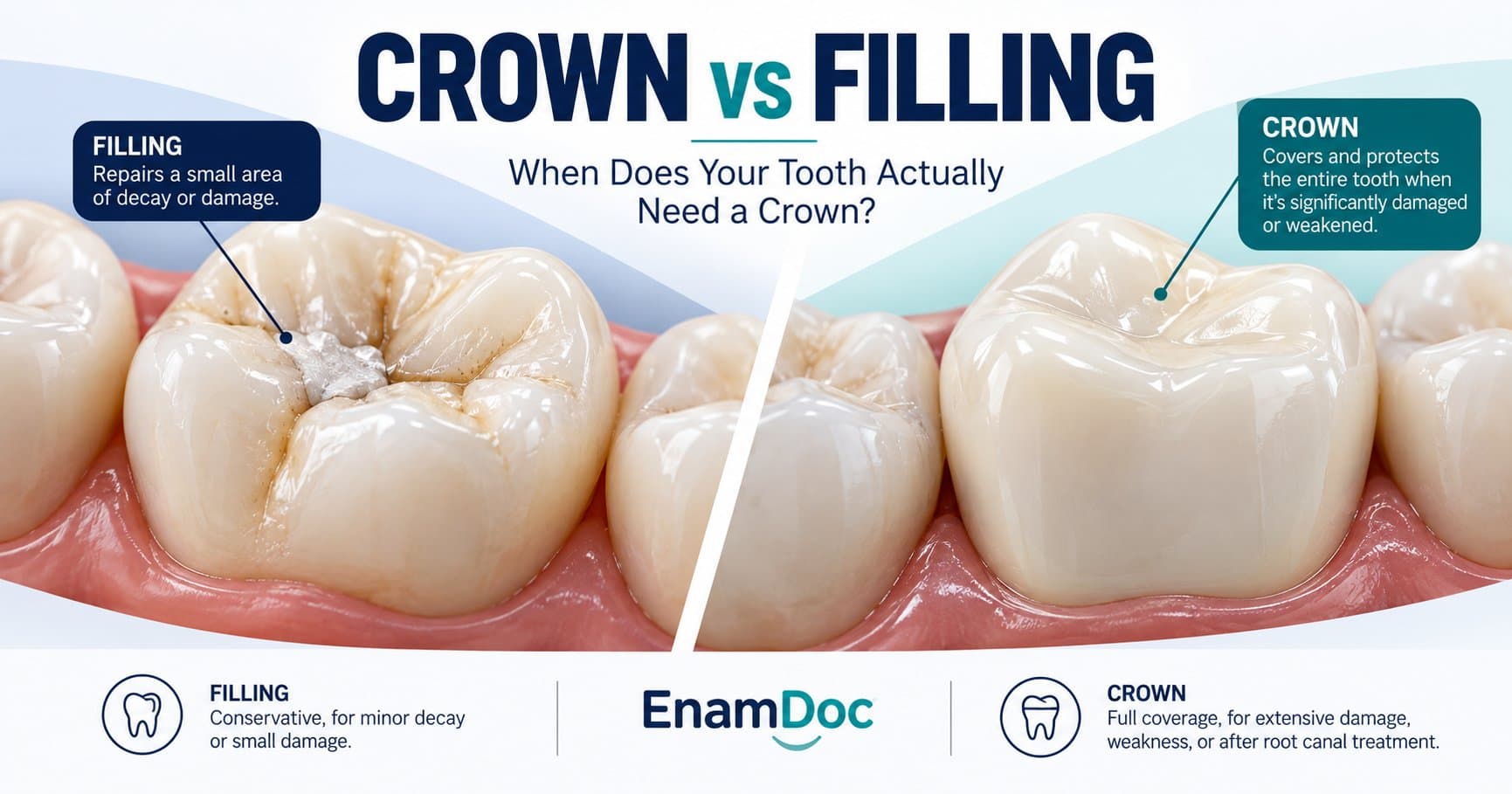
When a dentist says you need a crown instead of a filling, the natural reaction is to wonder why. Both restore a damaged tooth — but they work very differently and suit different situations. Understanding when each one is appropriate helps you make informed decisions about your dental treatment.
What Is the Difference Between a Filling and a Crown?
A filling repairs a limited area of damage within the tooth. The dentist removes the decayed or damaged portion, fills the space with composite resin or another material, and the natural tooth structure around it remains intact. A filling is relatively quick, minimally invasive, and preserves most of the tooth.
A crown covers the entire visible portion of the tooth above the gumline, like a cap. To place one, the dentist reduces the tooth on all sides to create space for the crown, takes an impression, and sends it to a laboratory where the crown is custom-made — usually from ceramic, zirconia, or metal alloy. A crown is stronger and more protective, but more invasive and expensive.
When Is a Filling Sufficient?
A filling is appropriate when the damage is limited in size and the surrounding tooth structure is strong enough to hold it. Signs that a filling is likely sufficient:
- Small to medium cavity that affects less than half the tooth's biting surface
- Minor chip with no structural compromise
- The tooth has not had previous large restorations
- No cracks running through the tooth
Most fillings are completed in a single appointment and, with proper care, can last 10–15 years.
When Does a Tooth Need a Crown Instead?
Your dentist will recommend a crown when the tooth needs more protection than a filling can provide. Common reasons include:
1. Large or deep cavities
When decay removes more than half the tooth's structure, a filling does not have enough healthy tooth to bond to. It is likely to crack the remaining walls or fall out under chewing pressure. A crown encases what remains and distributes force more evenly.
2. After root canal treatment
Root canal treatment removes the pulp that keeps a tooth hydrated and slightly flexible. Without it, the tooth becomes brittle and prone to fracture — especially back teeth that absorb heavy chewing forces. A crown protects the tooth long-term.
3. Cracked tooth syndrome
A crack running through the tooth causes sharp pain when biting. If the crack has not reached the root, a crown holds the tooth together and stops the crack from deepening. A filling cannot do this because it does not protect the sides of the tooth.
4. Broken or severely worn teeth
When a large piece of the tooth has broken off, or when acid erosion or grinding has significantly reduced its height, a crown rebuilds the tooth's shape and function.
5. A failing large old filling
Old silver amalgam or composite fillings can fracture or leak over time. If a large filling has failed and there is not enough healthy tooth left to support another filling, a crown is the next step.
Crown Types and What They Cost in India
The right crown material depends on where the tooth is and your priorities (appearance, strength, budget).
| Crown Type | Best For | Approximate Cost in India |
|---|---|---|
| Metal (gold, cobalt-chrome) | Back teeth, strength priority | ₹3,000 – ₹8,000 |
| Porcelain-fused-to-metal (PFM) | Visible and back teeth | ₹4,000 – ₹10,000 |
| All-ceramic / zirconia | Front teeth, best appearance | ₹6,000 – ₹20,000 |
| Full zirconia (monolithic) | High-stress molars | ₹8,000 – ₹18,000 |
These are per-crown estimates and vary by city and clinic. Always ask your dentist for a written treatment estimate before beginning.
How Long Do Crowns Last?
Well-made crowns placed on properly prepared teeth last 10–20 years or more. The main threats to their longevity are teeth grinding (bruxism), poor oral hygiene at the crown margin, and biting on very hard objects. With good brushing, flossing around the crown edge, and regular dental check-ups, many patients keep crowns for decades.
What to Expect During Crown Placement
Crown treatment typically requires two appointments. At the first, the dentist prepares the tooth, takes an impression (or a digital scan), and fits a temporary crown. At the second appointment — usually two to three weeks later — the permanent crown is cemented. Same-day crowns using in-office CAD/CAM milling are available at some clinics in India, but they remain less common.
Managing Crown Treatment Records with EnamDoc
If your dentist uses EnamDoc, your crown treatment plan, X-rays, and lab work notes are stored in your digital record. You can check appointment timelines, confirm what material was used, and maintain a full history of restorative work — useful if you ever change clinics or need a replacement crown years later.
Final Thoughts
The choice between a crown and a filling is not arbitrary. Dentists choose the option that best protects what is left of the tooth under realistic chewing conditions. If your dentist recommends a crown, it usually means a filling would not provide enough structural support — and doing a filling first would likely lead to a more expensive repair later. When in doubt, ask your dentist to show you the X-ray and explain exactly what proportion of the tooth is damaged.
Frequently asked
Frequently asked questions
Is a crown always necessary after a filling fails?
Not always — it depends on how much healthy tooth remains. If the failed filling was small and the surrounding tooth structure is intact, another filling may be possible. However, if the tooth wall is thin, the tooth has cracked, or the decay has spread significantly, a crown offers better long-term protection and reduces the risk of the tooth fracturing while chewing.
How long does it take to get a crown?
Getting a crown usually takes two appointments spaced two to three weeks apart. At the first, the dentist prepares the tooth and places a temporary crown while the permanent one is made in a lab. At the second appointment, the permanent crown is fitted and cemented. Some clinics now offer same-day crowns using in-office scanning and milling, which can be done in a single visit of a few hours.
Can I get a crown on a front tooth and will it look natural?
Yes — modern all-ceramic and zirconia crowns on front teeth can look virtually indistinguishable from natural teeth. Your dentist will match the shade to your surrounding teeth. The key factors are the skill of the lab technician and choosing the right crown material: full-ceramic or lithium disilicate crowns (e-max) are typically preferred for front teeth because of their translucency and natural appearance.
- dental crown
- tooth filling
- crown vs filling
- dental crown cost India
- restorative dentistry
Keep reading