Dental Veneers vs. Composite Bonding: Which Option Suits You Better?
Veneers and composite bonding can both transform a smile — but they differ in cost, durability, reversibility, and the problems they solve best. Dr. Khanak Jain compares both options so you can have a more informed conversation with your dentist.
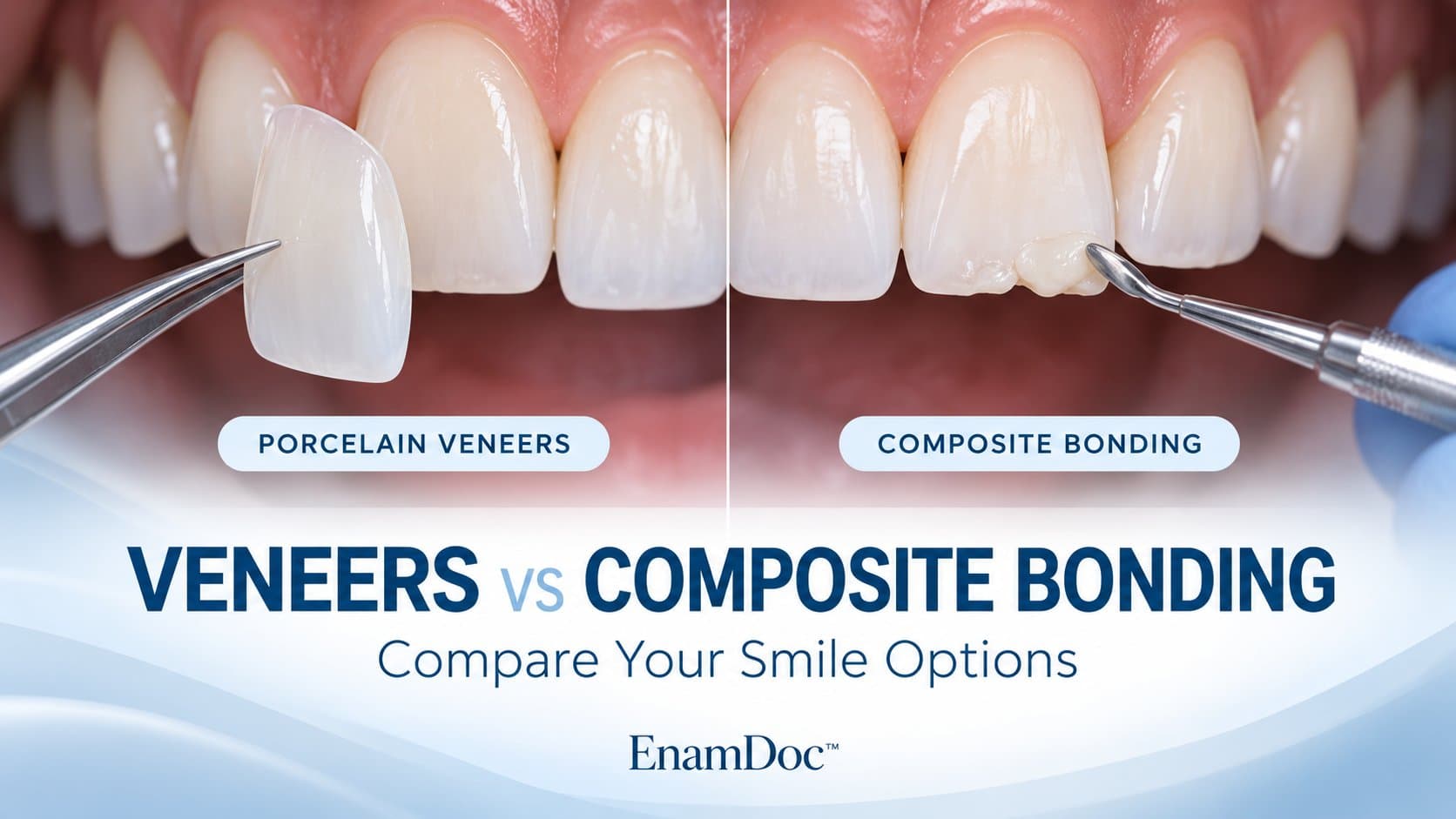
Someone shows you a photo of their new smile online. You ask how they got it: "Just some bonding," they say. Another person has the same seamless result: it is veneers. From the outside, both can look remarkably similar. But the procedures, costs, commitments, and clinical situations they suit are quite different — and choosing between them is a decision worth making carefully.
What Each Option Actually Is
Composite Bonding
Composite bonding involves applying tooth-coloured resin directly to the tooth surface. A dentist sculpts and shapes the material in the chair, then sets it with a curing light. In most cases, minimal or no enamel needs to be removed first — the resin bonds directly to the existing tooth. The whole process typically takes one appointment per tooth.
Porcelain Veneers
Veneers are thin porcelain shells, custom-made in a dental laboratory, that are permanently bonded to the front of the prepared tooth. Preparation involves removing a thin layer of enamel — usually 0.3–0.7 mm — to make room for the veneer so the tooth does not appear bulky. Impressions are taken, temporary veneers placed, and the permanent ones fitted at a second appointment, usually one to two weeks later.
How They Compare on the Key Factors
Cost
Composite bonding is substantially less expensive per tooth — in India, typically ₹3,000–₹8,000 per tooth depending on the complexity and the clinic. Porcelain veneers generally range from ₹15,000–₹40,000 per tooth, with some premium clinics charging more. For a full smile (8–10 front teeth), the difference is considerable.
Durability
Porcelain veneers typically last 10–20 years with proper care. They are highly resistant to staining because the porcelain surface is non-porous. Composite bonding lasts 5–7 years on average before it may need polishing, repair, or replacement. Composite can also stain over time — coffee, tea, and certain foods will affect its colour more readily than porcelain.
Reversibility
This is perhaps the most clinically significant difference. Composite bonding — at least when done without enamel removal — is reversible. The resin can be removed and the tooth returned to its original state. Porcelain veneers are not reversible. Once enamel is removed to place a veneer, that tooth will always need a veneer or similar restoration. This is a lifelong commitment.
Aesthetics
Porcelain has an optical quality that closely mimics natural enamel — it reflects light in a more natural way than composite, which can sometimes look slightly flat in photographs or in certain lighting. For patients with particularly high aesthetic expectations, or for visible front teeth where the result will be scrutinised closely, porcelain often provides a more convincingly natural result. That said, composite bonding in skilled hands can look excellent, and many patients are completely satisfied with it.
What Each Is Best Suited For
Composite bonding works well for: chipped or cracked teeth, small gaps (diastema), minor shape irregularities, discolouration that whitening cannot address, and worn tooth edges. It is also well-suited to younger patients for whom the reversibility matters, or those who want to trial a smile change before committing to veneers.
Porcelain veneers work well for: significant discolouration (including tetracycline staining or deep fluorosis that bonding cannot cover), multiple teeth that need consistent, long-lasting colour and shape changes, patients who want a long-term solution with minimal maintenance, and those willing to accept the permanence.
The Limits of Both
Neither option treats the underlying bite, alignment, or gum issues that may exist. If you have significant crowding, an uneven bite, or gum disease, these need to be addressed before cosmetic work — otherwise the result will either look wrong or fail prematurely. Composite and veneers are aesthetic enhancements on a structurally sound foundation, not replacements for orthodontic or restorative work.
A Note on Planning Your Smile Change
The best cosmetic dentistry starts with a thorough examination and an honest conversation about goals, timelines, and budget. Some patients who come in asking for veneers discover that composite bonding can achieve what they want for a fraction of the cost. Others who expected bonding to do the job find that only porcelain can cover the discolouration they have.
If you are considering either treatment, a consultation through EnamDoc gives you access to dentists who routinely do both — and who can show you before-and-after cases comparable to your situation. A second opinion is always worth getting before committing to an irreversible procedure.
Maintenance After Treatment
Regardless of which route you choose:
- Avoid biting nails, pens, or hard objects directly with the treated teeth
- Wear a night guard if you grind your teeth — both composite and porcelain can fracture under heavy grinding forces
- For composite: schedule a polish every 12–18 months to maintain colour and surface smoothness
- For veneers: treat them as you would natural teeth — brush twice daily, floss, and attend regular check-ups
The question "veneers or bonding?" is ultimately a question about what you want to change, how long you want it to last, how much you are willing to invest, and how certain you are about the result. Both are valid options. Both have their place. The right one depends on your specific teeth and goals — not on what a celebrity did or what your friend had done.
Frequently asked
Frequently asked questions
Are veneers permanent?
Porcelain veneers are permanent in the sense that preparing the tooth for a veneer (removing a thin layer of enamel) is irreversible. Once that enamel is gone, the tooth will always need to be covered with a veneer or a similar restoration. This is one of the most important things to understand before agreeing to veneer treatment.
Can composite bonding fix a gap between my front teeth?
Yes, composite bonding is a common and effective way to close small to moderate gaps (diastemas) between front teeth. The dentist adds resin to the sides of the adjacent teeth to narrow the gap. For larger gaps, orthodontic treatment or veneers may be a more suitable long-term solution.
How do I know if I need veneers or just whitening?
Whitening treats surface and intrinsic staining on natural teeth — it can lighten shade significantly but will not change the shape, size, or structure of your teeth. Veneers (or composite bonding) are used when the tooth shape, chip, crack, size, or position needs to change, or when the staining is too deep for whitening to address, such as with tetracycline or fluorosis marks. Your dentist can advise after examining your teeth.
- dental veneers
- composite bonding
- smile makeover
- cosmetic dentistry
- teeth
Keep reading