Dry Socket After Tooth Extraction: Symptoms & Treatment
That throbbing jaw pain 2 days after your extraction isn't normal soreness — it could be dry socket. Here's how to identify it, how serious it is, and exactly what treatment looks like.
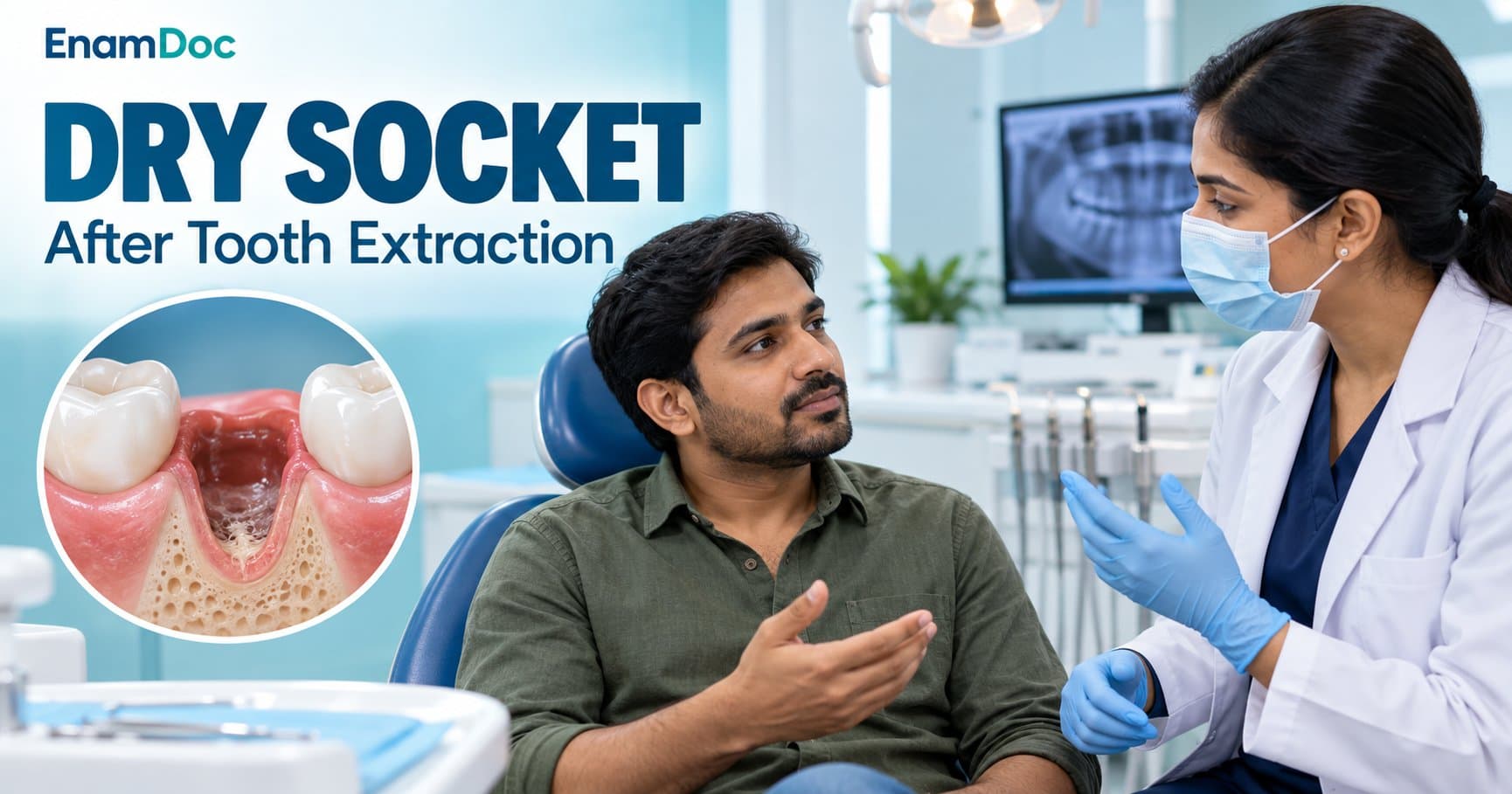
What Is Dry Socket and Why Does It Happen?
After a tooth extraction, your body forms a blood clot in the empty socket. This clot serves a critical purpose: it protects the underlying bone and nerve endings while healing progresses and acts as the foundation from which new tissue grows. Dry socket — medically called alveolar osteitis — occurs when that clot either fails to form, dissolves too early, or is physically dislodged.
When the clot is gone, the raw bone and nerve are directly exposed to air, food, fluids, and bacteria in your mouth. This produces a distinctive, intense throbbing pain that typical post-extraction soreness simply doesn't explain.
Dry socket occurs in roughly 2–5% of all tooth extractions and rises to 20–30% for lower wisdom tooth removals — the most complex and high-risk extraction type.
Symptoms of Dry Socket: What It Actually Feels Like
The key feature that sets dry socket apart from normal healing is the timing. Post-extraction discomfort peaks around Day 1 and steadily improves. Dry socket, by contrast, begins to worsen 2 to 4 days after the extraction.
Signs to watch for:
- Throbbing, radiating pain that intensifies after Day 2 rather than improving — often spreading toward the ear, jaw, or temple
- Empty-looking socket — when you look in the mirror, instead of a dark blood clot, you may see an open hole exposing whitish-grey bone
- Foul smell or bad taste that doesn't go away with rinsing
- Pain not adequately controlled by over-the-counter painkillers you were prescribed
Not everyone will see the empty socket clearly — especially for back molars. The pain pattern is often the most reliable indicator.
Who Is Most at Risk?
Dry socket isn't random. Several factors significantly raise the likelihood:
- Smoking or tobacco use — Nicotine restricts blood flow and reduces clot stability; smoking is the single biggest risk factor for dry socket
- Oral contraceptives — Oestrogen can interfere with the clotting process
- Complex or traumatic extractions — Lower wisdom tooth removals, impacted teeth, and extractions requiring bone removal carry higher risk
- Poor post-operative care — Spitting, rinsing vigorously, drinking through a straw, or touching the socket too soon can dislodge the clot
- Previous dry socket — Having had it once significantly increases risk in future extractions
- Infection at time of extraction — Pre-existing gum disease or pericoronitis complicates healing
How Serious Is Dry Socket?
Dry socket is very uncomfortable but not a dental emergency in the life-threatening sense. It won't cause permanent damage to the bone or surrounding teeth if treated promptly. However, it won't resolve on its own quickly — you need to see your dentist to have it treated. Left untreated, it can take 1 to 2 weeks to slowly resolve (very painful), whereas treatment typically brings significant relief within hours.
What Your Dentist Does to Treat Dry Socket
The treatment for dry socket is straightforward and usually provides rapid relief:
1. Irrigation of the Socket
The dentist gently irrigates the socket with saline or a medicated solution to clean out any debris, bacteria, and food particles from the exposed area.
2. Medicated Dressing
A medicated gauze dressing — typically containing zinc oxide, clove oil (eugenol), or a similar analgesic compound — is placed inside the socket. This dressing directly covers the exposed bone and nerve, providing almost immediate pain relief. Most patients notice a significant reduction in pain within 15 to 30 minutes.
3. Follow-Up Dressing Changes
The dressing usually needs to be changed every 1–3 days until the socket begins to re-granulate (form new tissue). Most cases require 2 to 4 visits. Each visit typically takes only 10 to 15 minutes.
4. Antibiotics (Sometimes)
If there are signs of secondary infection — fever, pus, or significant swelling — antibiotics may be prescribed alongside the dressing changes. Antibiotics alone won't treat dry socket; the dressing is the key intervention.
What You Can Do to Prevent Dry Socket
Most dry socket cases are preventable with careful adherence to post-operative instructions:
- Don't smoke for at least 72 hours after extraction — ideally longer
- Don't use a straw for 24–48 hours (suction pressure dislodges clots)
- Don't rinse vigorously or spit forcefully for the first 24 hours
- Eat soft foods on the opposite side of your mouth
- Keep the area clean from Day 2 with gentle warm salt water rinses (not the first day)
- Avoid alcohol and mouthwash with alcohol during initial healing
If your dentist knows you're at high risk (smoker, oral contraceptives, impacted wisdom tooth), they may apply a protective gel to the socket immediately after extraction or prescribe a chlorhexidine rinse to reduce bacterial load.
When to Call Your Dentist
Contact your dental clinic promptly if:
- Pain is increasing rather than decreasing after Day 2
- You're experiencing pain that spreads to your ear, jaw, or the side of your face
- The socket looks empty, white, or bone-coloured when you look in the mirror
- Pain medication isn't providing adequate relief
- You notice a foul smell or taste despite regular rinsing
Most dentists will see a patient with suspected dry socket as a priority same-day or next-day appointment — don't wait it out hoping it improves on its own.
Concerned After an Extraction? Book Through EnamDoc
If you've had a tooth extraction elsewhere and are now experiencing warning signs of dry socket, EnamDoc can help you quickly find an experienced oral surgeon or general dentist near you who can treat it. Don't delay — with the right dressing, relief can come within the hour.
Frequently asked
Frequently asked questions
How quickly does dry socket resolve after treatment?
Most patients experience significant pain relief within 15 to 30 minutes of the medicated dressing being placed. Full healing of the socket typically takes 1 to 2 weeks with regular dressing changes. Each dressing change (every 1–3 days) progressively reduces pain as the socket begins to fill with new tissue. Complying with post-treatment care — no smoking, gentle rinsing, soft foods — speeds recovery considerably.
Can I prevent dry socket if I am a smoker?
Smoking is the leading risk factor for dry socket, but the risk can be significantly reduced. Stop smoking for at least 72 hours before and after your extraction — ideally longer. If you absolutely cannot stop, avoid smoking for the first 24 hours and don't inhale deeply while the socket is healing. Some dentists place a protective gel (like Alvogyl) in high-risk sockets immediately after extraction. Discuss your smoking history honestly with your dentist so they can plan preventive steps.
Is dry socket an infection?
No — dry socket (alveolar osteitis) is not an infection in the traditional sense, although the two can sometimes coexist. Dry socket is an inflammatory condition caused by the loss of the blood clot from the extraction socket, exposing bone and nerve. An infection involves bacteria actively multiplying and causing tissue damage. However, the exposed socket can become secondarily infected if not treated. Signs of infection include fever, pus, and progressive swelling — if you experience these alongside dry socket symptoms, antibiotics may also be needed.
- dry socket
- tooth extraction
- alveolar osteitis
- dental complication
- post extraction pain
- patients
Keep reading