Dry Socket After Tooth Extraction: Symptoms, Prevention, and Treatment
Dry socket is one of the most painful complications after a tooth extraction. Dr. Aditya Swami explains what it is, how to spot it early, and exactly what your dentist will do to treat it.
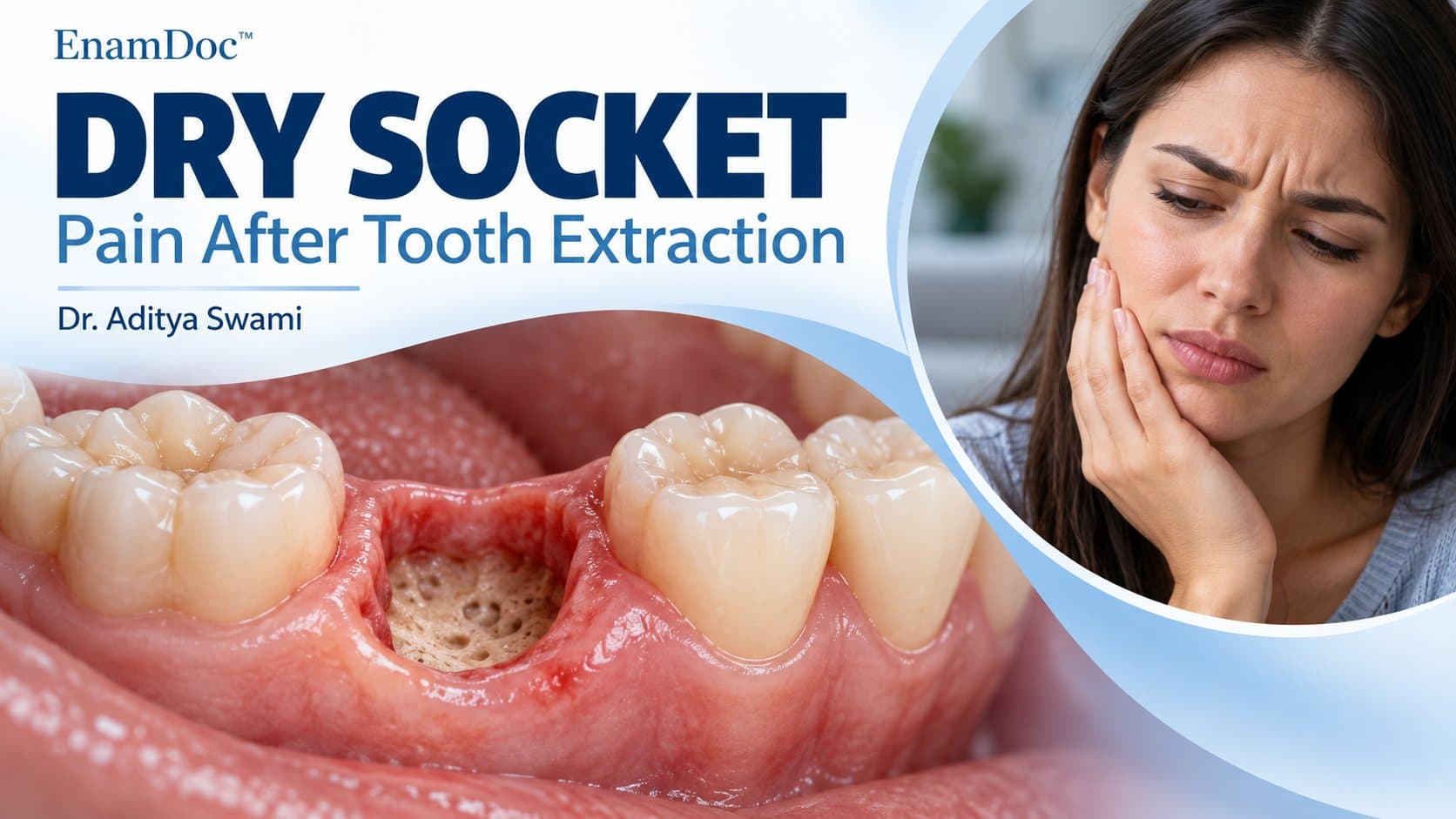
You had a tooth extracted a few days ago, and it felt manageable at first. Then, around day 3 or 4, a sharp, throbbing pain started radiating from the socket toward your ear or temple. You can see that the socket looks empty or whitish, with no clot visible. That is almost certainly dry socket — and it needs attention.
Dry socket, known medically as alveolar osteitis, is one of the most common complications following tooth extraction. It is not an infection, but it causes significant pain and delays healing. Understanding what causes it, how to prevent it, and what your dentist will do to treat it makes the recovery far less distressing.
What Actually Happens in a Dry Socket
When a tooth is extracted, the body forms a blood clot in the empty socket. This clot serves two purposes: it protects the underlying bone and nerve endings from air, food, and bacteria, and it provides the scaffold for new tissue to grow in and fill the socket over the following weeks.
In dry socket, this clot either fails to form properly or is dislodged before healing is complete. The exposed bone and nerve endings are directly in contact with the oral environment — air, saliva, and food particles — which is why the pain can be quite intense and feel completely different from normal post-extraction soreness.
Who Is at Higher Risk
Dry socket is not random. Certain factors increase your risk significantly:
- Smoking: The suction from smoking can dislodge the clot, and tobacco chemicals impair healing. This is one of the strongest risk factors — smokers are significantly more likely to develop dry socket than non-smokers.
- Oral contraceptives: High oestrogen levels can affect clot formation and increase risk.
- Lower jaw extractions: Mandibular third molars (lower wisdom teeth) are the most common site for dry socket.
- Traumatic extractions: When a tooth is difficult to remove and the procedure takes longer, the socket is more vulnerable.
- Poor oral hygiene: Existing gum disease or bacterial load in the mouth increases infection risk around the socket.
- Certain medications: Blood thinners and immunosuppressants may slow clot formation or healing.
Symptoms: What Dry Socket Feels Like
Normal post-extraction pain peaks within the first 24–48 hours and then gradually reduces. Dry socket is the opposite — the pain begins or significantly worsens between day 2 and day 5 after the extraction.
The hallmark symptoms are:
- Severe, aching or throbbing pain at the extraction site that radiates to the ear, eye, or neck
- An empty-looking socket, or visible bone (dry, greyish-white appearance) where the clot should be
- A bad taste or unpleasant odour from the socket
- Pain not relieved by standard over-the-counter analgesics
Importantly, dry socket does not cause fever or significant swelling. If you have fever, increasing swelling, or pus from the socket, that suggests infection — which requires different treatment.
How Your Dentist Treats Dry Socket
Treatment for dry socket is straightforward and almost always brings relief within a day or two. Your dentist will:
- Irrigate the socket to gently flush out food debris and any loose tissue.
- Place a medicated dressing in the socket. The most commonly used material contains zinc oxide, eugenol, and often clove oil (eugenol is the active anti-inflammatory component). This dressing numbs the exposed nerve endings directly and significantly reduces pain within hours.
- Prescribe analgesics if needed — typically NSAIDs such as ibuprofen or, for more severe cases, prescription-strength pain relief.
The dressing typically needs to be replaced every few days until the socket begins to heal. Most patients feel substantial improvement after the first dressing. The socket will ultimately heal on its own once the environment is managed.
What You Should Not Do at Home
Several home remedies make dry socket worse or mask symptoms without addressing the cause:
- Do not rinse forcefully — it can dislodge any remaining protective tissue.
- Do not insert cotton wool or gauze into the socket yourself — this risks pushing bacteria deeper or trapping debris.
- Do not smoke — even after dry socket develops, smoking will slow recovery significantly.
- Do not use aspirin directly on the socket — topical aspirin can chemically burn oral tissue.
How to Prevent Dry Socket
The post-extraction instructions your dentist gives you are not suggestions — they are the difference between smooth healing and dry socket. The most important preventive steps:
- Do not use a straw for at least 72 hours — suction is one of the most common ways clots are dislodged.
- Do not smoke for at least 48–72 hours after extraction, and ideally longer.
- Eat soft foods on the opposite side for the first few days.
- Avoid vigorous rinsing in the first 24 hours. After 24 hours, gentle warm salt water rinses (no spitting) help keep the socket clean.
- Take prescribed antibiotics if your dentist prescribed them — do not skip doses.
How Long Does Dry Socket Last
With proper treatment, pain from dry socket typically resolves within 7–10 days. The socket itself takes 4–6 weeks to fully fill in with soft tissue, and the bone underneath takes several months to remodel completely. Once the dressing is in place and healing begins, the intense pain reduces quickly — most patients report significant improvement within 24–48 hours of treatment.
When to See Your Dentist
If you are more than 48 hours post-extraction and the pain is getting worse rather than better — especially if it is radiating and you can see an empty or grey socket — contact your dentist promptly. Do not wait and hope it resolves on its own. Dry socket does not heal without the dressing; the pain will persist and potentially worsen until the socket is professionally managed.
EnamDoc's dentist directory can help you find an oral surgeon or general dentist quickly if you are experiencing post-extraction complications and need same-day or next-day care.
Frequently asked
Frequently asked questions
Can dry socket heal on its own without seeing a dentist?
Technically, dry socket will eventually resolve on its own — the bone will eventually become covered by new tissue. However, the healing without treatment takes significantly longer, and the pain can be severe and debilitating in the meantime. The medicated dressing a dentist places provides rapid pain relief and protects the exposed bone from further irritation, allowing healing to progress much faster. Waiting it out is not recommended when effective, quick treatment is available.
How soon after extraction can dry socket develop?
Dry socket most commonly develops between day 2 and day 5 after extraction. Day 1 pain is normal post-surgical pain from the procedure itself. The classic warning sign is when pain that was improving suddenly worsens again, or when new, more intense pain begins after the first 24 hours. If this happens — especially if you can see bare, greyish bone in the socket — contact your dentist the same day or next morning rather than waiting.
Is dry socket the same as a tooth extraction infection?
No — they are different conditions that can look similar. Dry socket is caused by the loss or failure of the blood clot, exposing the bone; it causes intense localised pain but does not typically cause fever, significant swelling, or pus. A post-extraction infection is caused by bacterial contamination of the socket and usually presents with throbbing pain accompanied by swelling, redness, fever, and sometimes discharge. A dentist can distinguish between the two quickly, and treatment differs: dry socket requires a medicated dressing, while infection requires antibiotics.
- dry socket
- tooth extraction
- alveolar osteitis
- post-extraction pain
Keep reading