The Gum Disease–Heart Disease Link: What the Research Actually Shows
A 2026 American Heart Association statement puts real numbers behind a link dentists have flagged for years — though treating your gums still isn't proven to protect your heart.
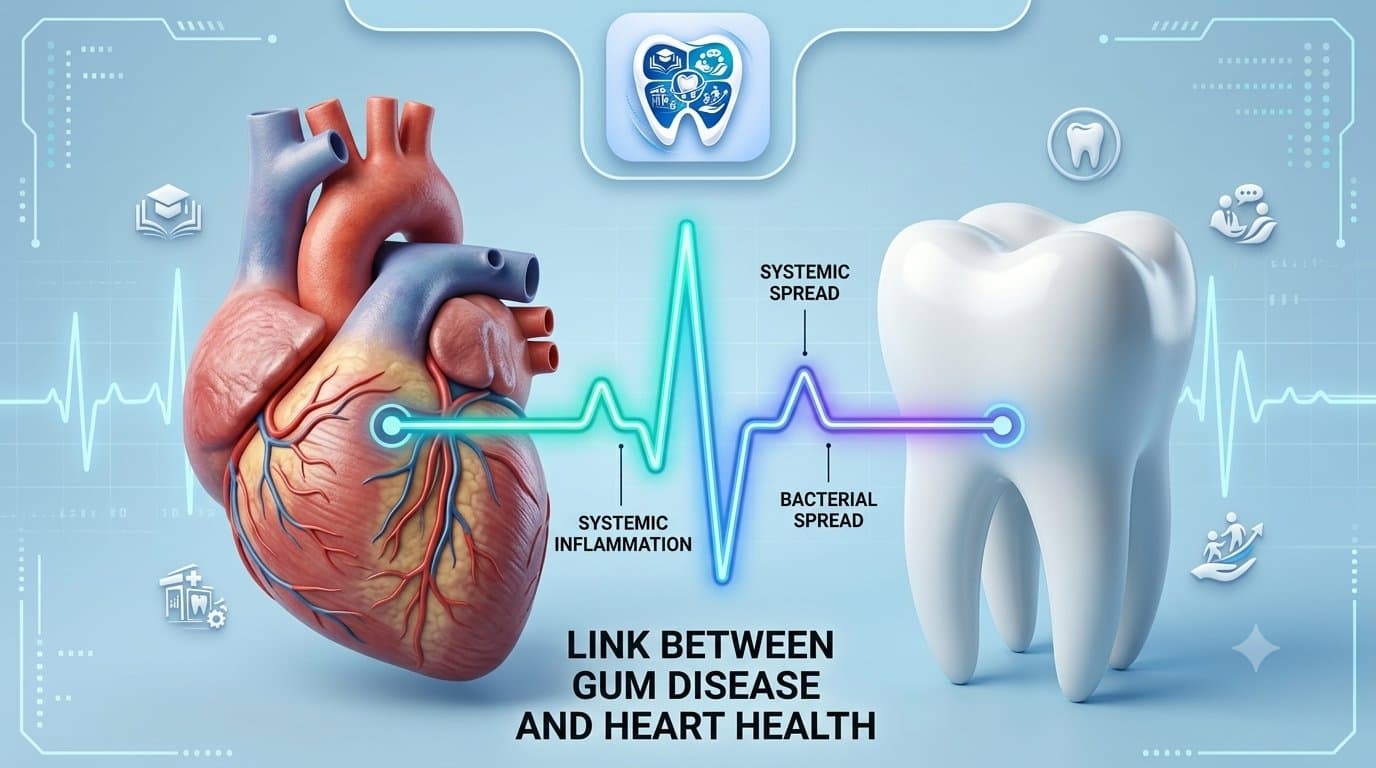
For years dentists have said gum disease and heart disease are connected, and for years that has sounded like the kind of thing a dentist would say to sell you a cleaning. A 2026 scientific statement from the American Heart Association put actual numbers behind it — and the numbers are harder to wave off than the warning ever was.
What the 2026 statement actually found
The American Heart Association's statement links periodontal disease to a measurably higher risk of heart attack, stroke, atrial fibrillation, heart failure, and related cardiometabolic conditions. It's not a new claim — the association between gum disease and cardiovascular disease has been studied for over two decades — but this is one of the more direct acknowledgments from a major cardiology body that the two are connected closely enough to matter clinically.
Periodontal disease is common enough that this isn't a niche warning: it affects more than 40% of adults over 30 in population studies, which puts a large share of any dental clinic's patient base inside the risk group being described.
How bacteria in your gums reach your bloodstream
The mechanism isn't mysterious. Inflamed gums bleed, and bleeding gums are an open door between the bacteria living in periodontal pockets and your bloodstream. Once bacteria and the inflammatory byproducts they trigger circulate, they can contribute to blood vessel damage — one of the early steps in atherosclerosis. Chronic, low-grade inflammation from long-standing gum disease adds a second, slower pathway on top of that: it keeps the body's inflammatory system switched on in a way that is independently linked to cardiovascular disease progression.
The brushing-frequency number worth knowing
One of the more concrete figures to come out of this research: people who brush once a day or less show roughly 13.7% ten-year cardiovascular risk, compared to about 7.35% for people who brush three or more times a day. That's not proof that brushing more prevents heart attacks — it's an association, and there are confounding habits that go along with brushing three times a day. But it's a large enough gap to notice.
What this does not prove
It's worth being precise about what the research supports and what it doesn't. The link is an association, not a confirmed cause-and-effect relationship. Nobody has yet shown, in a large randomized trial, that treating gum disease reduces heart attacks or strokes. The statement itself is careful to flag this gap. So this isn't "get a cleaning and skip the cardiologist" — it's "gum health is one more thing worth taking seriously if you're managing cardiovascular risk," not a replacement for anything else your doctor has told you.
What to actually do about it
None of this changes basic dental advice much — it just raises the stakes on doing it. Bleeding gums when you brush is the earliest sign of gingivitis and it's fully reversible at that stage. Left untreated, it progresses to periodontitis, which is not reversible, only manageable. If you have cardiovascular risk factors already — family history, high blood pressure, diabetes — treating gum disease early is one of the few dental issues where the case for acting quickly extends past your mouth.
Frequently asked
Frequently asked questions
Does treating gum disease lower my risk of heart disease?
Not proven yet. Studies show a strong association between the two, but no large trial has confirmed that treating periodontal disease directly reduces heart attacks or strokes. Treating it is still worthwhile for your gums and teeth regardless.
How exactly does gum disease affect the heart?
Bacteria from inflamed, bleeding gums can enter the bloodstream and contribute to blood vessel damage, while the chronic inflammation from long-term gum disease adds to the body's overall cardiovascular risk.
Should I tell my cardiologist if I have gum disease?
It's reasonable to mention it, especially if you already have cardiovascular risk factors. It won't change your heart medication, but it's part of a complete health picture.
- gum disease
- heart disease
- periodontal disease
- oral health
Keep reading