How to Build a Transparent Treatment Estimation Sheet That Avoids Billing Disputes
Eliminate billing surprises and increase case acceptance. Learn how to structure clear, phase-wise dental treatment estimates with explicit revision and refund policies.
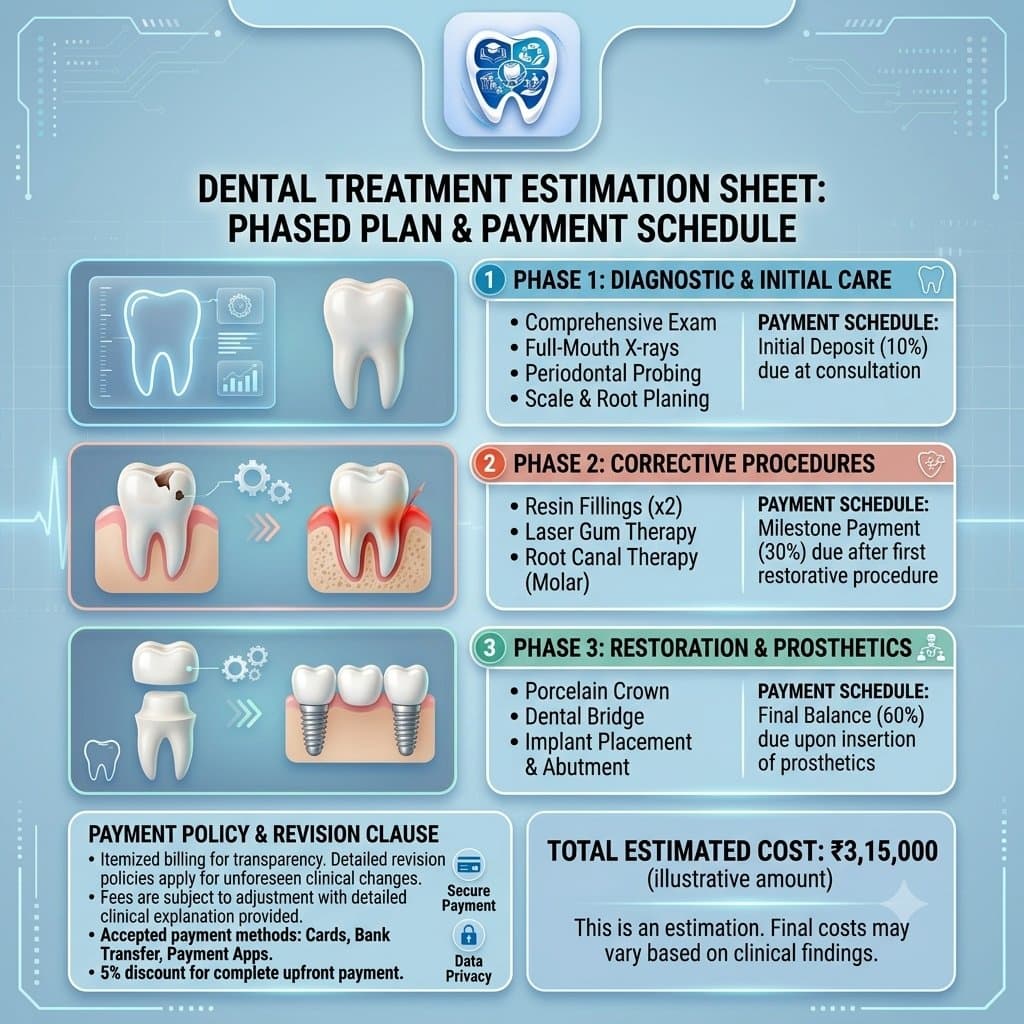
Billing misunderstandings are among the leading causes of patient dissatisfaction and poor online reviews in dental practice. When a patient signs up for a multi-visit procedure—such as full-mouth rehabilitation, an implant restoration, or orthodontic alignment—unexpected add-ons or vague pricing language can quickly erode clinical trust.
A transparent, structured treatment estimation sheet eliminates ambiguity before treatment begins. By itemizing clinical stages, implementing phase-wise payment milestones, and defining explicit terms for revisions or cancellations, you create financial clarity that improves both patient retention and treatment plan acceptance.
The Risk of Vague Treatment Quotes
Lump-sum verbal quotes (e.g., "The implant will cost around ₹35,000") frequently trigger friction when additional clinical needs emerge during treatment:
- Hidden Adjunctive Fees: Bone grafts, surgical guides, temporary crowns, and lab revisions often get caught in dispute if not detailed in the original quote.
- Sticker Shock at Checkout: Presenting accumulated charges at the end of a long clinical appointment creates tension and damages the front-desk patient experience.
- Uncollected Balances: Without documented payment checkpoints linked to clinical milestones, patients may leave unfinished treatments while carrying unpaid lab balances.
1. Itemizing Multi-Step Procedures
Complex dental procedures should never be billed as a single composite fee. Break every case into distinct diagnostic, surgical/operative, and prosthetic components so the patient understands exactly what they are paying for:
- Diagnostic & Planning: 3D CBCT imaging, study models, digital smile design, diagnostic wax-ups.
- Surgical/Preparatory Stage: Tooth extraction, site preservation, bone grafting, implant fixture placement, or core build-up.
- Restorative & Lab Stage: Custom abutment, provisional/temporary crown, definitive monolithic zirconia or ceramic crown.
- Post-Procedure Maintenance: Follow-up occlusal checks, suture removal, and initial post-op radiographic evaluations.
2. Structuring Phase-Wise Milestone Payments
Linking payments directly to tangible clinical milestones protects clinic cash flow while making high-ticket treatments manageable for patients.
| Treatment Phase | Clinical Milestone | Payment Trigger |
|---|---|---|
| Phase 1: Diagnostic & Prep | Comprehensive charting, X-rays, mock-up, initial scaling/prep | Deposit upon treatment plan acceptance (20–30%) |
| Phase 2: Surgical / Primary Operative | Surgical placement, root canal obturation, crown preparation | Due on the day of primary operative appointment (40–50%) |
| Phase 3: Final Delivery & Verification | Permanent cementation, occlusal adjustment, post-op imaging | Remaining balance cleared *before or at* final seating (20–30%) |
3. Defining Clear Terms for Revisions, Warranties, and Refunds
To avoid disagreements if biological complications occur or patient preferences change mid-treatment, include standard operational clauses on your estimate sheet:
- Lab Re-Shades and Adjustments: Clarify that minor shade corrections and adjustments during the provisional trial stage are included, but extensive design alterations requested after final ceramic firing may incur a standard lab fee.
- Contingency Disclaimers: Clearly state that biology is dynamic: "If underlying anatomical conditions require additional procedures (e.g., unexpected bone grafting or root canal therapy), an addendum estimate will be discussed and approved before proceeding."
- Refund & Discontinuation Policy: If a patient relocates or discontinues mid-treatment, specify that refunds are calculated by deducting completed clinical stages and custom non-refundable laboratory fabrication costs.
- Written Acknowledgement: Include a clear patient signature line confirming they have reviewed the estimated fees, milestone dates, and consent guidelines.
Building Trust Through Financial Transparency
A well-designed estimation sheet is not just an administrative document—it is a communication tool that demonstrates professionalism and mutual respect. When patients fully understand their treatment timeline, associated costs, and financial checkpoints upfront, they proceed with greater confidence and zero billing anxiety.
Frequently asked
Frequently asked questions
Why should dental treatment estimates always be provided in writing?
Written estimates provide clear documentation of agreed fees, treatment phases, and material specifications. This prevents misunderstandings, eliminates verbal quote discrepancies, and builds clinical trust with patients.
How should unforeseen clinical costs be handled during a procedure?
Always pause and inform the patient before performing unquoted work (such as an unexpected bone graft or root canal). Present an itemized addendum estimate for their verbal and written consent so there are no surprises at checkout.
- dental billing
- treatment planning
- practice management
- treatment estimation
- case acceptance
- patient communication
- clinical workflows
Keep reading