How to Handle Dental Anxiety in Your Clinic: A Step-by-Step Patient Protocol
One in four patients delays dental care because of anxiety. This practical protocol helps clinic teams turn an anxious visit into a calm, completed appointment — covering every stage from the phone call to the follow-up.
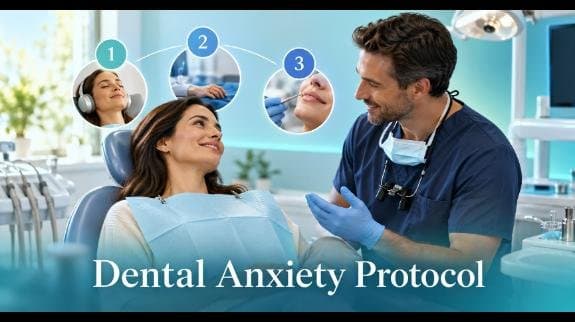
Studies suggest that dental anxiety affects somewhere between 10 and 40 percent of the general population, depending on how it's measured. In practice, most dentists know this number feels about right — there's usually at least one significantly anxious patient every single day.
What separates a dentist who simply tolerates anxious patients from one who actively helps them is a consistent protocol, applied before, during, and after the appointment.
This is that protocol.
Why Dental Anxiety Deserves a Protocol, Not Just Patience
Dental anxiety isn't irrationality. It's typically rooted in one or more of:
- A previous painful or traumatic dental experience
- Loss of control (the patient can't see what's happening, can't speak easily)
- Fear of pain or needles specifically
- General health anxiety
- Embarrassment about dental neglect
Anxious patients often delay care for years — and arrive with more complex, expensive problems as a result. A clinic that handles anxiety well doesn't just provide better patient care; it builds genuine long-term patient loyalty.
Before the Appointment: Set the Tone Early
Use Your Booking Process to Screen
Add a simple question to your intake form: "On a scale of 1–10, how anxious do you feel about dental visits?" Patients who rate themselves 7 or above need a modified protocol.
Send a Pre-Appointment Message
For anxious patients, a brief personalised message before the appointment goes a long way. Something like: "Dr [Name] will take things at your pace tomorrow. Please mention any concerns when you arrive — there's no rush."
This is simple to automate. EnamDoc allows dentists to set up personalised pre-appointment communications that go out automatically based on appointment type or patient flag.
Offer a Phone Call Option
Some patients benefit from talking to the dentist or a staff member briefly before a first appointment, particularly for complex treatment. A 5-minute phone check-in costs little and significantly reduces walk-out rates.
At the Reception: The First Physical Impression
The reception environment shapes patient state before they ever sit in the chair.
- Keep wait times short for anxious patients (long waits amplify anxiety)
- Reception staff who are warm, unhurried, and who acknowledge the patient by name matter more than most dentists realise
- Avoid a sterile, clinical atmosphere where possible — plants, soft lighting, and calm music have measurable effects on anxiety
In the Chair: Control and Communication
The Tell-Show-Do Method
- Tell: Explain what you're about to do in plain language before doing it
- Show: Demonstrate the instrument or sensation briefly (e.g., air from the three-in-one syringe on the back of the hand)
- Do: Perform the step
This removes the element of surprise, which is the single biggest anxiety driver for most dental patients.
Establish a Stop Signal
Give the patient control: "Raise your left hand if you need me to stop at any point, and I will stop immediately." Patients rarely use the signal, but knowing they have it dramatically reduces anxiety.
Local Anaesthesia: The Needle Fear
For patients with needle phobia:
- Apply topical anaesthetic for a full 2 minutes before injection (not 30 seconds)
- Use the smallest gauge needle appropriate
- Inject extremely slowly — the sting comes from the pressure of the solution, not the needle itself
- Distract with conversation during injection
Explain as You Go
A short running commentary — "I'm going to rinse now, you'll feel some water" — keeps the patient oriented and prevents panic from unexpected sensations.
For Moderate-to-Severe Anxiety: Additional Options
When standard communication techniques aren't sufficient:
- Nitrous oxide (laughing gas): Widely available, safe, and effective for moderate anxiety. Wears off immediately after removal.
- Oral sedation: A mild sedative (typically benzodiazepine) taken 30–60 minutes before the appointment. Patient needs an escort and cannot drive.
- Separate scheduling: Anxious patients do better scheduled as the first appointment of the day (no wait) or in the afternoon when you're not running behind from a complex morning case.
After the Appointment: Lock In the Positive Experience
The post-appointment conversation is where you build trust for the next visit:
- Acknowledge that they did well: "You handled that really well. I know it wasn't easy."
- Give clear aftercare instructions — uncertainty after a procedure feeds anxiety
- Book the next appointment before they leave. Anxious patients who leave without booking are unlikely to rebook proactively.
Tracking Anxiety Levels in Patient Records
Mark anxiety levels in your patient records. EnamDoc allows dentists to add clinical notes and flags to patient profiles. Over time, you'll see what works for each specific patient — something you can refer to before every appointment rather than starting fresh each time.
Frequently asked
Frequently asked questions
What percentage of patients experience dental anxiety?
Studies estimate 36–40% of people experience some level of dental anxiety. Among these, around 10–12% have severe dental phobia that causes them to avoid care entirely. In Indian clinics, the proportion is likely similar — anxiety about pain and cost being the two most commonly cited reasons for delayed treatment.
Can children have dental anxiety, and how is it handled differently?
Yes, dental anxiety is common in children and handled differently. Child-specific techniques include tell-show-do, use of child-friendly language for instruments (the "sleepy juice" for anaesthetic, the "water squirter" for the three-in-one), shorter appointments, and involving a parent in the chair for younger children. Many paediatric dentists also use distraction — a screen above the chair showing cartoons can be remarkably effective.
Should dental clinics use sedation for anxious patients?
Sedation (nitrous oxide, oral sedation, or IV sedation) is a valid option for patients with moderate to severe anxiety who cannot complete treatment with communication techniques alone. Nitrous oxide is the most commonly used — it is safe, fast-acting, and wears off within minutes. Oral sedation requires more planning (consent, escort, fasting). IV sedation requires specialist involvement. Most general dental clinics in India use nitrous oxide when available; formal sedation dentistry is more common in metro cities.
- dental anxiety
- patient management
- clinic protocol
- dental phobia
- calm patient
Keep reading